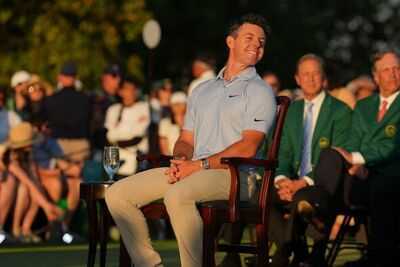
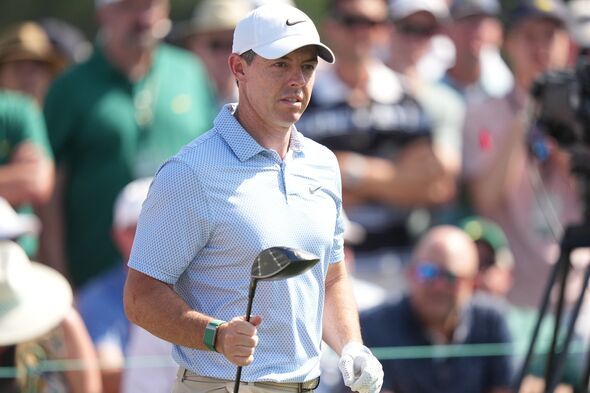
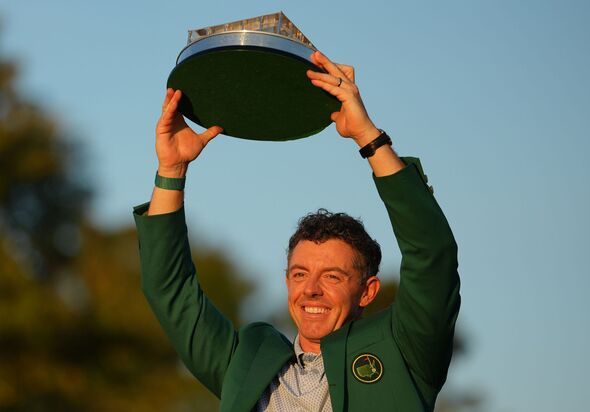
Two-time Masters winner Rory McIlroy has snubbed the chance to win a staggering £2.6million just days after his triumph at Augusta National by turning down a spot at the RBC Heritage. The 36-year-old successfully defended his title last Sunday, joining the small but elite club, featuring Jack Nicklaus, Nick Faldo and Tiger Woods. While he received £3.36m in prize money for his Masters success, the Northern Irish superstar will have had to relinquish more than a third of his earnings in tax.
The chance to play and win at the RBC this weekend could have helped boost his earnings after surrendering them to the taxman, should he have claimed the top spot at the event. Yet McIlroy has decided to take personal leave to recover after his monumental victory in Georgia, opting for a "mental reset" and celebration period rather than immediately returning to competition.
This will mark the third time in four years that McIlroy has skipped the RBC immediately following the Masters. In 2023, he cited a need for mental well-being after a disappointing missed cut at Augusta. However, this time, it is likely for the same reason after his Masters victory in 2025 - a desire to decompress after scooping another major title.
The Signature Event at Harbour Town Golf Links in South Carolina is one of the most popular stops on the PGA Tour calendar - and boasts huge prize money. Three years ago, golf stars would even face a hefty £2.2m penalty for withdrawing.
EXPRESS SPORT ON FB! Get all the best sports news and much more on our Facebook page
However, as of early 2025, players are no longer fined or penalised for skipping multiple 'signature events' in a season. This year will see the likes of Scottie Scheffler, Cameron Young, Tommy Fleetwood, Matt Fitzpatrick and Robert MacIntyre vying for the top prize of £2.6m at the tournament.
McIlroy's Masters winnings, while substantial, will have taken a big hit. Jon Elphick, Managing Tax Partner at accounting firm Bandexplained: "The tax position of an international sports person largely depends on where they are resident (i.e., in which country they pay their taxes) as well as where they perform the activities generating the earnings.
"Typically, a level of local tax will be paid where the event takes place, but additional tax may then be due in the country the sports person lives. Most countries apply a system of marginal taxes, with the rates increasing as a person's income increases.
"The Masters takes place at Augusta National Golf Club in the US state of Georgia. The US tax system charges 'federal tax', a national tax applied on all US source earnings and all US nationals on worldwide income, and 'state tax' payable on earnings generated within specific states.
"The highest rate of federal tax is charged at 37 per cent, whilst state income tax in Georgia is currently charged at 4.99 per cent, meaning a total tax rate of 41.99 per cent will be applied in the US on the Masters winnings, and so US tax of up to $1,511,640 (£1,127,040) would be payable by the winner."
McIlroy previously resided in Florida but has since purchased a property in Wentworth, Surrey. Before the Masters concluded, Elphick detailed how a UK resident could be taxed more than an American champion.
"Whilst US tax will be paid on the winnings, the winner may be tax resident outside of the US, meaning they could have local taxes to pay in addition to that, depending on where they live (note that nationality isn't typically important, but where the person lives as a tax resident)," he said.
"A US winner's tax liability will be limited to the tax paid in the US, whereas a UK resident winner would be liable to pay UK income tax at a likely rate of 45 per cent on the winnings as well (a liability of $1.62m).
"In this case, the UK tax would be reduced by the amount of tax paid in the US in order to avoid a "double tax charge", so a UK winner would pay over $1,511,640 to the IRS in the US, and an additional $108,360 (£80,790) to HMRC in the UK."
The combined weight of both US and UK taxation would leave McIlroy facing a total bill of £1.2m ($1.62m), based on those figures, which would account for a whopping 36 per cent of his Masters prize money.
-
New MoU Signed to Enhance Digital Ecosystem in India
-
Miraculous Survival Story from Vrindavan Boat Tragedy

-
Controversial Incident in Auraiya: Youth Forced to Apologize at Ambedkar Statue

-
Court Sentences Man to Life Imprisonment for Acid Attack on Minor in Ajmer

-
Tragic Outcomes Following Board Exam Results in Madhya Pradesh