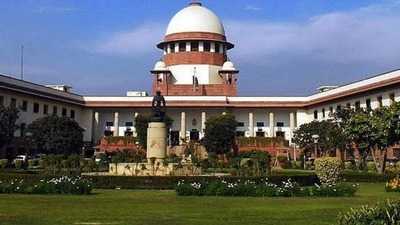
SC seeks ECI's response on biometric facial verification for voters
13 Apr 2026
The Supreme Court has issued a notice to the central government and the Election Commission of India (ECI) on a public interest litigation (PIL) filed by Bharatiya Janata Party (BJP) leader Ashwini Kumar Upadhyay.
The PIL seeks to introduce biometric and facial recognition systems for voters before they cast their votes.
A bench headed by Chief Justice of India Surya Kant and Justice Joymalya Bagchi sought responses from both the ECI and the government.
Financial burden and infrastructure challenges
Implementation hurdles
The court noted that implementing biometric voting across the country would require major changes in existing electoral laws and frameworks.
It also observed that such a move would impose a huge financial burden on the exchequer.
The scale of infrastructure needed for millions of voters and polling booths was acknowledged as a major hurdle in implementing this proposal.
Initial reluctance from court
Initial reluctance
Initially, the bench was hesitant to intervene at this stage and suggested Upadhyay approach the Election Commission first.
The court said, "ECI needs to give us a reply and if State does not help or finance ministry does not pass budget then again we can be approached."
However, it eventually agreed to examine the matter after Upadhyay said he was not talking about the five states that are going to the polls.
Responses expected to address feasibility, legality
Federal nature
"The prayers cannot be considered for the upcoming elections. But whether such a recourse deserves to be followed for next parliamentary elections or State polls needs to be examined. Issue notice," the court directed.
The petition stated that the cause of action arose on March 20, when the petitioner became aware that, despite various measures implemented by the ECI, instances of bribery, undue influence, personation, duplicate voting, and ghost voting persisted, undermining public trust in the electoral process.
Petition highlights electoral integrity issues
Electoral integrity
The petition highlights that the lack of foolproof identification systems continues to impact the "purity and integrity of the electoral process." It raises issues such as impersonation and duplicate voting.
The petitioner also argued that biometric IDs are unique and cannot be forged, hence maintaining the principle of "One Citizen, One Vote" in its purest definition.
It argued that the Election Commission can carry out such steps by using its plenary powers under Article 324 of the Constitution.
-
India plans Jasprit Bumrah's workload after IPL, likely to prioritize Tests over ODIs

-
PBKS, Australia pacer Bartlett speaks on Test ambitions, learning from 'Big Three' pace trio of Cummins, Hazlewood, Starc

-
We want to play aggressive and brave cricket in every phase, says Mo Bobat as RCB gear up to face Gujarat Titans

-
MI vs CSK Toss & Playing XI, IPL 2026: Mumbai Wins Toss and Opts to Bowl First in Match 33

-
"Proud moment for cricket": Jay Shah as LA 2028 Olympics venue construction begins