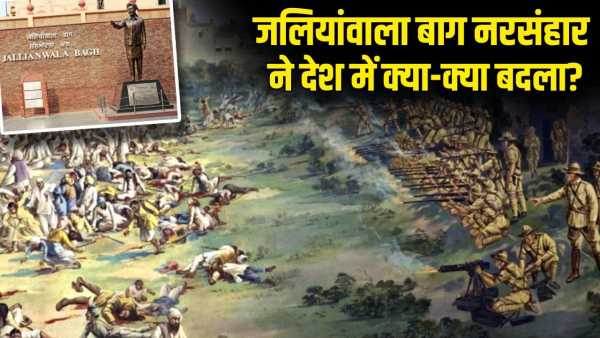
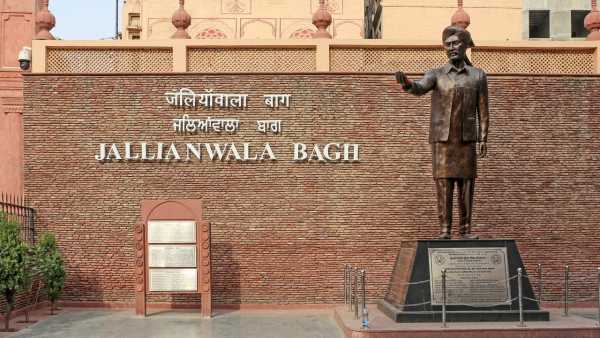
Even after more than a century, the pain of Jallianwala incident continues to haunt the countrymen. This is the reason why the crowd that reaches Jallianwala Bagh Memorial to pay homage to the martyrs moves ahead with slow steps and deep silence of sadness. The bullet marks on the walls of the garden and the well testify to the British cruelty, into which many innocent people jumped to save their lives. But these thousands of martyrdoms did not go in vain. This gave new enthusiasm and courage to the lovers of freedom. What happened then? Let's turn and read the pages of history.
Through the Rowlatt Act, the British government had acquired the right to arrest anyone and put them in jail without trial. This was a direct attack on the fundamental rights of Indians who were victims of the cycle of repression. There was a nationwide protest against this black law under the leadership of Mahatma Gandhi. This protest had become quite fierce in Punjab. People were flocking to the streets. On the other hand, Lieutenant Governor Michael Francis O'Dwyer was preparing to crush the protests strictly.
He handed over the command of law and order to Brigadier General Reynolds Edward Harry Dyer. As soon as he took command, Harry Dyer created an atmosphere of panic by imposing a ban on gathering of crowds and making rapid arrests. But the public was not ready to bow down. People were ready to pay any price for their rights.
That bloody day of Baisakhi
It was the day of Baisakhi. A festival of joy and enthusiasm. The date was 13 April 1919. On this day a meeting was organized in Jallianwala Bagh, Amritsar against the Rowlatt Act. There was only one entry and exit gate in this complex. Despite all the restrictions imposed by the police and administration, thousands of enthusiastic people were present in the meeting. At that time Hansraj was speaking on the mic. The crowd was completely disciplined and peaceful. But suddenly the soldiers led by General Dyer surrounded the only gate of the garden.
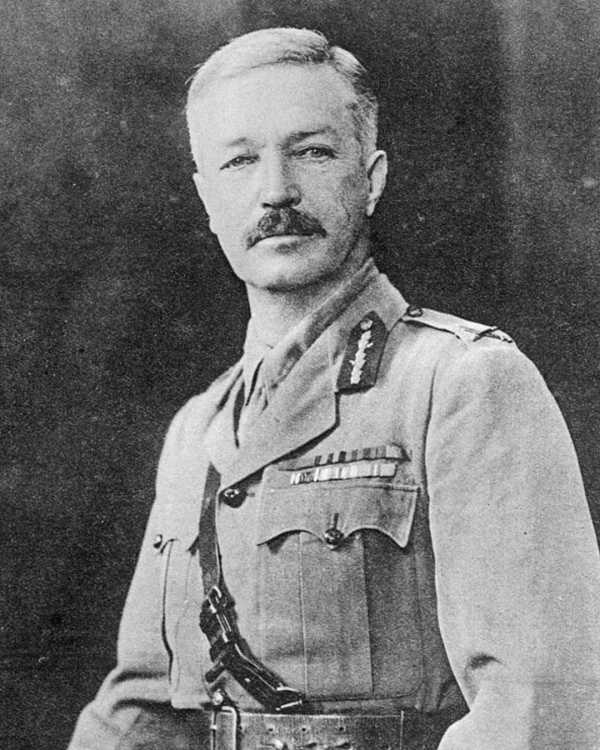
Brigadier General Reynolds Edward Harry Dyer.
Without giving any warning to end the meeting or asking people to leave, the soldiers opened fire mercilessly. There was no count of bullets nor of those who were martyred. In a failed attempt to save themselves, many people had jumped into the well located at one end of the field. The bodies of many people were hit by police and army bullets while trying to climb over the wall.
Harry Dyer, who was commanding the attack, had crossed all limits of brutality on this occasion. Through this massacre, the British government had given a message not only to Amritsar but to the entire country that every voice raised for freedom and rights would be brutally crushed.
Swearing revenge with blood soaked soil in fist
This heart-wrenching incident shocked the entire country. News of British atrocities had reached other countries also. But even after paying a huge price, the people fighting for freedom were not ready to surrender before the foreign rule. Now this fight had reached every part of the society. A young volunteer living in an orphanage was also present at the Jallianwala Bagh meeting to provide water to the people.
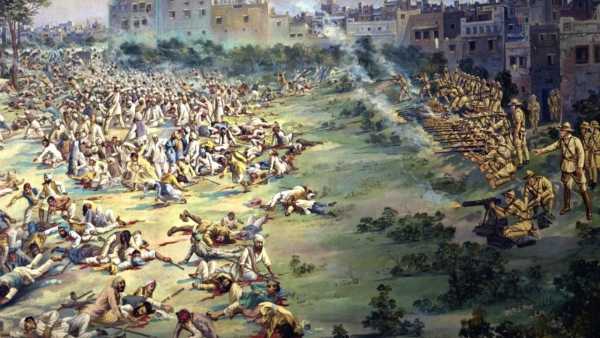
After the Jallianwala Bagh massacre, anger towards the British increased further across the country.
That dreadful scene had ignited the embers of vengeance in him instead of fear. Holding the soil soaked in the blood of martyrs in his fist, he swore that he would avenge this injustice. He had to wait twenty-one years to fulfill his oath. On March 13, 1940, he shot Michael O'Dwyer to death in Caxton Hall, London. He was Udham Singh, the brave son of the country, who later became immortal by kissing the noose. On receiving the news of this incident, a 12 year old boy reached Jallianwala Bagh instead of school the next day. The soil there was stored in the worship place of the house. That child is today remembered by the name of Shaheed-e-Azam Bhagat Singh, the flame of revolution.
Far reaching consequences of genocide
The Jallianwala Bagh massacre had far-reaching consequences. Resentment against British rule intensified across the country. Mahatma Gandhi started the non-cooperation movement. Rabindranath Tagore returned his knighthood. A series of protests started at various places. The British rule was much criticized in the international world also. To calm the anger of the people, the government formed the Hunter Commission. In its report, the number of people who lost their lives that day was accepted at 379 and 1200 were injured. According to Dyer's own statement, 1650 bullets were fired that day and the firing continued for about 10 minutes. The commission described Dyer's actions as excessive but did not recommend any harsh punishment. On the contrary, some sections in Britain, who wanted to keep India enslaved, promoted him as a “hero”.
Dyer had said in his statement, 1650 bullets were fired that day and firing continued for 10 minutes.
No trust in government investigation
Congress and the people of the country did not trust any government investigation in this matter. The committee comprising Mahatma Gandhi, Motilal Nehru, Chittaranjan Das, MR Jayakar, Abbas Tyabji etc. reached the incident site, Amritsar, Kasur and Lahore and obtained detailed information by meeting the families of the injured and the deceased as well as all the eyewitnesses. This investigation and its report present the real picture of the genocide in contrast to the cover-up of the Hunter Commission. Mahatma Gandhi played a central role in preparing this report. This report was published in 1920, in which the number of dead was said to be more than 1000.
First People's Investigation
This investigation is considered important for many reasons. This was the first organized People's Investigation, which exposed British claims to the world. This dealt a blow to the image of British rule at the international level. On the other hand, the freedom movement got moral and political strength. According to historian Bipin Chandra, this report was a powerful expression of Indian nationalism. While the Hunter Commission carried out a formality of investigation with limited scope and efforts to protect the government, on the other hand the Congress recorded the voice of the public. This investigation report was not only a document of data, but also a charge sheet of the moral degradation of the British rule. In the report, Dyer's actions were described as not only cruel but also unnecessary and inhuman.
The conclusion was that the crowd was targeted by bullets without any prior notice, which clearly shows that the objective was not to punish but to spread terror. The report also revealed that the martial law imposed in Punjab was a gross violation of the principles of justice and inhumane orders were issued to humiliate the people. The inquiry committee had held not only General Dyer but also Punjab's Lieutenant Governor Michael O'Dwyer responsible for this tragedy.
The British government expressed only sorrow
After this massacre, the British government did not agree to be ashamed of the atrocities during the era of slavery or to take any strict action against the culprits including General Dyer. Even after independence, the British government kept avoiding questions related to this for a long time. In 1997, Queen Elizabeth II had visited Jallianwala Bagh and had fulfilled her duty by calling it a tragic incident. In 2013, David Cameron called it a shameful incident.
In 2019, on the completion of 100 years of this incident, it was discussed in the British Parliament. The then Prime Minister Theresa expressed deep regret over this but still did not apologize on behalf of the government. Even though the British government has not been able to muster the courage to apologize yet, as far as Indians are concerned, the memories of the martyrs of Jallianwala Bagh are forever imprinted in their minds with respect and reverence.
-
Have you ever wondered why we don’t burn bamboo? Know the shocking reasons’ – News Himachali News Himachali

-
‘Dragon’ did not land in Iran’s favor just like that, China’s reserves are full of Iranian oil and business is worth billions of dollars.

-
Vastu Tips for Tulsi Plant: Do not keep these plants near Tulsi, otherwise there may be bitterness in relationships!

-
India’s small finance banks poised for strong Q4 FY26 performance

-
Padma Shri awardee Gulabo praises PM Modi for Women’s Reservation Act