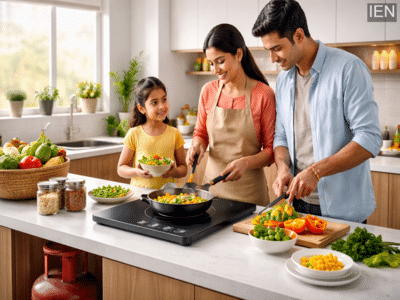

Gas Free Kitchen Initiative: With LPG prices rising and concerns over future supply stability, the government is now actively exploring a transition toward electric cooking solutions. The idea of a “Gas-Free Kitchen” is gaining traction, with a strong push toward induction-based cooking systems as a cleaner, cost-effective alternative.
This move is being seen as part of a broader strategy to reduce dependency on traditional LPG cylinders and promote energy-efficient cooking methods across Indian households.
Why the Shift Away from LPG?India has witnessed a steady increase in LPG prices over the past few years, putting pressure on household budgets. Additionally, concerns around supply constraints and global fuel volatility have made policymakers rethink long-term dependence on gas cylinders.
The proposed shift aims to:
- Reduce reliance on LPG imports
- Lower household cooking costs over time
- Promote cleaner and more sustainable energy usage
A “Gas-Free Kitchen” refers to a setup where traditional LPG gas stoves are replaced by electric cooking appliances—primarily induction cooktops.
Induction cooking works using electromagnetic energy to heat utensils directly, making it faster and more efficient compared to gas stoves.
Key Benefits of Induction CookingSwitching to induction-based cooking offers several advantages:
1. Faster and Energy EfficientInduction cooktops heat food quickly and minimize energy loss, making them more efficient than LPG.
2. Cost Savings Over TimeWhile the initial cost of an induction stove may be higher, long-term savings on fuel can offset the investment.
3. Improved SafetyNo open flame reduces the risk of gas leaks and fire hazards, making kitchens safer.
4. Eco-Friendly AlternativeElectric cooking produces fewer emissions compared to LPG, supporting environmental sustainability goals.
Government’s Role in Promoting Electric CookingThe government is expected to play a crucial role in accelerating this transition. Organizations like Energy Efficiency Services Limited (EESL) are likely to spearhead initiatives aimed at making induction cooktops more accessible.
Possible support measures include:
- Subsidized induction cooktops
- Easy EMI financing options
- Awareness campaigns on energy-efficient cooking
- Integration with existing electrification schemes
These steps could significantly reduce the entry barrier for middle- and lower-income households.
Cost and Electricity Consumption: What to Expect?One of the biggest questions for consumers is whether induction cooking is truly economical.
- Induction cooktops typically consume 1–2 kWh per hour, depending on usage
- Monthly electricity costs may increase slightly, but overall expenses could still be lower than LPG in many cases
- Savings depend on electricity tariffs and cooking habits
Experts suggest that urban households with stable electricity supply may benefit the most from this transition.
Challenges in Adopting Gas-Free KitchensDespite the benefits, there are a few challenges that need to be addressed:
- Electricity reliability: Rural and semi-urban areas may face power supply issues
- Initial cost: Buying induction cooktops and compatible utensils requires upfront investment
- User awareness: Many households are still unfamiliar with induction cooking
Addressing these challenges will be key to widespread adoption.
Is India Ready for a Gas-Free Future?The shift toward electric cooking reflects a larger transformation in India’s energy ecosystem. While LPG will continue to play an important role in the near future, the gradual adoption of induction cooking could reduce long-term dependency.
For urban households and young consumers, the “Gas-Free Kitchen” concept is already becoming appealing due to convenience, safety, and modern design.
ConclusionThe government’s push toward a Gas-Free Kitchen signals a significant shift in how Indian households may cook in the coming years. With rising LPG prices and increasing focus on sustainability, induction cooking could soon become a mainstream choice.
However, the success of this transition will depend on affordability, infrastructure, and awareness. If implemented effectively, India could move toward a safer, cleaner, and more cost-efficient cooking future.
-
Formulate model SOP for trekking safety in Karnataka: Minister Khandre tells officials
-
Four Bangladesh nationals sentenced to three years in jail in human trafficking case

-
KKR vs LSG, IPL 2026: Kolkata Knight Riders Seek Revival Against In-Form Lucknow Super Giants at Eden Gardens

-
Shocking Murder Case in Delhi: Woman Killed Over Refusal to Comply with Disturbing Demands

-
Bangladesh Women's Cricket Receives Salary Boost from BCB