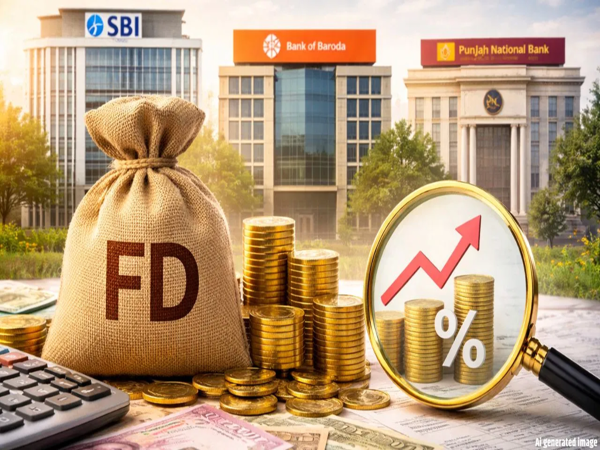
The meeting of the Reserve Bank of India's (RBI) Monetary Policy Committee (MPC) concluded today. The central bank has clarified that there will be no alteration to the repo rate; it will remain unchanged at 5.25 percent. This implies that there will be no immediate changes to the interest rates on your home or car loans. Furthermore, banks' Fixed Deposit (FD) interest rates will also remain at their current levels.
Now that the repo rate remains stable at 5.25 percent, the FD rates offered by several public sector banks continue to be attractive. Given the prevailing market uncertainty, diverting a portion of your savings into options that offer security and assured returns could prove to be a prudent move.
Which Bank Offers the Most Lucrative Investment Opportunity?
If you are planning to invest your savings for a short duration—specifically one year—it is crucial to know which bank is currently offering the best returns. According to recent data, Indian Overseas Bank leads the pack for this short-term tenure. The bank is offering an impressive interest rate of 6.50 percent on 1-year FDs—the highest among the major public sector banks. Union Bank of India is not far behind in this regard, offering a robust return of 6.30 percent.
Conversely, if you are considering investing with Punjab & Sind Bank, note that it is currently offering an interest rate of just 5.85 percent on one-year deposits—the lowest among the banks listed. The country's largest lender, State Bank of India (SBI)—along with Punjab National Bank (PNB) and Canara Bank—is offering an interest rate of 6.25 percent for a one-year tenure. Institutions such as the Bank of India and the Central Bank of India are offering rates ranging between 6.20 and 6.25 percent.
You Can Invest in These Banks for the Long Term
For those looking to safeguard their capital over an extended period while earning substantial lump-sum returns, 3-year and 5-year Fixed Deposits (FDs) have always been an excellent option. When it comes to a three-year investment horizon, State Bank of India (SBI) and Punjab National Bank are offering the most attractive rates to customers, standing at 6.30 percent. In contrast, Bank of Maharashtra is offering relatively low interest rates—just 5.25 percent for a 3-year tenure and 5.00 percent for a 5-year tenure.
If your investment plan spans 5 years, Bank of Baroda could prove to be the most suitable option for you. This bank is offering an interest rate of 6.30 percent for this long-term duration, which is the best rate among all public sector banks. Additionally, Canara Bank is also offering a steady return of 6.25 percent for a 5-year tenure.
Where Can You Earn the Highest Interest on FDs?
Bank Name | Interest in 1 Year (%) | Interest in 3 Years (%) | Interest in 5 Years (%)
Punjab & Sind Bank | 5.85 | 5.85 | 5.95
Bank of Baroda | 6.10 | 6.25 | 6.30
Indian Bank | 6.10 | 6.05 | 6.00
Bank of Maharashtra | 6.20 | 5.25 | 5.00
Central Bank of India | 6.20 | 6.00 6.00
Bank of India | 6.25 | 6.25 | 6.00
Canara Bank | 6.25 | 6.25 | 6.25
Punjab National Bank | 6.25 | 6.30 | 6.10
State Bank of India | 6.25 | 6.30 | 6.05
Union Bank of India | 6.30 | 6.25 | 6.00
Indian Overseas Bank | 6.50 | 6.10 | 6.10
Disclaimer: This content has been sourced and edited from TV9. While we have made modifications for clarity and presentation, the original content belongs to its respective authors and website. We do not claim ownership of the content.
-
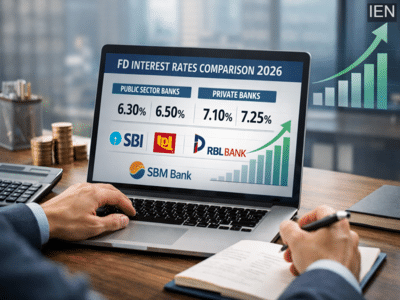
FD Rates After RBI Decision: Where Are You Getting the Highest Interest in 2026?
-
Raghav Chadha Sparks Speculation Amid AAP Rift; Hints at New Political Move

-
[WATCH] David Miller dejected in Delhi Capitals dressing room after GT loss

-
Excitement Marks Kerala Elections as Celebrities and Leaders Cast Votes

-
Vaazha 2 Breaks Records at the Box Office