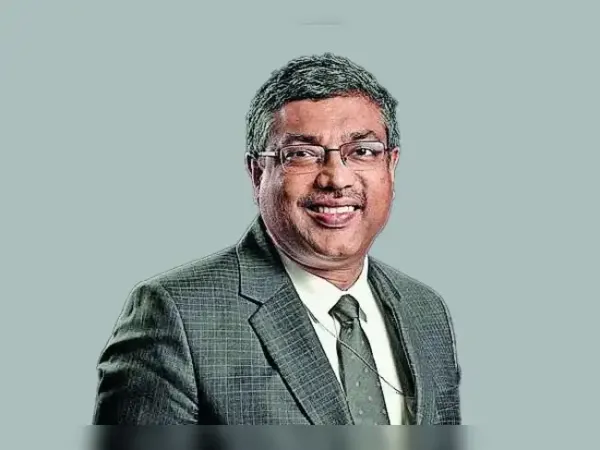
The latest amendments to the Information Technology Rules, 2021 are just clarificatory and don’t expand government authority, electronics and IT secretary S Krishnan said on Tuesday even as digital rights organisations, civil society and social media giants protested the new rules.
Draft amendments unveiled last week have listed all intermediaries and all news content hosted by them online under Part III of the IT Rules that recognise entities to whom the code of ethics and procedure and safeguards in relation to digital media applies. As a result, user-generated content may now face the same scrutiny and treatment as those in place for publishers.
Calling the move “purely procedural,” Krishnan said it has been done to shift oversight over news content to the Ministry of Information and Broadcasting (MIB), which has always overseen news content. “In today’s world, there is a lot more news which is put out by users other than registered publishers. It was thought there should be one entity (MIB) which handles these,” he told reporters in New Delhi.
Earlier in the day, during two stakeholder meetings, some digital rights organisations and the civil society asked the government to rescind any move to bring online user-generated news or current affairs content within regulatory oversight, while Google and Meta pushed back against advisories and guidelines being made mandatorily enforceable.
Experts said the move makes it easier for the government to order the takedown of content posted online. It may particularly impact content creators and digital influencers both on online intermediaries like Google and social media platforms such as Facebook, Instagram and X.
Expansion of the ambit of Part III of the IT Rules to social media users will result in a greater amount of censorship, Apar Gupta, founder director of digital rights advocacy group Internet Freedom Foundation (IFF), told ET.
“There is a lack of transparency in which a show-cause notice is not being provided, proper hearing is not being provided, a final order is not being provided, even as takedowns are being done already. This is going to just increase that,” explained Gupta, who attended a meeting with Ministry of Electronics and Information Technology (MeitY) officials.
Krishnan, though, said the government remains bound by statutory provisions, and will not act beyond its constitutional mandate.
He also pushed back against claims that the amendments are designed to suppress dissent. The rise of artificial intelligence (AI)-generated content and deepfakes have led to takedown orders increasing in recent months, he argued.
Those who attended Tuesday’s meetings included Google, Meta, WhatsApp, ShareChat and Snapchat, besides industry associations such as the US-India Business Council (USIBC), US-India Strategic Partnership Forum (USISPF), Internet and Mobile Association of India (IAMAI) and Nasscom. News Broadcasters & Digital Association (NBDA), Adobe, and think tank Quantum Hub were present as well.
The industry also flagged the potential impact of the amendments on the digital advertising ecosystem.
A key request from stakeholders has been to extend consultations beyond the initial 15 days given by the government, multiple stakeholders who attended the meeting told ET.
Consequently, Krishnan said the April 14 deadline for comments may be extended further.
Ruling through advisories
Industry bodies also pushed back against amendments mandating online intermediaries to comply with any clarification, advisory, order, direction, standard operating procedure, code of practice or guideline issued by MeitY under Section 79 of the IT rules.
Participants told ET that many past advisories lacked consultation and their legality was questionable. They cannot simply be retrospectively made binding through a rule, they said. Advisories cannot be equated with legally binding guidelines unless they undergo the proper rule-making process, including consultation and notification, they added.
“The government has issued several advisories, directions, and circulars in the past, and there has been persistent ambiguity over whether these are binding or non-binding. Through the amendments, the intent is to consolidate these into a framework that makes compliance mandatory, effectively creating a ‘master circular’,” one of the participants told ET, requesting anonymity.
Krishnan said the government will compile a single framework of guidelines for intermediaries.
Draft amendments unveiled last week have listed all intermediaries and all news content hosted by them online under Part III of the IT Rules that recognise entities to whom the code of ethics and procedure and safeguards in relation to digital media applies. As a result, user-generated content may now face the same scrutiny and treatment as those in place for publishers.
Calling the move “purely procedural,” Krishnan said it has been done to shift oversight over news content to the Ministry of Information and Broadcasting (MIB), which has always overseen news content. “In today’s world, there is a lot more news which is put out by users other than registered publishers. It was thought there should be one entity (MIB) which handles these,” he told reporters in New Delhi.
Earlier in the day, during two stakeholder meetings, some digital rights organisations and the civil society asked the government to rescind any move to bring online user-generated news or current affairs content within regulatory oversight, while Google and Meta pushed back against advisories and guidelines being made mandatorily enforceable.
Experts said the move makes it easier for the government to order the takedown of content posted online. It may particularly impact content creators and digital influencers both on online intermediaries like Google and social media platforms such as Facebook, Instagram and X.
Expansion of the ambit of Part III of the IT Rules to social media users will result in a greater amount of censorship, Apar Gupta, founder director of digital rights advocacy group Internet Freedom Foundation (IFF), told ET.
“There is a lack of transparency in which a show-cause notice is not being provided, proper hearing is not being provided, a final order is not being provided, even as takedowns are being done already. This is going to just increase that,” explained Gupta, who attended a meeting with Ministry of Electronics and Information Technology (MeitY) officials.
Krishnan, though, said the government remains bound by statutory provisions, and will not act beyond its constitutional mandate.
He also pushed back against claims that the amendments are designed to suppress dissent. The rise of artificial intelligence (AI)-generated content and deepfakes have led to takedown orders increasing in recent months, he argued.
Those who attended Tuesday’s meetings included Google, Meta, WhatsApp, ShareChat and Snapchat, besides industry associations such as the US-India Business Council (USIBC), US-India Strategic Partnership Forum (USISPF), Internet and Mobile Association of India (IAMAI) and Nasscom. News Broadcasters & Digital Association (NBDA), Adobe, and think tank Quantum Hub were present as well.
The industry also flagged the potential impact of the amendments on the digital advertising ecosystem.
A key request from stakeholders has been to extend consultations beyond the initial 15 days given by the government, multiple stakeholders who attended the meeting told ET.
Consequently, Krishnan said the April 14 deadline for comments may be extended further.
Ruling through advisories
Industry bodies also pushed back against amendments mandating online intermediaries to comply with any clarification, advisory, order, direction, standard operating procedure, code of practice or guideline issued by MeitY under Section 79 of the IT rules.
Participants told ET that many past advisories lacked consultation and their legality was questionable. They cannot simply be retrospectively made binding through a rule, they said. Advisories cannot be equated with legally binding guidelines unless they undergo the proper rule-making process, including consultation and notification, they added.
“The government has issued several advisories, directions, and circulars in the past, and there has been persistent ambiguity over whether these are binding or non-binding. Through the amendments, the intent is to consolidate these into a framework that makes compliance mandatory, effectively creating a ‘master circular’,” one of the participants told ET, requesting anonymity.
Krishnan said the government will compile a single framework of guidelines for intermediaries.