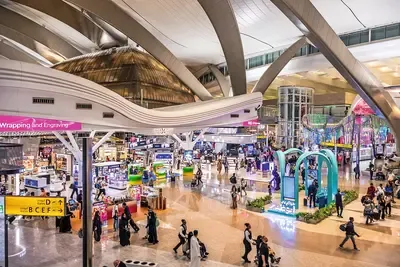
For decades, the Gulf has built its reputation on connectivity. From Dubai and Abu Dhabi to Doha and Riyadh, the region has positioned itself as one of the world’s most important transit and tourism corridors. In 2025 alone, Dubai International handled 95.2 million passengers, while Abu Dhabi Airports welcomed more than 33 million, underscoring the scale of the region’s aviation footprint.
But connectivity has always come with exposure. When regional tensions rise, the effects are often felt first in the skies. Flight routes shift, airspace access tightens, and costs begin to climb. Travellers, too, become more cautious — even when destinations themselves remain stable and operational. In a sector built on confidence and seamless movement, perception can be just as influential as disruption itself.
That is what makes resilience increasingly central to the Gulf’s travel story. While Middle Eastern carriers still posted 6.7% traffic growth in 2025, the region’s long-term strength will depend not only on demand, but on how quickly its aviation and tourism ecosystem can adapt, reassure and recover when disruption hits.
Planning for Uncertainty
Geopolitical tensions may not always close airspace, but they rarely leave travel operations untouched. Across the Middle East, even limited disruptions can trigger a cascade of adjustments — from rerouted flights and longer journey times to shifting passenger flows and operational costs.
From an airline perspective, risk assessment is now continuous and multi-layered. Carriers rely on a mix of global aviation guidance, regulatory advisories and their own internal intelligence to evaluate routes on a near-daily basis. As Alena Iakina, Founder of visarun.ai, explains, decision-making today is driven by live data and scenario planning rather than fixed schedules.
“Airlines take a layered approach, using real-time information from sources such as IATA's Airspace Risk Assessment Guidance, national aviation authorities, and geopolitical experts to evaluate route risks daily,” she says.

Alena Iakina, Founder of visarun.ai
“Managing these risks means planning networks flexibly, sometimes suspending flights as Air France-KLM did for Dubai and Riyadh in January 2026, rerouting through places like Turkey or Egypt, and keeping backup capacity to handle disruptions without breaking the network.”
That flexibility extends beyond simply avoiding high-risk zones. Airlines are increasingly building contingency into their network design — adjusting frequencies, holding reserve aircraft capacity and preparing alternative routings in advance. Regulatory guidance from bodies such as the FAA and EASA plays a key role, but final decisions often come down to individual airline risk assessments.
“Even when airspace is open, airlines run their own checks before confirming routes,” Iakina adds. “Different airlines might make different choices about the same route on the same day.”
On the ground, travel operators are adapting in parallel. For companies managing accommodation and customer experiences, disruptions often show up as last-minute itinerary changes, delayed arrivals or extended stays. The response has been a shift away from rigid planning towards more dynamic, responsive operations.
“Planning today is no longer fixed, it’s continuous,” says Shilpa Mahtani, Co-founder of bnbme holiday homes. “Airlines are constantly reassessing routes based on real-time updates, with safety as the priority. At bnbme, we feel the impact immediately through delays or last-minute changes, and that’s where being flexible and agile becomes key.”
Whether it is adjusting bookings, reallocating inventory or accommodating extended stays, the emphasis has moved towards responsiveness rather than prevention. “Across the company, the focus has shifted to responding quickly rather than trying to avoid disruption altogether,” Mahtani adds.
Confidence as Competitive Advantage
One of the UAE’s strongest advantages lies in how quickly it stabilises and signals normalcy. Even during periods of disruption, aviation and tourism systems are designed to recover at pace, reinforcing the message that the destination remains open, safe and fully functional. According to Iakina, that responsiveness plays a central role in sustaining trust.
“The UAE keeps traveller confidence by quickly bouncing back, restoring full capacity at DXB just days after closures, and communicating openly through dedicated crisis pages and influencer partnerships that emphasise ‘safety first’,” she says. That communication strategy is paired with structural advantages. Dubai’s geographic positioning — within an eight-hour flight of two-thirds of the world’s population continues to underpin its role as a global transit and tourism hub. At the same time, the country’s diversified economy helps insulate the travel sector from volatility, allowing it to maintain momentum even when external pressures rise.
“The scale of DXB itself sends a strong message,” Iakina adds. “Handling 94.6 million passengers in 2024 and aiming for 100 million by early 2027, its size allows it to absorb disruption without the kind of operational strain smaller hubs might face.”
In parallel, targeted incentives and flexible travel policies have become part of the response toolkit. From visa waivers to hotel credits during periods of disruption, the focus is increasingly on converting uncertainty into loyalty — giving travellers reasons to return, rather than pause their plans altogether. Regional collaboration also plays a role, with hubs such as Doha and Abu Dhabi leveraging codeshare partnerships to maintain connectivity even when traffic patterns shift.
On the ground, travel operators are seeing how that confidence translates into behaviour. While uncertainty may trigger short-term changes, it rarely leads to a sustained drop in demand. Instead, patterns tend to rebalance.
“What sets the UAE apart is consistency,” says Mahtani.
“Even during uncertainty, the country continues to operate seamlessly — from airports to hospitality standards and that builds long-term trust with travellers.”
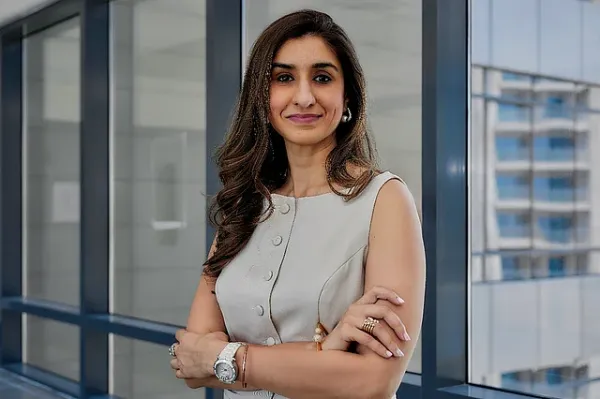
Shilpa Mahtani, Co-founder of bnbme holiday homes
From an operational perspective, that trust shows up in how bookings evolve rather than disappear. “Demand doesn’t vanish, it shifts,” Mahtani adds. “We’ve seen short-term cancellations balance out with last-minute bookings and extended stays. With Dubai welcoming close to 20 million international visitors recently, the confidence in the destination remains strong.”
Redesigning for Resilience
Rather than relying too heavily on a single corridor or hub, airlines are increasingly spreading operational exposure across multiple geographies. That means strengthening access to secondary hubs, building more flexible routing options and reducing dependence on any one airspace pathway.
“Geopolitical disruptions are pushing airlines to permanently diversify their routes,” says Iakina. “They’re boosting capacity at secondary hubs like Istanbul, Riyadh and airports in South Asia to rely less on the Gulf.”
Airline partnerships are also taking on greater strategic importance. Codeshares and alliance agreements, once driven largely by convenience and commercial reach, are now becoming operational safeguards. They allow airlines to preserve passenger flows, offer alternative routings and maintain connectivity when direct paths are disrupted.
“Partnerships are growing, too,” Iakina adds. “For example, Qatar Airways and Turkish Airlines expanded their codeshare network in November 2025, allowing automatic rerouting through Istanbul if Gulf routes close.”
At the same time, contingency planning itself has become more sophisticated. Carriers are investing in more flexible fleet deployment, scenario-based scheduling and digital forecasting tools that help anticipate demand shocks before they fully materialise. Increasingly, resilience is being engineered into the system rather than activated only during crisis.
“Contingency plans now include flexible fleets for quick rerouting and AI tools to forecast demand and reduce revenue losses,” says Iakina. “The industry is moving toward resilient networks that can handle big shocks without causing widespread failures.”
Those shifts are being felt well beyond airlines. Across the wider travel economy, businesses are adapting to a customer base that is also becoming more fluid. Booking patterns are changing, travel windows are shortening and demand is increasingly shaped by confidence, convenience and flexibility. “They’re now a core part of planning, not just a contingency,” says Mahtani. “Airlines are diversifying routes and partnerships, while across the travel ecosystem there’s a stronger focus on flexibility.”
For hospitality and accommodation operators, that means planning for volatility in a more permanent way. “For us at bnbme, this means planning for shifting demand patterns — shorter booking windows, more last-minute travel and changing source markets,” Mahtani adds. “Our focus is on dynamic pricing and operational agility to ensure we can adapt quickly and continue delivering strong returns for homeowners despite uncertainty.”
A Permanent Shift
From investing in alternative routes to deploying AI-driven risk assessment tools, Gulf carriers and hubs are building systems that can respond to sudden shifts with greater speed and precision. Collaboration with global regulatory bodies is also becoming more structured, helping standardise responses to emerging flashpoints.
“Yes, managing geopolitical risks is now a key skill,” says Iakina. “Gulf hubs are investing in alternative routes, AI risk tools, and working with regulators through ICAO frameworks to handle ‘flashpoint’ events as normal.”
The scale of the region’s aviation ecosystem makes that shift particularly urgent. With an estimated 12% to 13% of global airfreight moving through the Gulf, even short-term disruptions can have outsized ripple effects across supply chains and passenger travel alike. “The recent crisis showed how critical the region is to global connectivity,” Iakina adds, noting that this exposure is accelerating investment in multi-hub strategies and network diversification.
Looking ahead, the next phase of growth is likely to be more distributed and less dependent on a single model of connectivity. Secondary airports are expected to play a larger role, while airlines may increasingly introduce more direct long-haul routes that reduce reliance on transit hubs. At the same time, tourism strategies are beginning to diversify beyond aviation-led growth, with greater emphasis on segments such as MICE, wellness and long-stay travel.
“In the next 3 to 5 years, we can expect more secondary airports, more direct long-haul flights that skip transit hubs, and tourism strategies that focus on non-aviation areas,” Iakina says. “This will make the region stronger and more resilient.”
For operators on the ground, that evolution is already underway. The ability to remain consistent, responsive and reliable — even during periods of uncertainty is becoming a key differentiator for destinations like the UAE. “Yes, and in many ways it already has,” says Mahtani. “It’s pushing the industry to become more resilient, more flexible and more coordinated.”
“For destinations like the UAE, this is actually a strength,” Mahtani adds. “The ability to operate smoothly even during uncertainty is what builds trust and keeps travellers coming back.”
-
Bengal voter list row deepens as deletions cross 90 lakh mark

-
Bengal voter list row deepens as deletions cross 90 lakh mark

-
IPL 2026: KKR Earn First Point After Match Against PBKS Abandoned Due to Rain

-
Oil prices jump over 3% as Iran tensions escalate and US sets Hormuz deadline

-
Virat Kohli-Anushka Sharma Laud Aditya Dhar & Ranveer Singh For Dhurandhar 2; Director Reacts