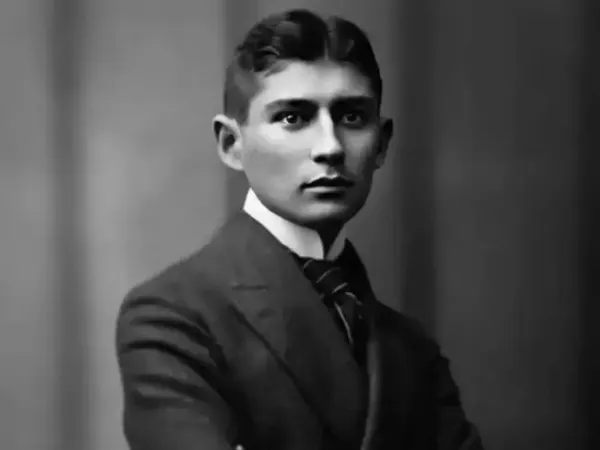
The Quote of the Day comes from one of the most widely read and discussed writers of the 20th century, Franz Kafka, whose works often explored isolation, fear, and the strange weight of existence. His words continue to feel relevant even today, long after his time. The quote reads: “Reality is too heavy for most people to carry. So they borrow illusions, soft dreams, sweet lies, and call it happiness.” It is simple at first glance, but when you sit with it for a while, it starts to feel a bit uncomfortable, like it is pointing at something people usually avoid talking about.
If you try to think about what Kafka is saying here, it feels like he is talking about how people deal with life when it becomes too much. Reality, as he puts it, is not always kind or easy. There are pressures, expectations, disappointments, and things that don’t go as planned. Not everyone can handle that weight directly. So instead, people create small escapes for themselves. These could be hopes that are not fully real, or stories they tell themselves to feel better. It is not always deliberate lying, sometimes it just becomes a habit of thinking in a certain way.
In another way, the quote also points to how happiness itself can sometimes be built on fragile ground. When people depend too much on illusions, even if they feel comforting in the moment, they may not last long. That is probably what Kafka is hinting at in his usual quiet but sharp way. It is not that dreaming or hoping is wrong, but when those dreams become a replacement for reality instead of something that helps you deal with it, things can get confusing. People might think they are happy, but that feeling may not be as solid as it seems.
Kafka’s writing has always dealt with this sense of unease. In works like The Trial and The Metamorphosis, his characters struggle with forces they don’t fully understand, often feeling trapped or disconnected. That same feeling, in a different form, can still be seen today. People might not be dealing with the same situations, but the emotional weight, that sense of not fully being in control, still exists.
Despite being known today as a major literary figure, Kafka did not see himself that way during his lifetime. He worked a regular job in insurance, dealing with long hours, and wrote mostly at night. This routine created a kind of double life for him. On one side, there was the structured world of work, and on the other, a more personal and intense inner world where his writing lived.
His close friend Max Brod played a crucial role in preserving his work. Kafka had actually asked for his unpublished manuscripts to be destroyed after his death, but Brod chose not to follow those instructions. Because of that decision, the world today has access to some of Kafka’s most important works.
The idea of illusion versus reality fits into this pattern. Kafka’s characters sometimes live in worlds that feel normal on the surface but are actually strange and unsettling underneath. That mix of the ordinary and the bizarre has even led to the term “Kafkaesque,” used to describe situations that are both confusing and disturbing in a quiet way.
This quote feels like a simpler version of those larger themes. Instead of showing a complex story, it puts the idea into a single line. People avoid harsh truths, replace them with softer versions, and then settle into that space, calling it happiness.
His appeal is also global. Readers from different cultures and backgrounds find something familiar in his work. That is probably because the emotions he writes about—fear, confusion, loneliness, the need for meaning—are not limited to any one place or time.
If you try to think about what Kafka is saying here, it feels like he is talking about how people deal with life when it becomes too much. Reality, as he puts it, is not always kind or easy. There are pressures, expectations, disappointments, and things that don’t go as planned. Not everyone can handle that weight directly. So instead, people create small escapes for themselves. These could be hopes that are not fully real, or stories they tell themselves to feel better. It is not always deliberate lying, sometimes it just becomes a habit of thinking in a certain way.
In another way, the quote also points to how happiness itself can sometimes be built on fragile ground. When people depend too much on illusions, even if they feel comforting in the moment, they may not last long. That is probably what Kafka is hinting at in his usual quiet but sharp way. It is not that dreaming or hoping is wrong, but when those dreams become a replacement for reality instead of something that helps you deal with it, things can get confusing. People might think they are happy, but that feeling may not be as solid as it seems.
Kafka’s writing has always dealt with this sense of unease. In works like The Trial and The Metamorphosis, his characters struggle with forces they don’t fully understand, often feeling trapped or disconnected. That same feeling, in a different form, can still be seen today. People might not be dealing with the same situations, but the emotional weight, that sense of not fully being in control, still exists.
Quote of the Day: A Look at Kafka’s Life and Thought
To understand this Quote of the Day better, it helps to know a bit about Kafka himself. Born in 1883 in Prague, he grew up in a German-speaking Jewish family. His relationship with his father, Hermann Kafka, was difficult and left a strong mark on him. He often felt overshadowed and judged, something that later appeared in his writing in the form of powerful and often intimidating authority figures.Despite being known today as a major literary figure, Kafka did not see himself that way during his lifetime. He worked a regular job in insurance, dealing with long hours, and wrote mostly at night. This routine created a kind of double life for him. On one side, there was the structured world of work, and on the other, a more personal and intense inner world where his writing lived.
His close friend Max Brod played a crucial role in preserving his work. Kafka had actually asked for his unpublished manuscripts to be destroyed after his death, but Brod chose not to follow those instructions. Because of that decision, the world today has access to some of Kafka’s most important works.
Quote of the Day: Themes That Echo in His Quote
The Quote of the Day reflects many of the ideas Kafka returned to again and again. His stories often show characters trying to find meaning in confusing situations, sometimes without success. There is a constant search for understanding, but also a sense that answers may not come easily.The idea of illusion versus reality fits into this pattern. Kafka’s characters sometimes live in worlds that feel normal on the surface but are actually strange and unsettling underneath. That mix of the ordinary and the bizarre has even led to the term “Kafkaesque,” used to describe situations that are both confusing and disturbing in a quiet way.
This quote feels like a simpler version of those larger themes. Instead of showing a complex story, it puts the idea into a single line. People avoid harsh truths, replace them with softer versions, and then settle into that space, calling it happiness.
Kafka's Lasting Impact Across Generations
Even today, Kafka’s influence can be seen in literature and beyond. Writers across the world have drawn inspiration from his work, including Gabriel Garcia Marquez, who once spoke about how reading Kafka changed the way he thought about storytelling. Kafka showed that even the strangest ideas could be written in a straightforward and believable way.His appeal is also global. Readers from different cultures and backgrounds find something familiar in his work. That is probably because the emotions he writes about—fear, confusion, loneliness, the need for meaning—are not limited to any one place or time.