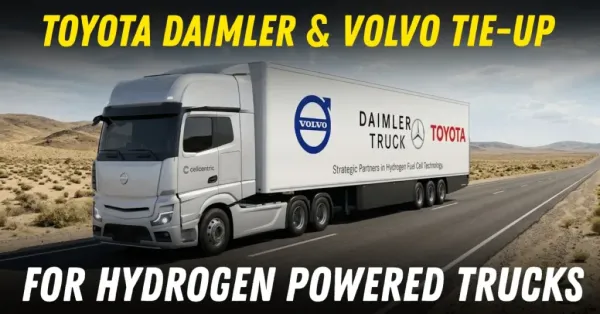
Toyota Motor Corporation has signed a non-binding agreement to become an equal partner in Cellcentric, the hydrogen fuel cell joint venture currently owned equally by Volvo Group and Daimler Truck AG. If the deal closes as planned, Cellcentric will become a three-way venture with equal shareholding across all three companies. Toyota would fund its entry through a capital investment in the company. The partnership covers the development, production, and commercial sale of hydrogen fuel cell systems designed specifically for heavy-duty vehicles and applications with comparable energy demands.
Cellcentric was originally formed in March 2021 when Daimler Truck and Volvo Group decided to combine their fuel cell development programs. The company currently has around 560 employees, approximately 700 hydrogen fuel cell patents, and is building what is expected to be one of Europe’s largest series production facilities for fuel cell systems. Toyota’s entry brings a third dimension to this already substantial foundation.
Toyota has been developing hydrogen fuel cell technology since the early 1990s and commercially launched the Mirai fuel cell passenger car in 2014. The second generation Mirai, launched in 2020, uses a system that generates up to 182bhp from its fuel cell stack while producing only water as a byproduct. More directly relevant to this partnership, Toyota has been developing heavy duty fuel cell trucks, including a 25-tonne hydrogen powered semi in collaboration with Hino Motors in Japan and has run commercial pilots in California with Kenworth.
The specific area of collaboration between Toyota and Cellcentric will focus on fuel cell unit cells, the core component at the heart of every fuel cell system. Toyota and Cellcentric will jointly manage the development and production of these unit cells, along with their directly linked architecture and control systems. This is the most technically sensitive part of fuel cell manufacturing, and combining Toyota’s cell production expertise with Cellcentric’s heavy duty vehicle knowledge is the central engineering rationale for the deal.
Hydrogen fuel cell technology makes a more straightforward case for long haul commercial vehicles than for passenger cars. A fuel cell truck can be refuelled in minutes and carries a range exceeding 1,000km per fill on some prototypes, closely matching the operational patterns of diesel long haul trucks. Battery-electric trucks, by contrast, face significant challenges with the weight of large battery packs and long charging times that disrupt commercial transport schedules.
Daimler Truck and Volvo identified this gap when they formed Cellcentric. Battery electric works well for shorter urban and regional routes. Hydrogen fuel cell becomes the preferred option when loads are heavy, distances are long, and turnaround time between trips matters commercially.
The three partners have also committed to actively supporting the build-out of hydrogen supply infrastructure and refuelling networks. Cellcentric will operate as an independent company and continue to sell fuel cell systems to customers outside the three partner companies, preserving its commercial scope beyond just serving its own shareholders.
-
Gardeners urged to stop making 6 big mistakes or 'birds will go elsewhere'

-
Rory McIlroy could bank insane Masters prize money as Scottie Scheffler surges

-
'I was asked to do Celebrity Traitors but turned down huge offer for one reason'

-
Tyson Fury's daughter Venezuela, 16, attends fight with fiance ahead of wedding

-
Quote of the day by Jay Shetty: “There is toxicity everywhere around us. In the environment, in the political atmosphere, but the origin is in people's hearts. Unless we…”