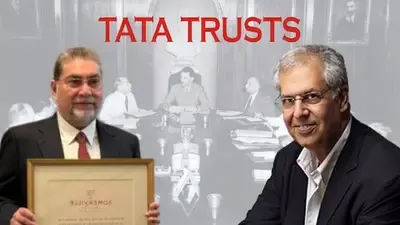
The Tata Charitable Trust dispute has taken a significant legal turn as Mehli Mistry approached the Charity Commissioner, questioning both the composition and functioning of a trust linked to the Tata Group. At the center of the controversy is the non-renewal of Mistry’s tenure as a trustee of the Bai Hirabai Jamshedji Tata Navsari Charitable Institution, along with allegations that certain board members do not meet the eligibility criteria laid out in the original trust deed. The dispute has raised broader concerns about governance, legal validity of decisions, and adherence to long-standing institutional norms.
Eligibility Dispute and Questions Over Trustee Appointments
Mehli Mistry, who served as a trustee for a three-year term beginning October 29, 2022, has contested the board’s decision not to renew his tenure in October 2025. His petition argues that the very decision to remove him is flawed, as some of the trustees involved in the voting process allegedly do not meet the mandatory eligibility conditions specified in the trust’s founding document.
The dispute hinges on the interpretation and enforcement of the original trust deed dated December 7, 1923. According to Mistry’s petition, the deed clearly mandates that all trustees must belong to the Parsi Zoroastrian community and must be permanent residents within the Bombay Presidency–Navsari jurisdiction. These conditions, he argues, are essential to preserving the trust’s original purpose and community-focused governance structure.
Mistry has specifically challenged the appointments of Venu Srinivasan and Vijay Singh, claiming that they do not fulfill these criteria. He alleges that neither of them belongs to the Parsi Zoroastrian faith and that they are not permanent residents of the specified jurisdiction. If these claims hold legal weight, it could render their appointments invalid and call into question any decisions in which they participated.
The voting pattern related to Mistry’s tenure has further complicated the matter. Trustees including Noel Tata, Venu Srinivasan, and Vijay Singh opposed the renewal, while Jehangir C. Jehangir and Darius Khambata supported it. One trustee, Jimmy N. Tata, reportedly did not respond. Mistry’s argument is that if the votes of allegedly ineligible trustees are excluded, the resolution denying his extension would no longer stand, potentially altering the outcome entirely.
Governance Concerns and Broader Legal Implications
Beyond the question of eligibility, the Tata Charitable Trust dispute has brought governance practices under scrutiny. Mistry has alleged that the trust has not held any formal meetings over the past two years, raising serious concerns about transparency and accountability. Such claims, if substantiated, could indicate a breakdown in procedural compliance and oversight within the institution.
In his petition, Mistry has urged the Charity Commissioner to conduct a thorough examination of the trust’s records, including its minute books, and to require affidavits from all trustees confirming their eligibility. This demand underscores the seriousness of the allegations and the potential implications for the trust’s legal standing.
A particularly critical issue raised in the petition relates to the structural integrity of the trust’s board. The trust deed reportedly requires a minimum of five trustees for proper functioning. If the appointments of certain members are declared invalid, the board may fall below this threshold, creating a governance vacuum. In such a scenario, Mistry has suggested the appointment of an administrator to manage the trust’s affairs until a valid board is constituted.
Importantly, Mistry has clarified that his petition is not solely aimed at securing his reinstatement. Instead, he has framed his actions as an effort to protect the original intent of the trust and safeguard the interests of the Parsi community it was established to serve. This positions the dispute not just as a personal grievance but as a larger issue concerning institutional integrity and community representation.
The Bai Hirabai Jamshedji Tata Navsari Charitable Institution is one of the older charitable entities associated with the Tata legacy, created specifically to support the welfare and religious activities of the Parsi community in Navsari, Gujarat. Its strict eligibility criteria reflect its foundational purpose, making adherence to these rules central to its identity.
As the matter now rests with the Charity Commissioner, the outcome of this dispute could have far-reaching implications, not only for the governance of this particular trust but also for how legacy charitable institutions interpret and enforce their founding principles in a modern context.
The post Tata Charitable Trust Dispute Deepens as Mehli Mistry Challenges Trustee Appointments and Raises Governance Concerns appeared first on CliQ INDIA.
-
Samay Raina Releases ‘Still Alive’ Trailer, Marks Comeback A Year After Controversy-Watch

-
'Here For Sanjeev Goenka': Bhumi Pednekar Supports LSG While Ishan Kishan's Girlfriend Aditi Hundia Marks Presence At Hyderabad Stadium

-
SRH VS LSG: Heinrich Klaasen, Nitish Reddy Slam Fifties In Century Stand After Top Order Collapse

-
'₹20 Water Bottle For ₹100?' Cricket Fans Condemn High Stadium Prices For Essentials At Lucknow's Ekana Stadium During IPL 2026 Match

-
MP News: Raisen’s Real-Life Kabir Khan Invests ₹10 Lakh, Leads Underprivileged DRFC Girls To Historic IWL Entry