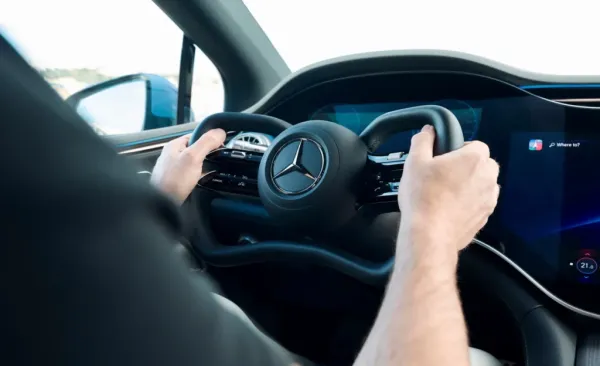
Mercedes-Benz is about to change something fundamental about how its cars feel to drive. The 2026 EQS sedan will be the first model from the brand to introduce a steer-by-wire system, paired with a yoke-style steering wheel. It’s a big shift, and one that signals where Mercedes believes luxury driving is headed.
Instead of a traditional steering setup, the new system replaces the mechanical connection between the steering wheel and the front wheels with electronics. In simple terms, your steering input is translated digitally rather than physically. It’s a move that’s already been explored by a few automakers, and now Mercedes is stepping in with its own take.
Steering, But Without The Steering Column
For decades, steering has relied on mechanical components. Turn the wheel, and a physical link moves the front wheels. Mercedes’ new setup removes that connection entirely.
The result, according to the company, is quicker response, improved maneuverability, and reduced steering effort. One of the biggest benefits is a variable steering ratio. At low speeds, such as parking, the steering becomes quicker and requires less movement. At higher speeds, it slows down to offer more stability and control.
Mercedes also says the system can filter out road imperfections, reducing vibrations felt through the steering wheel. That could make long drives more comfortable, though some enthusiasts might miss the traditional road feel.
A Yoke Steering Wheel Enters The Scene
Along with steer-by-wire, Mercedes is introducing a yoke-style steering wheel. Instead of the classic round shape, the wheel features a flat top and bottom, giving it a futuristic appearance.
Mercedes says the yoke isn’t just about looks. Because the steer-by-wire system reduces the need for large steering inputs, the yoke becomes practical. It also frees up space in the cabin, offering more legroom and a more open feel.
Another advantage is improved visibility. With less steering wheel blocking the view, drivers get a clearer look at the digital instrument display. Mercedes even pointed out that this becomes particularly useful when using Level 3 automated driving, where drivers may shift their attention to infotainment screens while the car handles certain driving tasks.
Built With Backup Systems For Safety
Steer-by-wire naturally raises questions about safety. Mercedes says it has addressed this with a fully redundant system. That means duplicate sensors, actuators, and even a backup power supply.
If one system fails, another immediately takes over. Mercedes says the vehicle remains controllable even in the event of a failure, offering peace of mind for drivers.
The automaker also claims the system has undergone extensive testing, with more than one million miles logged across test environments and real-world driving conditions.
A Natural Fit For Luxury Sedans
Mercedes says steer-by-wire works especially well with rear-wheel steering systems, which are already available in models like the EQS and S-Class. Together, these technologies could make large luxury sedans feel more agile and easier to maneuver.
The refreshed 2026 EQS is expected to debut the new steering system first. If it proves successful, Mercedes will likely expand the technology to other models in the future.
Whether drivers will embrace the yoke steering wheel is still up for debate. But one thing is certain: Mercedes is pushing toward a future where steering feels less mechanical and more digital.
-
SRH vs LSG: Hyderabad flies under the storm of Mohammed Shami, Lucknow opens its account with its first win.

-
Cholesterol is not a disease, a sign of bad lifestyle; Know what Ayurveda says’ – News Himachali News Himachali

-
What to eat on an empty stomach to keep the digestive system healthy? Learn from experts

-
Strait of Hormuz closed for enemies, free for others: Iran envoy

-
Vijay Sethupathi unveils first look of psychological thriller ‘Don’t Sleep’