'There is no Planet B,' goes the bumper sticker. But the absence of Planet B at our perusal is a kind of bullshit excuse for how we've trashed Planet A. And I'm not even a tree-hugger.
So, when I followed - with my eyes on the Nasa website, not in an Ola - Artemis II on its 10-day mission carrying 4 astronauts on a lunar flyby mission on what was still April Fool's Day, I was keenly aware that humans were going to space beyond the immediate neighbourhood of the International Space Station, after more than 53 years. I have aged since Apollo 17, the last crewed mission, landed on the Moon, and never mind interplanetary travel, we don't even have flying cars yet.
Artemis 2, unlike Apollo 17, isn't primarily about a space race, even as China's Lanyue mission is slated to land taikonauts on the lunar surface by 2030. (India's crewed space mission is currently unscheduled.) It's about getting serious about finding Planet B - for resources, and, in the long run, to 'settle abroad'. While best of luck with that, there is another way we could conceivably lengthen our resources, and better our stay on Planet A.
While Lemuel Gulliver in Jonathan Swift's 1726 satirical novel, 'Travels into Several Remote Nations of the World In Four Parts', later simply known as 'Gulliver's Travels', found both Lilliput, where people were less than 6-in tall, and Brobdingnag, whose citizens averaged 70-odd ft, to be prosperous and without any resource crunch, it was the 1720s. Pre-Industrial Revolution pollution was minimal, and the population must have been even less than today's Europe with its low birth rate, and numbers propped up by immigration. So, the vast difference in consumption and output between Gulliver's micro and mega hosts didn't really matter.
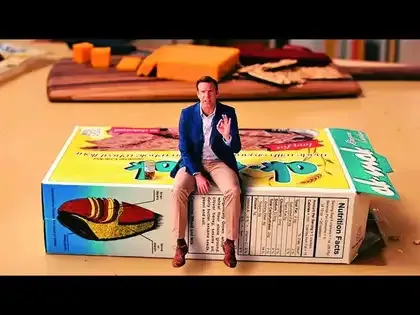
But being Lilliputians - significantly small humans - in today's groaning, belching, creaking world would significantly reduce intake of resources: less energy, less food, less space. With Earth remaining the same size, there would be more to go around.
Liu Cixin, China's grandmaster of speculative fiction and author of the 'Remembrance of Earth's Past' trilogy that starts with the 2008 novel, 'The Three-Body Problem', has mused how shrinking humans would shrink consumption. A 15-cm adult would need a rice grain for dinner, a thimble for a swimming pool, a matchbox-sized condo, and live grandly - once it 'downsizes' cats and mosquitoes, and tackles things like hail. The ecological footprint would be so small that even a Thumbelina-ed Greta Thunberg should be fine with Texan oil companies.
Of course, the transition would be messy. The economy, built on our current normal 'XXL' proportions, would wobble for a while. Agriculture would pivot to micro-crops, one wheat stalk feeding a district, even as farmers of normal-sized crops will be left with crashing prices and vast unsold stocks.
But markets, like cockroaches, survive everything. They would recalibrate. Soon an $8 diamond ring would make a relative-sized Kohinoor for the richest of brides. A big fat Indian wedding would be suitably served by what normal-sized us would deem a nano-spread. SRK would still need heels to stand up to Deepika.
The environmental dividend is obvious. Carbon emissions would plummet. Energy grids would hum at a fraction of their current load. Financial burden of housing, healthcare, and transport would shrink.
Yes, distances would widen dramatically for walks and rides in vehicles designed to the new super-truncated size, micro-Cybertrucks included. Aviation speeds in miniature planes should travel in more or less the same time with less mass, but a bit more relative distance. One will just have to ensure that destinations are closer than they are now. (Reaching city from airport in Bangalore feels like weeks even without miniaturisation anyway.)
But the cost-benefit analysis is irresistible: smaller bodies, smaller appetites, smaller bills. So, while the likes of Artemis II can give 'Space, the final frontier... to boldly go where no (wo)man has gone before,' a second shot, it's not completely looney to picture humans, as Liu says, 'technologically intervene in their evolution to shrink themselves steadily over time' and 'expand in reverse'.
Why else do you think I've started eating, travelling, staying awake less?
So, when I followed - with my eyes on the Nasa website, not in an Ola - Artemis II on its 10-day mission carrying 4 astronauts on a lunar flyby mission on what was still April Fool's Day, I was keenly aware that humans were going to space beyond the immediate neighbourhood of the International Space Station, after more than 53 years. I have aged since Apollo 17, the last crewed mission, landed on the Moon, and never mind interplanetary travel, we don't even have flying cars yet.
Artemis 2, unlike Apollo 17, isn't primarily about a space race, even as China's Lanyue mission is slated to land taikonauts on the lunar surface by 2030. (India's crewed space mission is currently unscheduled.) It's about getting serious about finding Planet B - for resources, and, in the long run, to 'settle abroad'. While best of luck with that, there is another way we could conceivably lengthen our resources, and better our stay on Planet A.
While Lemuel Gulliver in Jonathan Swift's 1726 satirical novel, 'Travels into Several Remote Nations of the World In Four Parts', later simply known as 'Gulliver's Travels', found both Lilliput, where people were less than 6-in tall, and Brobdingnag, whose citizens averaged 70-odd ft, to be prosperous and without any resource crunch, it was the 1720s. Pre-Industrial Revolution pollution was minimal, and the population must have been even less than today's Europe with its low birth rate, and numbers propped up by immigration. So, the vast difference in consumption and output between Gulliver's micro and mega hosts didn't really matter.
But being Lilliputians - significantly small humans - in today's groaning, belching, creaking world would significantly reduce intake of resources: less energy, less food, less space. With Earth remaining the same size, there would be more to go around.
Liu Cixin, China's grandmaster of speculative fiction and author of the 'Remembrance of Earth's Past' trilogy that starts with the 2008 novel, 'The Three-Body Problem', has mused how shrinking humans would shrink consumption. A 15-cm adult would need a rice grain for dinner, a thimble for a swimming pool, a matchbox-sized condo, and live grandly - once it 'downsizes' cats and mosquitoes, and tackles things like hail. The ecological footprint would be so small that even a Thumbelina-ed Greta Thunberg should be fine with Texan oil companies.
Of course, the transition would be messy. The economy, built on our current normal 'XXL' proportions, would wobble for a while. Agriculture would pivot to micro-crops, one wheat stalk feeding a district, even as farmers of normal-sized crops will be left with crashing prices and vast unsold stocks.
But markets, like cockroaches, survive everything. They would recalibrate. Soon an $8 diamond ring would make a relative-sized Kohinoor for the richest of brides. A big fat Indian wedding would be suitably served by what normal-sized us would deem a nano-spread. SRK would still need heels to stand up to Deepika.
The environmental dividend is obvious. Carbon emissions would plummet. Energy grids would hum at a fraction of their current load. Financial burden of housing, healthcare, and transport would shrink.
Yes, distances would widen dramatically for walks and rides in vehicles designed to the new super-truncated size, micro-Cybertrucks included. Aviation speeds in miniature planes should travel in more or less the same time with less mass, but a bit more relative distance. One will just have to ensure that destinations are closer than they are now. (Reaching city from airport in Bangalore feels like weeks even without miniaturisation anyway.)
But the cost-benefit analysis is irresistible: smaller bodies, smaller appetites, smaller bills. So, while the likes of Artemis II can give 'Space, the final frontier... to boldly go where no (wo)man has gone before,' a second shot, it's not completely looney to picture humans, as Liu says, 'technologically intervene in their evolution to shrink themselves steadily over time' and 'expand in reverse'.
Why else do you think I've started eating, travelling, staying awake less?




Indrajit Hazra
Editor, Views