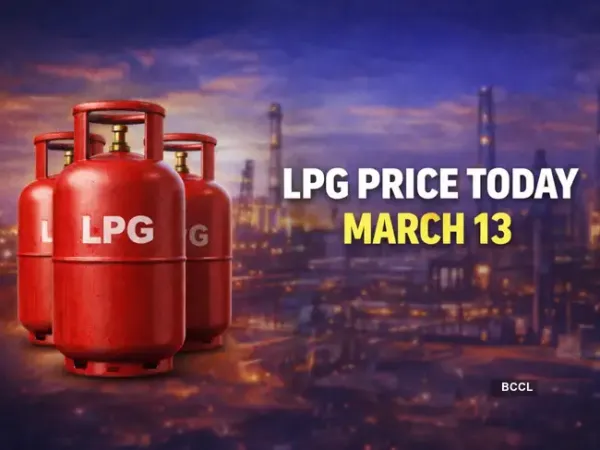
Domestic LPG cylinder prices in India have recorded a notable increase in March 2026, with the 14.2 kg cylinder price in New Delhi rising to Rs 913.00. The latest revision marks an increase from last month’s price of Rs 853.00, reflecting a rise of Rs 60.
Read more: Petrol, Diesel Price Today (March 13)
The increase comes amid heightened global energy uncertainty and logistical challenges in international shipping routes. However, government officials have assured that there is no shortage of LPG supply in the country and that adequate arrangements are in place to meet consumer demand.
Read more: PM Modi warns LPG black marketers, unveils energy strategy
What Is the Current LPG Price in Major Indian Cities?
Domestic LPG cylinder prices vary slightly across cities due to transportation costs and local taxes. The latest prices for a 14.2 kg LPG cylinder in major metro cities are as follows:
Among these cities, Kolkata continues to have one of the highest LPG prices, while Mumbai and Delhi remain relatively cheaper.
What Are the LPG Prices in Other Major Indian Cities?
Several other cities across India also reported stable LPG prices in the latest update. The current rates include:
Patna currently records the highest LPG cylinder price among the listed cities.
Why Did LPG Prices Increase in March 2026?
The price revision in March marks the most significant monthly increase over the past year. Between April 2025 and March 2026, LPG prices have increased by Rs 60 overall.
While domestic LPG prices are influenced by global energy markets, they are also shaped by government policy, subsidy structures and transportation costs. Recent geopolitical tensions and changes in global crude oil logistics have also affected energy supply chains.
Is There Any LPG Shortage in India?
Government officials have clarified that there is no LPG shortage in the country. According to Petroleum and Natural Gas Ministry Joint Secretary (Marketing and Oil Refining) Sujata Sharma, there has been no “dry-out” situation reported anywhere in India.
Officials said that LPG bookings have increased recently as consumers rushed to secure supplies due to fears of possible disruptions. However, authorities described the surge in bookings as panic-driven rather than a result of any actual supply shortage.
How Is the Strait of Hormuz Situation Affecting Energy Supplies?
Global energy markets have been watching developments around the Strait of Hormuz, a crucial route for global oil shipments. The waterway is currently closed for commercial shipping, raising concerns over global energy logistics.
Despite the disruption, Indian authorities said the country has successfully diversified its supply routes. Around 70 per cent of crude oil imports are now arriving through alternative routes, compared with about 55 per cent before the geopolitical tensions escalated.
How Is India Managing Its Crude Oil Supply?
India currently consumes roughly 55 lakh barrels of crude oil per day. Officials say the country has already secured sufficient supplies beyond the volumes that would typically arrive through the Strait of Hormuz during this period.
India now sources crude oil from around 40 countries, a significant increase from 27 supplier nations in 2006–07. This diversification strategy has strengthened the country’s energy security and reduced dependence on any single supply corridor.
Are Refineries Operating Normally in India?
According to government officials, refineries across India are operating at high capacity levels, with some facilities even exceeding 100 per cent utilisation. This has helped maintain steady supplies of petroleum products and LPG across the country.
The government has also prioritised the supply of commercial LPG to critical sectors such as hospitals and educational institutions to ensure uninterrupted operations.
Why Has the Government Suggested Alternative Fuels?
As a precautionary measure, the Environment Ministry has advised the temporary use of alternative fuels such as biomass, kerosene and coal for about a month.
The advisory aims to reduce pressure on LPG demand and ensure adequate energy availability during the period of global supply uncertainty.
Inputs from agencies
Read more: Petrol, Diesel Price Today (March 13)
The increase comes amid heightened global energy uncertainty and logistical challenges in international shipping routes. However, government officials have assured that there is no shortage of LPG supply in the country and that adequate arrangements are in place to meet consumer demand.
Read more: PM Modi warns LPG black marketers, unveils energy strategy
What Is the Current LPG Price in Major Indian Cities?
Domestic LPG cylinder prices vary slightly across cities due to transportation costs and local taxes. The latest prices for a 14.2 kg LPG cylinder in major metro cities are as follows:| City | LPG Price (Rs per cylinder) |
| New Delhi | Rs 913.00 |
| Mumbai | Rs 912.50 |
| Kolkata | Rs 939.00 |
| Chennai | Rs 928.50 |
Among these cities, Kolkata continues to have one of the highest LPG prices, while Mumbai and Delhi remain relatively cheaper.
What Are the LPG Prices in Other Major Indian Cities?
Several other cities across India also reported stable LPG prices in the latest update. The current rates include:| City | LPG Price (Rs/CYL) | Change |
| Bengaluru | Rs 915.50 | 0.00 |
| Bhubaneshwar | Rs 939.00 | 0.00 |
| Chandigarh | Rs 862.50 | 0.00 |
| Chennai | Rs 928.50 | 0.00 |
| Gurgaon | Rs 921.50 | 0.00 |
| Hyderabad | Rs 965.00 | 0.00 |
| Jaipur | Rs 916.50 | 0.00 |
| Kolkata | Rs 939.00 | 0.00 |
| Lucknow | Rs 950.50 | 0.00 |
| Mumbai | Rs 912.50 | 0.00 |
| New Delhi | Rs 913.00 | 0.00 |
| Noida | Rs 910.50 | 0.00 |
| Patna | Rs 1002.50 | 0.00 |
| Trivandrum | Rs 922.00 | 0.00 |
Patna currently records the highest LPG cylinder price among the listed cities.
Why Did LPG Prices Increase in March 2026?
The price revision in March marks the most significant monthly increase over the past year. Between April 2025 and March 2026, LPG prices have increased by Rs 60 overall.While domestic LPG prices are influenced by global energy markets, they are also shaped by government policy, subsidy structures and transportation costs. Recent geopolitical tensions and changes in global crude oil logistics have also affected energy supply chains.
Is There Any LPG Shortage in India?
Government officials have clarified that there is no LPG shortage in the country. According to Petroleum and Natural Gas Ministry Joint Secretary (Marketing and Oil Refining) Sujata Sharma, there has been no “dry-out” situation reported anywhere in India.Officials said that LPG bookings have increased recently as consumers rushed to secure supplies due to fears of possible disruptions. However, authorities described the surge in bookings as panic-driven rather than a result of any actual supply shortage.
How Is the Strait of Hormuz Situation Affecting Energy Supplies?
Global energy markets have been watching developments around the Strait of Hormuz, a crucial route for global oil shipments. The waterway is currently closed for commercial shipping, raising concerns over global energy logistics.Despite the disruption, Indian authorities said the country has successfully diversified its supply routes. Around 70 per cent of crude oil imports are now arriving through alternative routes, compared with about 55 per cent before the geopolitical tensions escalated.
How Is India Managing Its Crude Oil Supply?
India currently consumes roughly 55 lakh barrels of crude oil per day. Officials say the country has already secured sufficient supplies beyond the volumes that would typically arrive through the Strait of Hormuz during this period.India now sources crude oil from around 40 countries, a significant increase from 27 supplier nations in 2006–07. This diversification strategy has strengthened the country’s energy security and reduced dependence on any single supply corridor.
Are Refineries Operating Normally in India?
According to government officials, refineries across India are operating at high capacity levels, with some facilities even exceeding 100 per cent utilisation. This has helped maintain steady supplies of petroleum products and LPG across the country.The government has also prioritised the supply of commercial LPG to critical sectors such as hospitals and educational institutions to ensure uninterrupted operations.
Why Has the Government Suggested Alternative Fuels?
As a precautionary measure, the Environment Ministry has advised the temporary use of alternative fuels such as biomass, kerosene and coal for about a month.The advisory aims to reduce pressure on LPG demand and ensure adequate energy availability during the period of global supply uncertainty.
Inputs from agencies