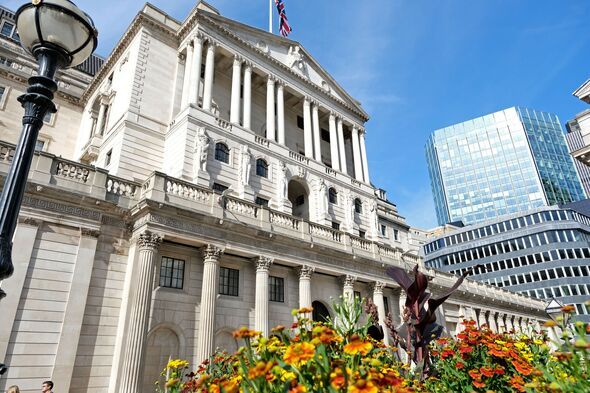
Fears over a recession could see the Bank of England cut interest rates five or six times this year, according to one of its own experts.
Alan Taylor, an external member of the Bank's Monetary Policy Committee (MPC), which sets the base rate, said a series of radical cuts could be on the agenda to avoid a sharp reverse in the economy.
City experts suggest the first rate cut could come in February, while they have been factoring in a further two or four cuts before Christmas.
But in a speech, Prof Taylor warned of an increasing risk that the weakening economy would need a "more accelerated pace of rate cuts" that would lead the BoE's benchmark rate to fall by 1.25 or 1.5 percentage points in the next 12 months. That would bring it down from 4.75 percent to as low as 3.25 percent.
Any such reduction would be good news for the 700,000 homebuyers who are due to remortgage this year and first time buyers trying to get a food on the property ladder.
Prof Taylor said: "The most recent data and forward-looking activity indicators present an increasingly gloomy outlook for 2025.
"We are in the last half-mile on inflation, but with the economy weakening, it's time to get interest rates back toward normal to sustain a soft landing."
A soft landing in central banking is a process where inflation is brought down from high levels without causing a recession.
Prof Taylor's downbeat assessment came before news that GDP growth in November was below expectations at just 0.1 percent.
Looking ahead, a raft of business organisations have warned that changes in the Budget, increasing the living wage and raising National Insurance, together with improvements to workers' rights will put up their costs, raise prices, reduce investment and recruitment. If these prove to be accurate, that would risk plunging the economy into recession.
Prof Taylor said concerns raised over the past 12 months about rising inflation are no longer the dominant issue. These have been replaced by concerns of a recession.
He warned that if the current situation worsened it could require faster, deeper cuts in interest rates than the MPC has been envisaging, he said, calling on fellow policymakers to "watch closely for signs of ebbing confidence".
Most expansions, said Taylor, who joined the MPC last year, were a "gradual climb up the stairs; but recessions can take hold quickly, sentiment can chill and the descent is more like taking the elevator shaft."
Catalysts for this adverse scenario could include new trade wars, he said, but the biggest domestic concern was of a new cash flow squeeze that was "already being felt by both businesses and households on various fronts".
He warned: "If some sudden essential costs rise, like taxes or debt service, then something else has to give.
"GDP growth appears to have ground to a halt in the second half of 2024, and with . . . business expectations veering to the pessimistic, in my view the risks are now more skewed to the downside."
Taylor joined fellow external MPC member Swati Dhingra and BoE deputy governor Dave Ramsden in voting for an immediate quarter-point rate reduction at the December meeting.
A majority of the nine-member committee voted for interest rates to be held at 4.75 per cent, with BoE governor Andrew Bailey saying "a gradual approach to future interest rate cuts remains right".
-
Owaisi Flags ‘Serious Errors’ In Telangana SIR, Seeks 4 More Weeks For Verification
-
Florentino Perez tracking France star as Bayern Munich leave room for possible future exit: Report

-
India’s Homegrown Cheesemakers Are Taking Artisanal Cheese Global

-
Cricket Australia Approves BBL Privatisation, Puts Melbourne Renegades Up For 100% Private Sale From 2027-28 Season

-
IRCTC Reveals 28% Of Online Railway Ticket Bookings Come Through Paytm, MakeMyTrip, ixigo And Other Third-Party Platforms