State Bank of India (SBI) Chairman Dinesh Khara has expressed confidence in the bank’s position despite growing concerns about a slowdown in deposit growth. Khara's comments come amid increasing apprehensions from the Reserve Bank of India (RBI) and the government regarding the stagnation in deposit growth. Recently, loan growth has slowed to 13.8%, while deposit growth has decreased to 10.3%, drawing significant attention to the issue.
The RBI is worried about the shifting public interest towards mutual funds and stock markets, which raises questions about the future of banks. RBI Governor Shaktikanta Das has repeatedly warned about the implications, and the Finance Minister has urged public sector banks to develop new strategies to attract more deposits.
Khara addressed these concerns by highlighting SBI's strong position to support its loan book growth. He emphasized that as long as the bank can maintain this capability, he does not foresee any challenges. SBI is managing its resources effectively by reducing its investments in government securities, which currently exceed ₹16 trillion, to ensure sufficient funds for lending.
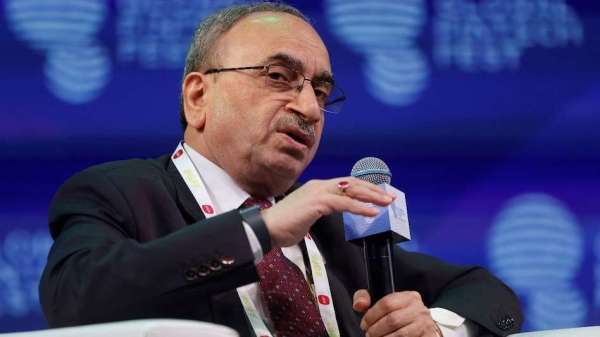
In the first quarter of the current financial year, SBI reported an 8.18% year-on-year increase in deposits, rising from ₹45.31 trillion to ₹49.02 trillion. However, there was a minor sequential decline of 0.29%. As Khara prepares to step down on August 28 after nearly four years at the helm, he reaffirmed the bank’s ability to sustain growth through strategic resource management. SBI’s latest report challenges the notion that deposit growth in the banking sector is slowing, calling it a statistical myth.
The Reality of GrowthWhile it is true that loan growth has recently outpaced deposit growth, the report argues that a detailed analysis presents a different picture. In the financial year 2023, all scheduled commercial banks (ASCBs) recorded the highest absolute growth in both deposits and loans since 1951-52. Deposits increased by ₹15.7 trillion, and loans grew by ₹17.8 trillion, resulting in an incremental credit-deposit (CD) ratio of 113%. This momentum continued into the financial year 2024, with deposits rising by ₹24.3 trillion and loans by ₹27.5 trillion.
-
Transparent Phone Cover: Don't throw away the yellowed phone cover, use these simple tips; It will be shiny in a few minutes

-
Pixel 11 Pro vs iPhone 17 Pro: Specs, Camera, Battery, Price And Key Differences

-
WhatsApp's new Password feature, now your secret chats will be more secure

-
Boltt ready to dominate the market! The first smartphone launched in the Indian market, comes with powerful features at a budget-friendly price

-
Why Is PLAB Stock Rising Today?