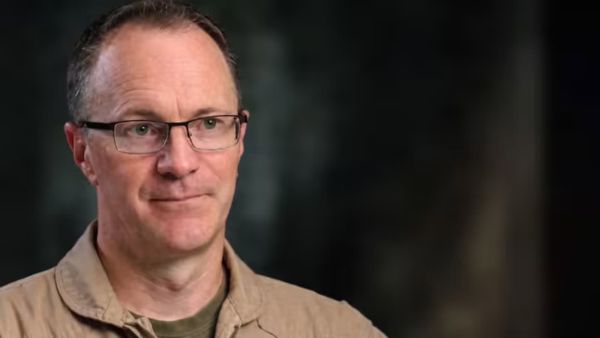
A US Air Force colonel has described how he survived nearly 50 hours in Iran after his F-15E fighter jet was shot down in April, revealing details of his ordeal and the US operation that eventually brought him home.
The officer, identified by his mission call sign “Dude 44 Bravo” because of security concerns, was the weapons-systems officer aboard the two-seat fighter. He gave his first public account of the incident to CBS News‘ “60 Minutes” in an interview aired on Sunday, September 13.
The F-15E was struck by an Iranian shoulder-fired missile during a US mission in early April. Bravo and the pilot, identified as “Alpha”, ejected from the aircraft after it was hit and became separated during the descent.
Bravo’s parachute had been damaged, leaving him falling at an estimated 70 to 100 miles per hour. He survived the impact but suffered a broken back, arm and shoulder.
“At one point when I looked up and saw no parachute, that was the most terrifying thing I’ve ever seen,” Bravo told “60 Minutes”.
Despite his injuries, he moved away from the crash site and made his way into the mountains. He eventually reached a ridgeline about 7,000 feet high and concealed himself while Iranian forces searched for the missing airmen.
US forces launch search for Bravo
Alpha was recovered during an initial US rescue operation, but Bravo could not be located. The search continued as Iranian ground forces also moved through the area.
Gen Dan Caine, chairman of the US Joint Chiefs of Staff, said Iranian forces came within a few hundred metres of Bravo.
Bravo later managed to communicate with US forces, informing them that he was injured but moving. He also sent a message saying, “God is good”.
According to CBS News, the CIA contributed to the search through intelligence work and a deception campaign designed to complicate Iranian efforts to find Bravo.
The US military subsequently prepared a second rescue operation. More than 90 US service members were deployed on the ground, while hundreds took part in the air operation and thousands more provided support.
The rescue force used aircraft and specialised personnel to reach Bravo’s position in the mountains. Air Force pararescue operators eventually found him.
Bravo described seeing the rescuers as “one of the greatest moments of my life”.
When they reached him, he said: “Let’s go.”
The evacuation encountered further difficulties after aircraft involved in the operation became stuck at a makeshift desert airstrip. The US military destroyed the stranded aircraft and helicopters to prevent sensitive equipment from falling into Iranian hands, CBS reported.
Bravo was eventually evacuated safely after spending about 50 hours in Iran.
He described the experience as a “modern-day miracle” and credited the training and people involved in the rescue.
“This is not a story about what I went through. Instead, it’s a story of the teamwork, the training, of the faith, of the decisions and the leadership,” Bravo said.
Alpha has since returned to flying duties but declined to take part in the “60 Minutes” interview because of security considerations.
US-Israel war with Iran
The shoot-down occurred during the wider US-Israel war with Iran, which began on February 28. The conflict involved sustained US and Israeli military strikes against Iranian targets and Iranian attacks in response.
-
Important Tips for Care of Tiles Grout

-
Those who take morning walk or run on the road must pay attention, take care of these things right from wearing clothes to walking.
-
Snakes Milk Myth: Do snakes really drink milk? Know the real truth of these 5 myths related to snakes
-
Royal Mail message for anyone posting envelopes
-
Hong Kong singer pays $62,000 yearly for daughters’ schooling