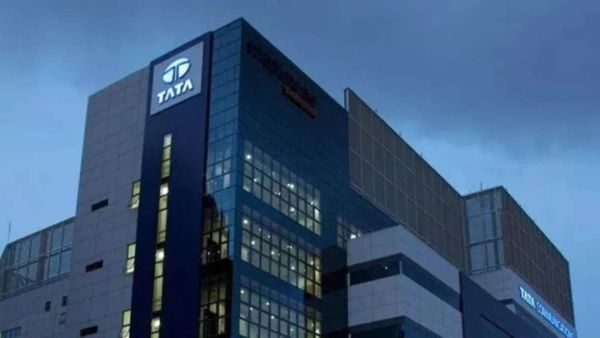
A single unresolved legal dispute at one of the Tata Group's founding trusts is now casting a shadow over two of the biggest decisions facing Tata Sons: whether the holding company must list on the stock exchange, and who will run it once N Chandrasekaran's term ends. Both questions converge at a board meeting scheduled for September 17.
The trigger: RBI says no
The immediate catalyst was a decision by the Reserve Bank of India to reject Tata Sons' bid to exit its registration as a Core Investment Company (CIC). Having become debt-free, Tata Sons had hoped deregistration would let it avoid the listing obligation that applies to upper-layer non-banking financial companies. The RBI's refusal has shut that door, pulling the listing question back into active discussion.
Compounding matters, Chandrasekaran, known within the group as Chandra, has already signalled he will step down when his term concludes on February 20, 2027. Citing people familiar with the matter, Moneycontrol reported that Tata Sons could therefore be forced into a complex listing process at precisely the moment its leadership is due to change hands. "A listing of this scale requires leadership clarity and continuity. If there is uncertainty over who will be leading Tata Sons, it could have implications for the process and its timelines," the report said.
Where Tata and Chandrasekaran have differed
The listing question has not been a neutral technical matter inside Tata Sons, it has reportedly been a source of tension at the top. Citing people in the know, the media organisation reported that Tata Trusts chairman Noel Tata has repeatedly pressed Chandrasekaran in board meetings to state his personal position on whether the company should list.
Chandrasekaran's management team took concrete steps, paying off debt and winding down corporate guarantees, that would have supported staying private. Media reports indicate the RBI held separate discussions in recent months with both camps: Chandrasekaran and chief financial officer Saurabh Agarwal on one side, and Noel Tata, representing the Trusts, on the other.
Unless the Trusts mount a legal challenge to the RBI's decision, the matter appears to have been resolved by the regulator rather than by internal negotiation. The two shareholder blocs had taken opposing views throughout: Tata Trusts, which holds roughly 66% of Tata Sons, wanted to preserve private ownership, while the Shapoorji Pallonji Group, holder of about 18%, had pushed for a listing.
Succession planning runs into the same wall
Choosing Chandrasekaran's successor was always going to be a delicate process. It has now become entangled with a legal dispute that has nothing directly to do with either the chairmanship or the listing.
Sir Ratan Tata Trust (SRTT), which owns close to 23.56% of Tata Sons, is currently barred from convening trustee meetings amid proceedings before the Maharashtra Charity Commissioner. The consequences have already surfaced once: Tata Sons had to adjourn its August 18 annual general meeting after SRTT and Sir Dorabji Tata Trust (SDTT) failed to jointly nominate a required representative.
SDTT, for its part, confirmed on August 13 that it respected Chandrasekaran's decision not to seek a third term and had begun assembling a selection committee. But the mechanics of that committee depend on the very cooperation SRTT currently cannot provide. Tata Sons' Articles of Association require three of the panel's five members to be jointly nominated by SDTT and SRTT together, with one nominee coming from the Tata Sons board and a fifth independent member chosen by the board. With SRTT sidelined, that joint nomination cannot go ahead.
A path forward may exist, however. On September 2, the Charity Commissioner threw out a separate challenge to Noel Tata's ownership of certain Tata Sons shares. Should the broader stay on SRTT meetings also lift, succession planning could resume relatively quickly.
Bringing in respected outsiders to resolve such deadlocks is not unprecedented at Tata Sons. The committee that replaced Cyrus Mistry after his October 2016 removal included Ratan Tata, Venu Srinivasan, Amit Chandra, former diplomat Ronen Sen, and Lord Kumar Bhattacharyya, founder of the Warwick Manufacturing Group, and ultimately recommended Chandrasekaran himself.
Even after a candidate emerges, two further hurdles remain: sign-off from Tata Sons' Nomination and Remuneration Committee, comprising Harish Manwani, Anita George and Venu Srinivasan, followed by approval from the full board. Disagreement at either stage would add yet another layer of delay.
A possible third path: asking Chandrasekaran to stay
The September 17 meeting could yet produce a different outcome altogether. According to the report, some directors may urge Chandrasekaran to reconsider stepping down, reasoning that continuity at the top would help Tata Sons navigate the listing question more smoothly. Whether he would agree to that is uncertain.
It would also risk reopening a disagreement that first surfaced earlier this year. At a board meeting on February 17, Noel Tata reportedly argued that discussion of Chandrasekaran's future could wait, since more than a year remained on his term, and called for updated business plans for loss-making units including Air India and Tata Digital, according to people familiar with the deliberations. Chandrasekaran himself chose to defer consideration of his reappointment rather than force a potentially divisive vote, a decision that preceded his eventual announcement that he would not seek another term, formally acknowledged by SDTT in August.
Were the board to revisit that decision now, any move to keep Chandrasekaran on would still require NRC and board approval. Persistent disagreement could force a vote, an outcome at odds with the consensus-driven approach the group has traditionally favoured for its top leadership, and one complicated further by SRTT's continued inability to function as a trustee body. Because Tata Trusts collectively hold promoter-like status in the group, their backing remains essential to any chairmanship decision, whatever the board itself concludes.
Tata Trusts, Tata Sons and members of the Nomination and Remuneration Committee had not responded to emailed requests for comment by the time of publication.
All Eyes On Tata's Board Meeting Ahead
Tata Sons was classified as an upper-layer NBFC in September 2022; its subsequent debt-free status is what prompted the now-rejected bid to exit CIC registration. A Tata Sons listing, unlike a standard public offering, would touch the holding company's substantial stakes in Tata Consultancy Services, Tata Motors, Tata Steel and a wide range of other group entities, with knock-on effects for how Tata Trusts' and Shapoorji Pallonji's own holdings are valued.
That scale is what elevates the succession question well beyond routine leadership planning. Whoever eventually succeeds Chandrasekaran may inherit responsibility for overseeing one of the most consequential ownership and governance changes in the group's recent history, even as the process for choosing that person remains stalled by a dispute unfolding several steps removed from either the boardroom or the regulator.
-
Premier League weekend as a film: the good, the bad and the ugly
-
White, Khaki or Olive Green? Why Doctors, Police and Army Wear These Uniform Colours

-
Medical Shocker: Doctors Find Needle in Heart After Man Complains of Peeing Pain!

-
BRICS Summit 2026: Jaishankar hails Modi’s ‘strong convening power’
-
100g Butter On Rs 130 Kadhi Chawal Has Internet Asking: Is It Real Butter Even?