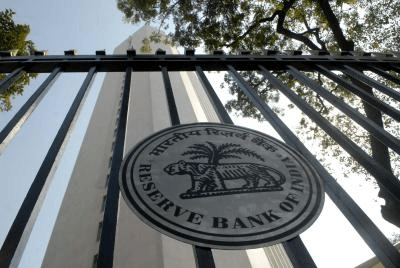
The Reserve Bank of India (RBI) on Monday absorbed over Rs 3.53 lakh crore of excess liquidity from the banking system through a one-day Variable Rate Reverse Repo (VRRR) auction, as the central bank stepped up measures to manage surplus funds in the financial system.
The RBI had notified an amount of Rs 5 lakh crore for the overnight auction. However, banks submitted bids worth Rs 3,53,390 crore, and the central bank accepted the entire amount.
The funds were accepted at a cut-off rate and weighted average rate of 5.24 per cent, according to a statement issued by the RBI.
A VRRR auction is a monetary policy tool used by the central bank to temporarily absorb excess funds from banks. When banks have surplus cash, they can park the funds with the RBI through such operations, helping the central bank manage liquidity and maintain stability in the financial system.
Why is RBI absorbing liquidity?
The RBI’s latest liquidity operation comes as the banking system has seen a significant increase in available funds following large foreign-currency inflows into India.
The inflows have been linked to the RBI’s special dollar-rupee forex swap facility for FCNR(B) deposits, Overseas Foreign Currency Borrowings (OFCB) and External Commercial Borrowings (ECB), which was launched on June 8.
The facility resulted in foreign exchange inflows of around $73 billion in less than 11 weeks, according to the RBI statement.
Of this, FCNR(B) deposits accounted for $65.40 billion, highlighting the strong response from Non-Resident Indians (NRIs), who channelled their savings into these deposits.
The scale of the mobilisation has been significantly higher than the RBI’s 2013 FCNR(B) swap scheme, which raised around $26 billion over roughly three months.

The strong response also prompted the RBI to advance the closure of the FCNR(B) window from September 30 to August 31, after the objective of the scheme was achieved ahead of schedule.
With large inflows adding to liquidity in the banking system, the RBI has been using tools such as VRRR auctions to ensure that surplus funds do not create excessive liquidity and that monetary and financial conditions remain orderly.
The latest auction is therefore part of the RBI’s broader efforts to manage the impact of the unusually large foreign-currency inflows while maintaining stability in the banking system.
-
Here are India's 5 most affordable courses; a fee of just a few thousand rupees can land you a high-paying job..

-
Career: Who gets scholarship money at IITs? It ranges from ₹90,000 per month to ₹3 lakh per year..

-
Will Class 6 students get relief from the CBSE's three-language policy? SC makes a suggestion..

-
All schools in Delhi closed on September 11; children enjoy a break due to the BRICS Summit; classes to resume on Monday..

-
What does the 'i' in iPhone stand for? If you think it just means 'Internet', you are mistaken..