0
The speed and scale of India’s assistance have generated goodwill and strengthened the argument that the two countries should use disaster response as an opportunity to rebuild broader bilateral cooperation.
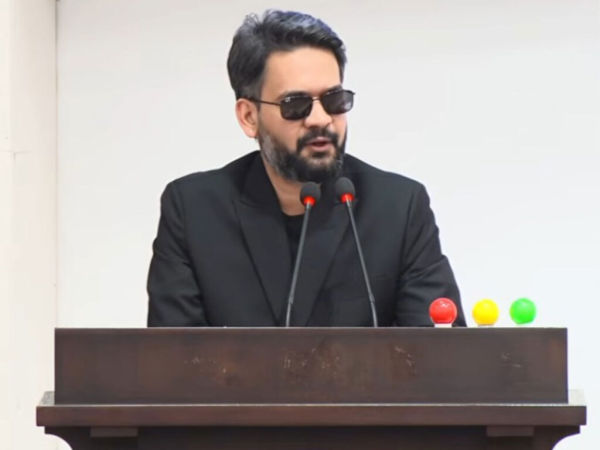
Nepal Prime Minister Balendra Shah is expected to visit India after attending the United Nations General Assembly in New York, according to highly placed sources, in what would be his first bilateral foreign visit since becoming Prime Minister and could mark an important shift in Kathmandu’s engagement with New Delhi. According to the sources, the India visit is expected to take place before Dussehra, with Shah likely to travel to India either directly from New York or after returning to Nepal. The sources said the visit is expected to go ahead before the festival, irrespective of whether it is scheduled as part of his return journey from the United States or as a separate trip from Kathmandu. Shah’s UNGA visit is being described in Nepal as his first foreign trip as Prime Minister. He is expected to use the UN platform to highlight the devastating flash floods and landslides that struck Nepal on 26 August, the vulnerability of the Himalayan region and the impact of climate change. His proposed India visit would come separately as a bilateral engagement.
The precise timing of Shah’s India visit will also depend on the schedule of Prime Minister Narendra Modi, according to the sources. The distinction is significant because there had been speculation over whether Shah would choose India or China for his first bilateral engagement after taking office. India has traditionally been the principal first bilateral destination for Nepali Prime Ministers, although the convention has been broken on several occasions. A decision by Shah to travel to New Delhi would therefore carry considerable political symbolism. The uncertainty was heightened by positions taken by Shah’s government on issues involving India, particularly the longstanding territorial dispute involving Lipulekh, Limpiyadhura and Kalapani. Shah told Nepal’s Parliament in May that both India and Nepal had encroached on each other’s territory. Nepal has incorporated the three areas into its official political map, a position rejected by India. The issue is part of a broader deterioration in IndiaNepal relations over the past decade, which has included the 2015 Madhes crisis and the controversy over the movement of goods across the border, followed by the sharp diplomatic dispute over Nepal’s revised political map in 2020. The question of Shah’s first bilateral destination had also assumed significance be cause Nepal has increasingly sought to balance its relationships with India and China. Before Shah himself travelled abroad, Foreign Minister Shisir Khanal undertook visits to both New Delhi and Beijing as the new government established its external engagements.
The backdrop changed dramatically on 26 August, when catastrophic floods struck the Trishuli river system in Rasuwa district, including the Bhote Koshi/ Trishuli river in the northern part of the district near the Nepal-China border. The flooding caused extensive destruction to homes, roads, bridges and hydropower infrastructure and triggered a massive search-and-rescue operation across northern Nepal. The disaster subsequently caused extensive damage along the Trishuli River corridor in Rasuwa and Nuwakot, where several hydropower projects were hit by torrents of water, rock, mud and debris. Among the worst affected were hydropower installations in the Trishuli basin, including the Upper Trishuli 3A project, where workers were trapped inside tunnels. On 4 September, two workers were rescued alive after spending nine days inside a tunnel. The scale of the disaster has been enormous. As of 4 September, at least 1,295 people had died in Nepal, more than 12,000 people had been rescued and around 5,000 remained missing, according to figures cited by India’s Ministry of External Affairs. India’s response began within hours of the disaster. New Delhi sent relief material to Nepal beginning on 26 August and subsequently expanded the operation to include specialist rescue, forensic and medical assistance. India has now sent about 95 tonnes of relief material and deployed 54 experts, including tunnelrescue personnel, forensic specialists and medical teams. Highly placed official sources said the Indian response has been professional, systematic and driven by Nepal’s requirements rather than by a predetermined package of assistance.
You Might Be Interested In
According to these sources, the Nepali government communicates to New Delhi what material, equipment or specialist assistance is required, and the Government of India then works to arrange and deliver the requested assistance. The sources said that, so far, requests made by the Nepali government for assistance to rescue people or augment its relief and recovery operations have been acted upon without delay. They specifically contrasted the speed of the response with the bureaucratic delays that can sometimes affect disaster assistance and government-to-government cooperation in the region. The assistance has been particularly significant at the hydropower sites along the Trishuli corridor. Indian technical teams have been working with the Nepal Army to excavate blocked tunnels and search for workers who may have survived underground. India has also deployed a forensic team to help identify victims through DNA analysis and has provided medical equipment and medicines. The latest consignments have included forensic kits and other specialised equipment. The Indian diplomatic mission has been directly involved in the operation. India’s Ambassador to Nepal, Naveen Srivastava, travelled on 3 September to Syabrubesi near Chilime in Rasuwa to inspect the rescue operation at the flood-hit hydropower project. He met the Indian technical personnel working with the Nepal Army and reviewed the tunnel excavation operation.
The Indian response has, therefore, extended from immediate humanitarian relief to highly specialised assistance on the ground, including rescue operations in tunnels, forensic identification and medical support. The response has also had a wider political effect in Kathmandu, according to people familiar with the Nepal government’s thinking. Sources say the speed and scale of India’s assistance have generated goodwill and strengthened the argument that the two countries should use the disaster response as an opportunity to rebuild broader bilateral cooperation. One senior figure in the Nepal government has suggested that once the immediate disaster is brought under control, India and Nepal should examine ways of making movement across the existing open border easier and strengthening cultural and people-to-people ties. The suggestion would not mean opening the IndiaNepal border, since the two countries already maintain an open-border arrangement. Rather, the proposal is to make cross-border movement more convenient, improve connectivity and deepen the social and cultural interaction that has historically characterised the relationship.
This is significant because the border itself has periodically been at the centre of political disputes. Yet the same open border is also one of the strongest foundations of the India-Nepal relationship, supporting extensive movement of people, trade, employment and family ties. For Shah, a visit to New Delhi before Dussehra would therefore come at a very different moment from the one in which his government initially took office. His government had faced questions over its position on India, including the territorial dispute, while there had been uncertainty over whether Kathmandu would give greater diplomatic prominence to Beijing. The humanitarian crisis has created an opportunity to move the relationship towards practical cooperation. It would not, by itself, resolve the territorial dispute or erase the disagreements that have accumulated over the past decade. Nepal’s position on Lipulekh, Limpiyadhura and Kalapani remains unchanged, while India continues to reject Nepal’s territorial claims. But a Shah visit to India would demonstrate that those disagreements need not prevent the two governments from expanding cooperation in areas of immediate mutual interest, including disaster management, connectivity, energy, trade and movement of people.
The symbolism would be particularly strong if India becomes Shah’s first bilateral destination after his UNGA appearance. It would come after years in which India-Nepal relations have been strained by border disputes and political disagreements and after Nepal’s successive governments have sought to deepen engagement with China. The immediate trigger for the possible thaw has been a disaster along Nepal’s northern frontier. But the diplomatic consequence could be a broader attempt by Kathmandu and New Delhi to rebuild trust and revive the people-to-people and economic links that have historically made the India-Nepal relationship distinctive.
-
David Ornstein questions Manchester United’s transfer work and says there is no ‘unlimited flow of cash’

-
Man Utd complete double academy deal with Man City midfielder David Eze and Leicester youngster Manuel Appiah Boakye

-
DFB-Pokal round-two draw confirmed: Here are the ties
-
Indian-origin fraudster arrested: FBI Director Kash Patel

-
Como are extremely strong and can challenge for the Serie A title