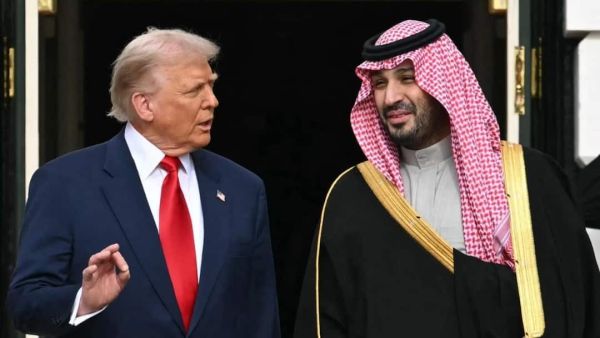
The United States has approved a possible $5 billion military sale to Saudi Arabia that includes thousands of precision-guidance kits, general-purpose bombs and associated support equipment, according to the US State Department.
The proposed Foreign Military Sale would provide Riyadh with Joint Direct Attack Munition-Extended Range (JDAM-ER) systems, bombs, fuzes, target detectors, containers, spare parts and technical and logistical support.
According to a congressional notification issued by the State Department, Saudi Arabia has requested 5,004 KMU-572 JDAM guidance kits and 5,000 KMU-556 JDAM guidance kits.
The request also includes 5,004 BLU-111 500-pound general-purpose bombs and 5,000 BLU-117 2,000-pound general-purpose bombs.
The package would additionally cover FMU-139 fuze systems, DSU-38 and DSU-40 target detectors, containers, support equipment, spare parts, consumables and accessories.
US government and contractor personnel would also provide engineering, technical and logistics support under the proposed deal.
US Cites Saudi Security
The State Department said the sale would support US foreign policy and national security objectives by strengthening Saudi Arabia's security.
Washington described Saudi Arabia as a force for "political stability and economic progress" in the Gulf region.
"The proposed sale will improve Saudi Arabia’s airborne defense capability to counter current and future regional threats, strengthen its homeland defense, and improve interoperability with systems operated by U.S. forces and other Gulf Region partners," the department said.
The US government assessed that Saudi Arabia would be able to incorporate the equipment and services into its armed forces without difficulty.
It also said the proposed transaction would not alter the military balance in the region.
Boeing, based in Virginia, would be the principal contractor for the potential sale. The US government said it was not aware of any proposed offset agreement linked to the transaction.
Implementation of the deal would not require additional US government or contractor representatives to be assigned to Saudi Arabia and would have no adverse impact on US defence readiness, according to the notification.
Deal Comes Amid Regional Tensions
The proposed arms package comes against the backdrop of heightened security concerns in West Asia, including the ongoing conflict involving the US and Iran, attacks targeting Saudi Arabia and renewed activity by Yemen's Houthi rebels.
The developments have added to concerns over security in the Gulf and the wider region, with Saudi Arabia seeking to strengthen its ability to protect its territory and critical infrastructure against potential air and missile threats.
US-Saudi Nuclear Cooperation
The latest defence approval also follows agreements signed more than a month ago by Washington and Riyadh establishing a framework for peaceful nuclear cooperation.
US Energy Secretary Chris Wright and Saudi Energy Minister Abdulaziz bin Salman signed a peaceful nuclear cooperation agreement, commonly known as a 123 Agreement, along with a bilateral safeguards agreement, according to the US Department of Energy.
"Together, these two agreements lay the legal foundation for a decades-long, multi-billion-dollar partnership that advances several priority economic and strategic objectives, including nuclear nonproliferation," the department said.
The 123 Agreement is intended to give US companies greater access to Saudi Arabia's emerging civil nuclear energy programme while supporting American industry, workers and supply chains.
The agreements also aim to strengthen nuclear safety, security and nonproliferation standards while expanding strategic cooperation between Washington and Riyadh.
The Department of Energy said the nuclear partnership formed part of the Trump administration's broader efforts to expand US civil nuclear technology exports and reinforce America's position in the global nuclear energy market.
-
Tech Mahindra Global Chess League Season 4 Trophy Unveiled By World’s Top Chess Stars Ahead Of Bengaluru Opener

-
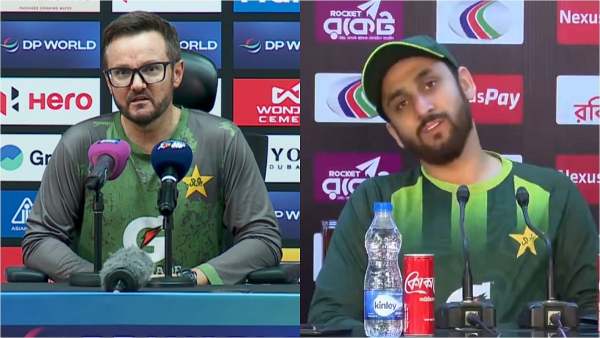
Pakistan Coach Mike Hesson Denies Salman Ali Agha Snubbed King Charles Meeting; Says Reports Were 'Made Up'
-
AFC U17 Asian Cup Qualification First Target, Says New India Coach Mehrajuddin Wadoo

-
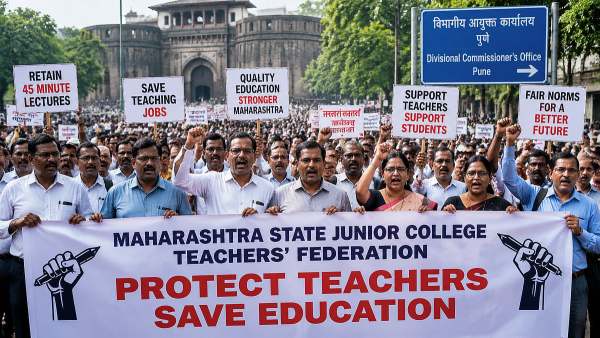
1,500 Maharashtra Junior College Teachers Rally In Pune Against Revised Staffing Norms, Warn Of Statewide Agitation
-
NIA Unravels Global Drone Network, Links US Citizen & 6 Ukrainians To Myanmar Aircraft Attack