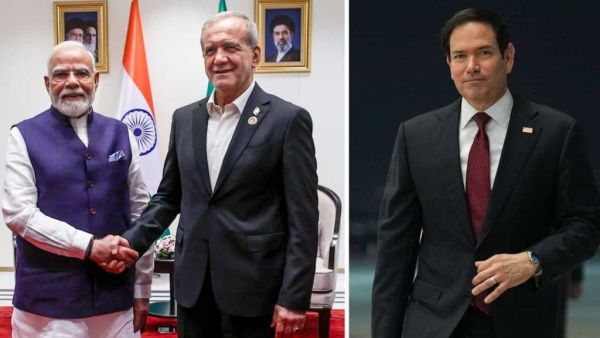
The important bilateral meeting between Indian Prime Minister Narendra Modi and Iranian President Masoud Pezeshkian on the sidelines of the Shanghai Cooperation Organization (SCO) summit held in Bishkek, the capital of Kyrgyzstan, has created a tremendous stir in global geopolitics. Amidst the ongoing severe geopolitical tension in West Asia and the economic siege of Tehran by the US, the two top leaders not only reiterated their resolve to take bilateral relations to new heights, but also openly agreed to expand and diversify the trade basket between the two countries. Washington's policy makers have become uneasy with this diplomatic warmth and the sound of a possible trade agreement and the US has issued a strict warning of immediate economic sanctions. What happened in Bishkek: What issues were agreed upon between the two leaders? This was the first formal face-to-face detailed meeting between PM Narendra Modi and Iranian President Massoud Pezeshkian during the SCO meeting in Bishkek, Kyrgyzstan. After the meeting, PM Modi clarified on social media that the historical and cultural relations between India and Iran are very strong and in the coming times, both the countries want to rapidly expand their trade basket. According to the Ministry of External Affairs (MEA) and Iranian statements, the talks mainly led to strategic consensus on the following points: Trade and economic cooperation: promoting exchange of energy, agriculture, pharmaceuticals, technology sector and non-oil products were discussed. Chabahar Port and Connectivity: Reiterated commitment to accelerate the International North-South Transport Corridor (INSTC) through Chabahar Port and maintain India's direct access to Central Asia. Peace and freedom of navigation in West Asia: PM Modi termed the safety of commercial ships, sailors and civilians in the Strait of Hormuz as the top priority and stressed on resolving all disputes through diplomacy and dialogue. BRICS Summit Invitation: Prime Minister Modi also invited the Iranian President to personally attend the upcoming BRICS summit to be held in New Delhi. Why is the fear of trade agreement troubling America? After this meeting, lines of worry have drawn on the forehead of the White House and the US State Department. America has recently launched 'Operation Economic Outcast' to put all-round pressure on Iran, under which stringent sanctions have been imposed on 5 major economic sectors like digital assets, shipping, technology, gold and aviation. America's best effort is to isolate Iran from the global system financially. In such an environment, India, the world's fifth largest and fastest growing economy, talking about openly increasing trade with Iran gives a big blow to the American strategy. The US fears that: If trade between India and Iran in local currencies (rupee-riyal mechanism) is restored or expanded, US dollar dominance and sanctions will be blunted. Trade through the Chabahar port would create an alternative supply route to Eurasia and Russia that could not be controlled by a US naval blockade or sanctions. If strategically neutral India provides economic support to Iran, then the policy of Western pressure in the Middle East may prove ineffective. New warning from US administration: 'Countries that trade may also be affected' Immediately after the meeting between PM Modi and Pejeshkian, strict messages were issued by the US State Department and the Treasury Secretary. US officials gave a clear warning that no country should create a path that would provide economic oxygen or source of income to Iran. Washington reiterated that any countries or foreign entities that conduct financial transactions with Iran in sanctioned areas could face US sanctions or be locked out of the dollar clearing system. It is noteworthy that even before this, America has taken action against some private companies of Indian origin on the charges of alleged petrochemical transactions to Iran, due to which it is trying to put indirect pressure on India. India's independent foreign policy: Clear refusal to bow down to pressure Despite American threats and fears of sanctions, India's stance is completely balanced and based on 'strategic autonomy'. New Delhi has made it clear at every global forum that India takes decisions independently in its national interests, energy security and Eurasian connectivity. Strategic importance of Chabahar: For India, Chabahar is not just a port but a lifeline corridor to connect Afghanistan and Central Asian countries bypassing Pakistan. Role of world friend: The Iranian President himself has appealed to PM Modi that India should use its wide international contacts to play the role of mediator in stopping war and bloodshed in the Middle East. While India shares deep defense and strategic relations with Israel and America, it has thousands of years of historical relations with Iran. This high-level meeting held in Bishkek has once again proved that in the multipolar world system, India is not ready to ignore its long-term regional and economic interests under the pressure of unilateral sanctions from any superpower.
-
Some at Manchester United still unconvinced by 'amazing' youngster after strong pre-season
-
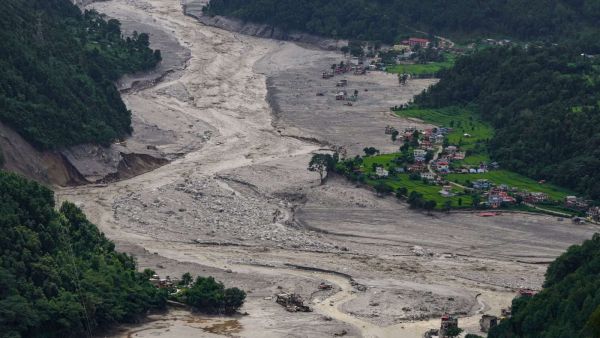
‘Disaster took away my sisters’: 16-yr-old Nepal flood survivor
-
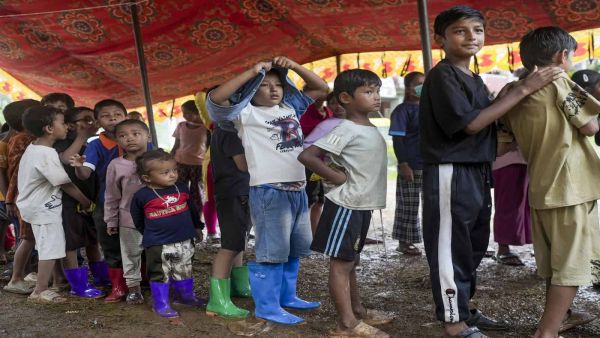
In crowded shelters, Nepal’s mothers struggle to nurture life
-
Swatantra Bhardwaj arrested for assaulting Dalit’s father
-
UP: Clash between Dalits, upper castes leaves 26-year-old dead