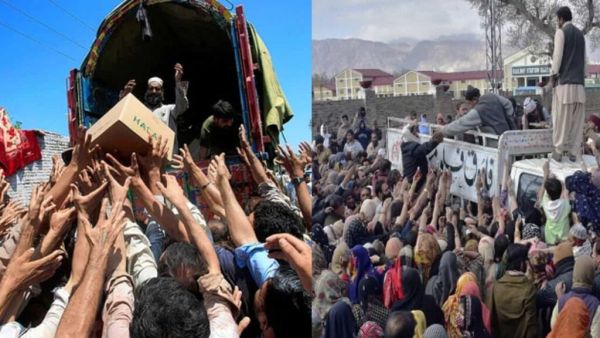
Desk: The effect of economic crisis and inflation in Pakistan is now directly visible on the plates of the people. Pakistanis are now having to eat less than before and the quality of food is also decreasing, because it is no longer possible for families to buy as much food as before. In fact, a few years ago, during the wheat crisis in Pakistan, hashtags like #BhookaNangaPakistan were discussed on social media. Now the food crisis has deepened in Pakistan.
According to data from Pakistan Bureau of Statistics (PBS), consumption of almost all major food categories in both urban and rural areas has declined in the last six years. Inflation and declining purchasing power in Pakistan have affected the daily eating habits of families. Families are now reducing the size of their bread, cooking meat less often a month and giving less milk to children. Even the number of cups of tea drunk daily is decreasing. That is, the crisis is not limited only to the increase in the prices of food items in the market, but it is directly impacting the eating habits of the people.
-
Read this also Rising sea level poses a threat, the threat of drowning of houses of lakhs of people in Mumbai-Kolkata; Warning in UN report
Pakistan's social indicators are also worrying. According to the data, in 2019, 15.92 percent of Pakistani families were in the category of moderate to severe food insecurity. By 2025, this figure will increase to 24.35 percent. At the same time, the share of families facing severe food insecurity also increased from 2.37 percent to 5.04 percent. This means that a large number of families in Pakistan are finding it difficult to access adequate and nutritious food.
A major reason for this crisis is not that food grains are not being produced in Pakistan. Pakistan produces wheat and rice. Poultry, eggs and milk are also produced on a large scale in the country. Meat is also exported. But the real problem is the price of food items and the decreasing purchasing power of the people. Inflation has ruined the budget of families. In such a situation, people are reducing their needs and first of all they are cutting down the quantity and quality of food and drink.
A few years ago, during the wheat crisis in Pakistan, hashtags like #BhookaNangaPakistan were discussed on social media. After the wheat crisis of 2023-24, new concerns are emerging regarding food security. Pakistan's challenge is not just to produce food but to deliver it to the common people at affordable prices. If the pressure of inflation and declining purchasing power continues, the problem of food insecurity and malnutrition may become more serious.
-
Enzo ke bina bhi kaam chalega! Chelsea boss Xabi Alonso ne Fernandez ke chaukane wale £125m Manchester City transfer ke baad midfield ki pareshaani suljhane ke liye ek anokhe defensive star par bharosa jataya

-
Emi Martinez gives up John Terry’s iconic No.26 shirt after just one game as Chelsea confirm surprise number change

-
Players’ vote and Hansi Flick support Lamine Yamal’s inclusion in Barcelona captaincy group

-
Inside Manchester United’s budget rebuild — and the question it leaves for Michael Carrick

-
70,000 Pints Of Guinness Beer Worth Rs 1.5 Crore Stolen In England