It is entirely appropriate that the biggest transfer in Premier League history, completed during the biggest Premier League window ever, captured so much about this summer’s market — and, arguably, how much of football’s usual logic has disappeared.
By the time Chelsea and Manchester City eventually entered proper talks over Enzo Fernandez, after months of distant tension, there was at least one clear starting point for all parties. The Stamford Bridge hierarchy could point to the £116m that City themselves had paid Nottingham Forest for Elliot Anderson. City had helped define this market.
Chelsea were always going to demand more for a World Cup-winning midfielder, even before considering everything else. Some of the reasoning was understandable, much like the wider deal itself. It suited everyone in one way or another. Fernandez wanted to leave, having long been part of a situation in which Chelsea were open to selling, and he was also the player new City manager Enzo Maresca wanted.
Chelsea sold Enzo Fernandez to Manchester City for £125m in the joint-biggest transfer in Premier League history.
Everyone ended up satisfied, and yet there was still plenty of ill feeling.
Likewise, that logic only stretches so far.
Chelsea are directly strengthening a possible title rival, and their insistence on a more face-saving fee may have cost them in another respect. By pushing for a record £125m, they ultimately failed to secure an alternative, even though that had previously been a condition of any agreement. Monaco dramatically pulled out of the £47m sale of Lamine Camara, in yet another example of established norms being overturned.
At the same time, is Fernandez really worth anything close to £125m? Is he truly good enough to become the Premier League’s most expensive player once again? City could argue that all value is relative, particularly when their manager wanted him so badly.
Others, however, say that only underlines how the very idea of “value” has this summer “gone out the window”.
That was in fact a phrase used to The Independent by several different figures from within the industry over the past few weeks, reflecting how “bizarre” many considered this transfer window.
Most obviously, there are the astonishingly inflated prices. Our Inside Football newsletter last Friday examined the many reasons behind this, from the broadcasting money that has long flowed through the division to the new ownership profiles adapting to changing financial rules. Clubs appear to be treating the 85 to 115 per cent expenditure allowance as a target rather than a restriction.
You could even call it “late-stage Premier League”, echoing the idea of “late-stage capitalism”, and the way a concentration of so much wealth starts to erode traditional norms. Because beyond the bewilderment over the fees, there was also the feeling by Wednesday morning that none of it was complete.
More money than ever before has been spent, well beyond last year’s £3.14bn, but fewer clubs than ever appear to be genuinely satisfied. It feels as though there is still so much unfinished business.
Arsenal still want that forward. Manchester United still want that left-back, along with reinforcements in other positions. Liverpool still want an entire right side.
And yet even identifying some of these positions as though they are merely the final pieces ignores how much of this window seemed to move away from older ideas of squad-building.
That was evident in the number of clubs trying to complete a high volume of deals so late in the window.
Even sides recently regarded as among the most forensic and forward-thinking, such as Liverpool and City, were scrambling in chaotic fashion. Just look at the Cody Gakpo situation.
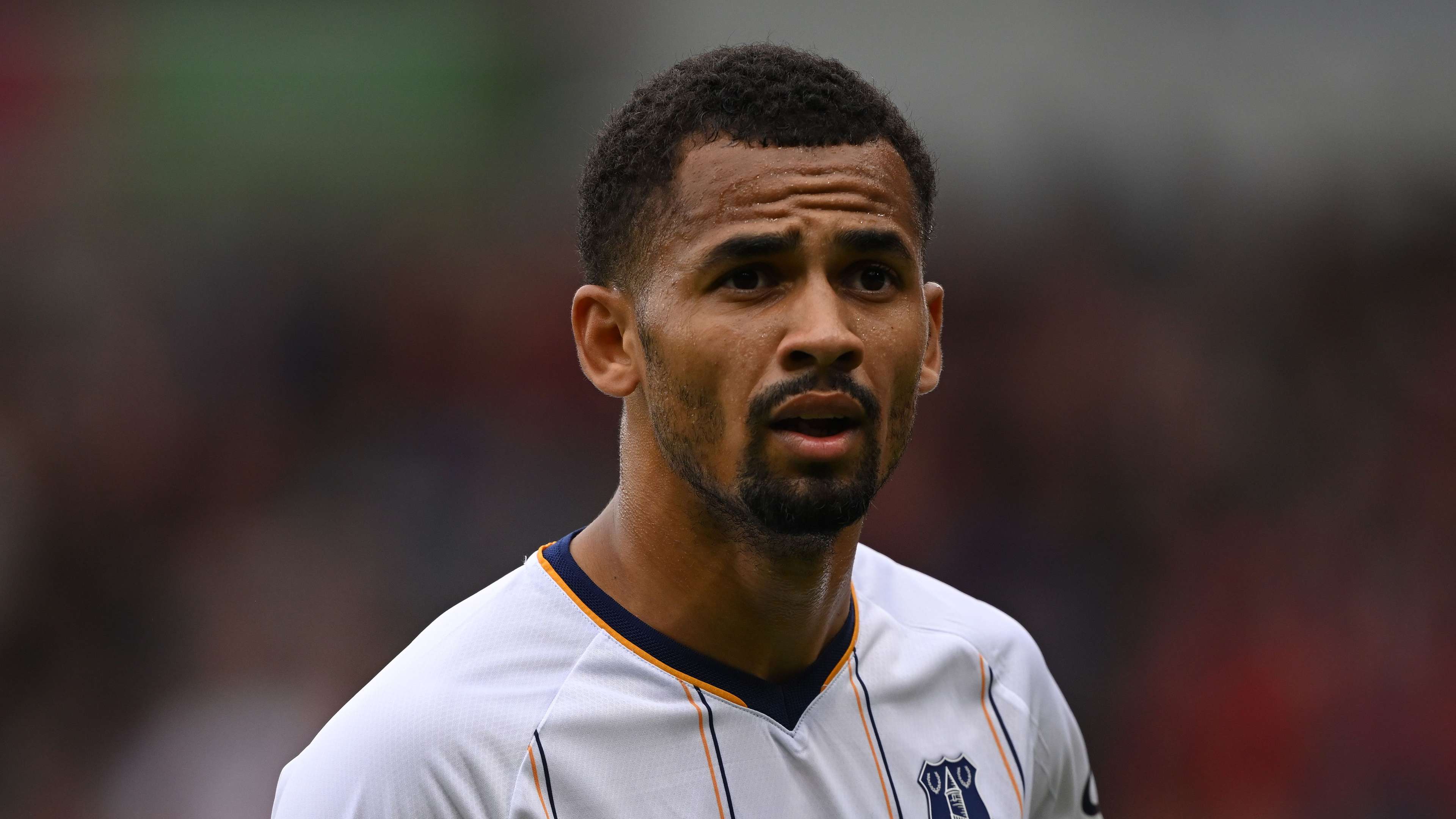
Manchester City were in talks to sign Cody Gakpo for £80m before switching their attention to Everton’s Iliman Ndiaye.
City’s completion of the Fernandez deal probably leaves them among the more content clubs, and that level of spending would ordinarily make them logical title favourites.
Others point to the absurdity of such spending continuing while the City case remains unresolved. The club continue to insist on their innocence.
On the pitch, though, can such an extensive overhaul really work so quickly? Can a coach impose a system on so many new players?
The same question applies across squads throughout the division, from Crystal Palace to Hull City.
Above all — or perhaps below all — Tottenham Hotspur may best illustrate how difficult it is to say whether the scale of the spending has even been worth it. They are better, certainly, but are they as good as their outlay should suggest?
Which deals even stand out across the division? It has been difficult to keep up, especially when it comes to whether the signings can even fit together. The transfer list has resembled the closing credits of a James Cameron film.
As one figure joked, the scene at City when Manchester United surprisingly made an approach for Rayan Ait-Nouri, while they were also working on Fernandez, must have resembled the player-trading scenes in Moneyball. Just constant calls and endless activity.
Manchester City and Manchester United were prepared to do business, while Chelsea and Tottenham reached an agreement over the loan of Mykhailo Mudryk.
For the Premier League as a whole, though, that description probably goes beyond a joke. Many sources have compared the sheer volume of business to the trading culture seen in American sports.
A widely held view is that more deals than ever are being done for business reasons rather than football reasons.
A major part of that is the need to adapt to financial regulations, something Aston Villa and Newcastle United would say they understand very well.
Ironically, or perhaps inevitably, both appear to have done smart business. As always, though, only what happens on the pitch will tell us for certain.
On that pitch, coaches now have to make sense of all this, but it does feel like a summer in which even the growing influence of sporting directors above them was overtaken.
This was a window shaped more by owners, and it is no coincidence that there was so much American-style “trading” at a time when so many clubs are being run by American capitalists.
You can extend that even to the way direct rivals such as the Manchester clubs were willing to do business with each other, in a manner that would once have been unthinkable.
Some insiders put it down to the reality that these owners already deal with one another across many other industries. Others have pointed to the symmetry in transactions between clubs that have recently faced regulatory issues.
Many of the same business figures would argue that this is a sign of football reaching “maturity” — and of old emotions being overridden.
Those emotions can still matter greatly, especially when it comes to the overall “feel” of a team.
Unai Emery has seen his team change completely since leading Aston Villa to the Europa League.
That could be sensed in the rare note of dissent over Everton’s attempt to sell homegrown player Harrison Armstrong. That may prove to be an even more symbolic moment than is currently appreciated.
Arsenal, meanwhile, were unusual in trying to build a squad to a specific idea, which is linked to the fact that Mikel Arteta is the Premier League’s longest-serving coach.
And yet they were still left with perhaps the sharpest frustration of all, having failed to sign the star in Julian Alvarez that they — and arguably the whole division — needed.
That is one advantage LaLiga, or really LaLiga’s big two, still has over the Premier League.
Brentford, Brighton and Bournemouth, meanwhile, have been unusual in standing apart from much of this and continuing to do business in their own way.
The strange part is that there is growing evidence of other clubs moving away from that kind of data-led approach.
The huge deals between English clubs make that plain. None of them suggested forward-thinking analytics.
The Premier League has never witnessed such turnover, and much of that has come from long-standing logic being overturned.
-
South African envoy to India cleared of protocol breach after row over temple visit by ex-president

-
Nico O'Reilly reveals the blunt Pep Guardiola advice that helped turn him into a Manchester City star
-
Iliman Ndiaye explains why he picked Manchester City over Tottenham as Etihad club confirm dramatic £65m deadline-day swoop for Everton forward
-
More than half of Premier League clubs smash transfer records as spending hits a new high

-
Transfer Deadline Day 2026: Every Premier League deal completed