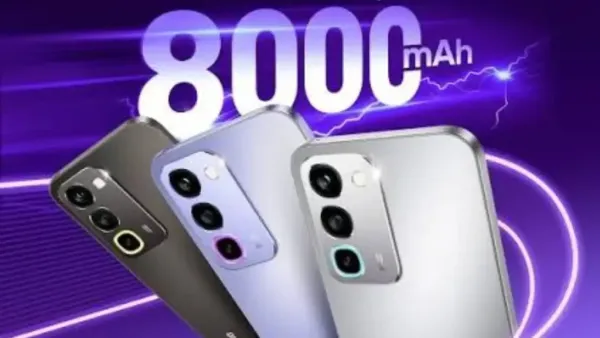
Tezzbuzz Desk: Till a few years ago, 5,000mAh battery was considered a very large capacity for a smartphone, but in 2026, a big change is being seen regarding the battery in the smartphone industry. Now phones equipped with batteries with 8,000mAh and even 10,000mAh capacity have started coming in the market. In January 2026, the share in global sales of smartphones with batteries of 6,000mAh or more reached 29 percent, whereas a year ago this figure was only 10 percent. The biggest reason behind this change is believed to be silicon-carbon battery technology.
In 2026, many smartphone companies are making high capacity batteries the specialty of their phones. Honor In the global market, this phone has a battery of 9,210mAh capacity. At the same time, 8,000mAh battery is also available in Poco M8 Power. This means that big batteries are no longer limited to just premium or special category phones.
Silicon-carbon battery technology is the most important reason behind this change. Traditional smartphone batteries use graphite anodes and have limited energy storage capacity. In comparison, silicon can store more energy. However, one problem with silicone is that it expands significantly during charging, which can affect the life and stability of the battery. The carbon structure in silicon-carbon batteries helps handle this dispersion of silicon. This makes it possible to install a higher capacity battery in approximately the same space. It is also important to understand here that a silicon-carbon battery is not a solid-state battery. It is still based on lithium-ion battery technology, but uses new materials at the anode stage. This same technology is helping smartphone companies provide more battery capacity without increasing the size of the phone too much.
Chinese companies seem to be at the forefront in adopting this technology. According to Counterpoint Research data, the top 10 best-selling smartphones with batteries of 6,000mAh or more included phones from all Chinese companies. These include brands like Vivo, Xiaomi, Oppo and Honor. Silicon-carbon battery technology was used in six of these 10 phones. Companies are trying to keep phones from becoming too thick or heavy by providing larger batteries. However, there are some challenges with larger batteries and new technology. There are concerns about battery expansion, manufacturing complexity, and long-term capacity loss due to excess silicon. According to Samsung, the silicon-carbon material is more reactive than graphite. Therefore, changes to the battery system may be necessary to maintain long-term stability. Xiaomi claims that the Redmi Note 17 Pro Max's battery retains at least 80 percent capacity even after 1,600 full charge cycles, but this claim is yet to be independently tested.
Now the question is, will 10,000mAh batteries become the new normal standard of smartphones in the future? It is too early to say this at this time. According to Counterpoint analysts, the pace of adoption of silicon-carbon technology may slow down in the coming times. Challenges like cost pressures and memory shortages can impact companies' budgets. However, new technological advancements in 2027 and large-scale use of this technology are expected around 2028. At present, it is clear that the old 5,000mAh limit of smartphone batteries is rapidly being left behind. Batteries with capacity of 8,000mAh and above are now appearing in the market and silicon-carbon technology is becoming the biggest reason for this change. This technology may further change smartphone battery capacity, design and battery backup experience in the coming years.
-
No need for a juicer-blender, get nutritious fruit juice with these 5 kitchen tools

-
Delighted to join Adani Group as a partner in the next growth journey of India's aviation sector: Premji Invest

-
Indian Men blunts South Korean challenge – Tezzbuzz

-
Tilak Verma's dream broken at 99, 1 run away from century; All out on South Zone 336

-
Tilak Verma OUT on 99, missed a century in Duleep Trophy final, East Zone's victory confirmed!