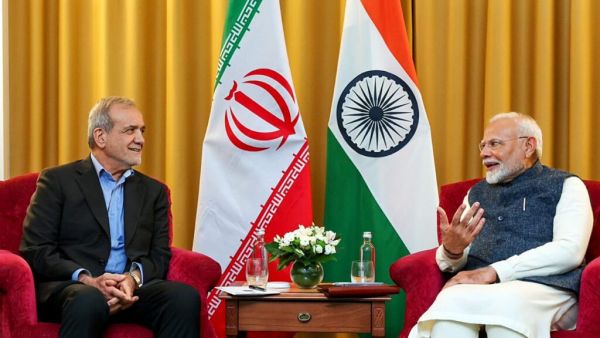
Amidst the increasing tension in West Asia, Iran is now eyeing India’s diplomatic strength. During his meeting with Prime Minister Narendra Modi in Bishkek, Iranian President Masoud Pejeshkian appealed to India to make such diplomatic efforts that the conflicting parties return to the negotiating table instead of war. The question is, why did Iran ask for help from India? Is this because of India’s balanced relations with America, Russia, Israel and Iran? Or are India’s own interests like Chabahar, Hormuz and energy security becoming the basis of the new ‘Peace Diplomacy’ in this whole story?
Why did Iran ask for help from India?
Modi and Pejeshkian also met on 31 August 2026 during the SCO summit held in Bishkek. According to the Iranian side, Pejeshkian has appealed to use India’s extensive global contacts to help the parties concerned move away from conflict to the path of dialogue and agreement.
Why did you ask for help from India only?
Actually, the specialty of India is that it simultaneously has diplomatic relations with America, Iran, Israel, Russia and Arab countries. India maintains dialogue with different power centers without becoming part of any military group. This position makes him a potential communication bridge in times of crisis.
However, it is too early to call it a formal mediation. India’s official stance is to support dialogue, diplomacy and lasting peace rather than supporting any one side of the conflict.
What is Iran’s compulsion behind Pejeshkian’s appeal?
Iran is currently facing economic and diplomatic pressure along with military conflict. In such an environment, the importance of those countries which have contacts with Western countries and regional powers increases for Tehran. Pejeshkian has considered this diplomatic reach of India important. The message of the Iranian President is basically that India should play a role in using its contacts to bring the countries concerned towards dialogue instead of war.
What is India’s new ‘Peace Diplomacy’?
The basis of India’s ‘Peace Diplomacy’ is not to stand with any one party, but to maintain dialogue with all the major parties. India believes that war does not provide permanent solution to any problem and disputes should be resolved through dialogue and diplomacy.
Even in the Modi-Pejeshkian meeting, India emphasized on dialogue and diplomacy to resolve regional issues. This policy combines India’s traditional strategic autonomy with a more active diplomatic role.
Is India talking about peace only in the matter of Iran?
It’s not like that. This policy of India is not limited to Iran only. Even in other international disputes like the Russia-Ukraine conflict, India has been continuously advocating solutions through dialogue and diplomacy. This means that instead of making itself a party to any one conflict, India wants to develop a role in which it can maintain dialogue with different countries.
Why did India raise the issue of Strait of Hormuz?
The conflict in West Asia is not just a matter of foreign policy for India. It is also directly to energy security, maritime trade and safety of Indian citizens. The Strait of Hormuz is an important sea route for global energy supplies.
Therefore, India wants that despite the tension, safe movement of ships and freedom of navigation should be maintained. Modi also stressed the safety of Indian sailors and commercial ships and asked for no harm to civilians and civilian infrastructure.
How was Chabahar connected to India’s peace diplomacy?
Chabahar port plays an important role in India’s relations with Iran. In May 2024, a 10-year agreement was signed between India Ports Global Limited and Iran’s Ports and Maritime Organization for the development and operation of Chabahar’s Shahid Beheshti Terminal. India had committed a credit line of about $120 million for equipment and infrastructure of $250 million for the terminal.
Why is Chabahar so important for India?
Chabahar gives India the option to bypass Pakistan and access Afghanistan and Central Asia. Through this, India can increase trade contacts with Central Asian countries like Kazakhstan, Kyrgyzstan, Tajikistan, Turkmenistan and Uzbekistan. India also plans to connect Chabahar with the International North-South Transport Corridor i.e. INSTC. Therefore, stability in Iran and smooth operation of Chabahar is directly linked to India’s economic and strategic interests.
Is India standing in favor of Iran?
It would not be right to say this. India wants to maintain its old and strategic relations with Iran, but also wants to balance its relations with America, Israel, Russia and the Gulf countries. This is India’s strategic autonomy. India communicates with different countries according to its interests without joining any one camp.
What benefit does India get from Pejeshkian’s appeal?
For India, peace in West Asia is not just an issue of international prestige. This impacts India’s energy security, maritime trade, safety of Indian citizens and connectivity to Central Asia. If India contributes in maintaining dialogue between different parties, it can strengthen its global diplomatic role. Besides, its ability to maintain balanced relations with America, Iran, Russia and other countries of West Asia will also increase.
What is the biggest challenge of India’s peace diplomacy?
The biggest challenge before India is to maintain balance. On one hand, there are important interests like Chabahar, trade and regional connectivity with Iran, while on the other hand, India’s strategic and economic relations with America are also very important. Therefore, India will have to adopt such diplomacy in which it can communicate with all the parties without becoming a part of any one camp.
-
Air India Terminates Phuket-Delhi Flight Pilot After Failing Drug Test
-
Viral Powerlifter Keyaa Banerji Reveals Dark Side Of Online Fame, Faced Sexual Harassment, Impersonation After Silver Medal

-
Khushi Kapoor Buys ₹63 Lakh 1RK Apartment In Mumbai's Bandra West

-
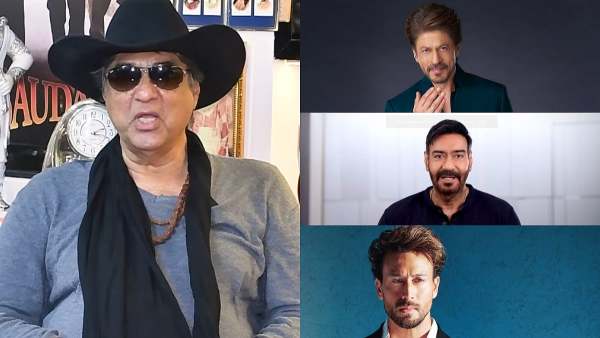
'Kama Chuke Hain...': Mukesh Khanna Reacts To Shah Rukh Khan, Ajay Devgn, Tiger Shroff Getting Show-Cause Notices From FDA Over Pan Masala Brand Ad - FPJ Exclusive
-
New Zealand Approves MDMA Therapy For Severe PTSD, Becomes Second Country After Australia To Allow Use