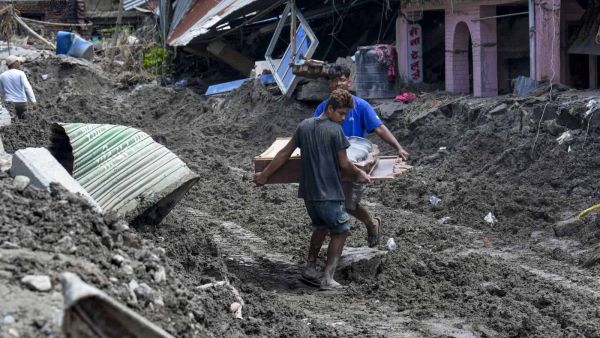
Kathmandu: Over 1000 people have now been confirmed dead following last week’s devastating floods in Nepal, even as bodies swept away continue to pile up along riverbanks in different districts on Tuesday, September 2.
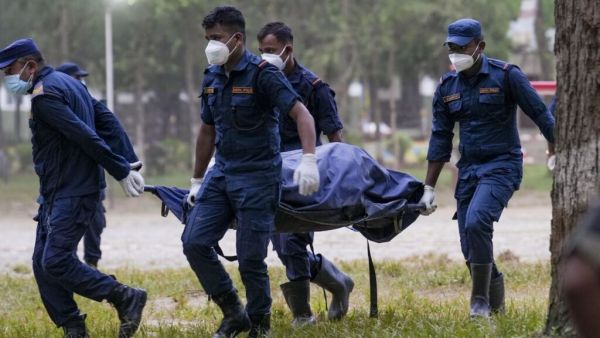
The number of bodies recovered so far has reached 1003, the National Disaster Risk Reduction and Management Authority (NDRRMA) said in its latest update. The highest number of bodies — 321 — were recovered in southern Chitwan district, followed by 216 in Nawalparasi East.
Authorities estimate that 3,916 people, including 583 foreigners, remain unaccounted for as security personnel, including those from the Nepal Army, intensify search and rescue operations in the affected areas.
According to the National Disaster Risk Reduction and Management Authority (NDRRMA), 321 bodies were recovered from Chitwan, 216 from Nawalparasi East, 170 from Nawalparasi West and 95 from Nuwakot. Sixty-five bodies were recovered from Gorkha, 55 from Dhading, 38 from Tanahun and 27 from Rasuwa.
As many as 639 people working at various hydropower projects along the Bhotekoshi and Trishuli river corridors have remained out of contact since last week’s disaster.
Relatives can submit DNA samples to identify victims: Indian Embassy
The Indian Embassy in Nepal on Tuesday issued a detailed procedure for the identification and repatriation of mortal remains of foreign nationals, including Indians, killed in the devastating flash floods in the country.
The Government of Nepal has laid down a nine-step procedure for handing over mortal remains of foreign nationals, including documentation, recording photographs and details, post-mortem examination, verification of the cause of death and formal identification, the embassy said in a press release.
The process also includes collection of fingerprints, DNA and other forensic samples, verification of the deceased’s passport or identity documents, completion of embassy or consular coordination, and issuance of a handover or release memo and receipt, it said.
The first four steps of the procedure will be carried out by Nepali authorities, the embassy said.
If relatives are able to identify mortal remains through photographs and descriptions uploaded on the Nepal Police website, the Indian Embassy will assist in coordinating with local authorities for their handover and repatriation.
The Government of Nepal has temporarily interred a large number of mortal remains to prevent health risks, the embassy said, adding that identification of such remains would require DNA matching with first-degree relatives.
A first-degree relative is a biological family member who is exactly one step away in the family tree. This category includes parents (biological mother and father), full siblings (brothers and sisters who share both biological parents), and children (biological sons and daughters).
In cases where identification is not possible, or the remains have been temporarily interred, Nepal will facilitate DNA matching, it said.
Nepali authorities are collecting DNA samples from the mortal remains to create their DNA profiles. First-degree relatives of the deceased can send their DNA profiles through email or provide blood samples along with preliminary information required by the Nepali authorities, the embassy said.
The embassy said relatives could also share DNA profiles with it for facilitation in coordination with Nepali authorities.
It also provided three helpline numbers with WhatsApp facility for further assistance and enquiries regarding the identification and repatriation process.
Over 11,000 rescued from flood-hit areas in Nepal
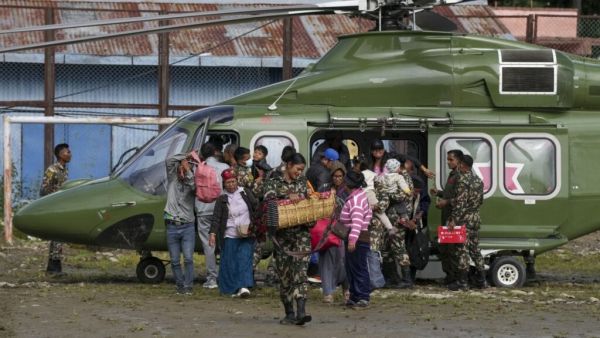
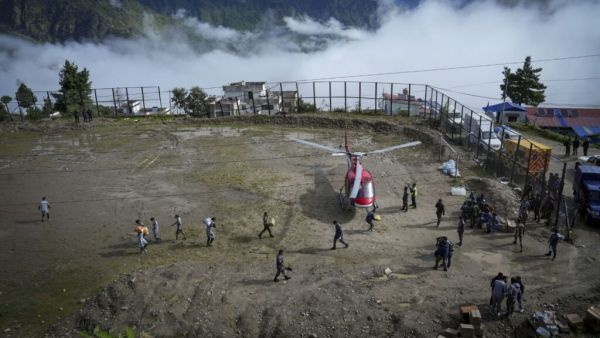
More than 11,000 people have been rescued from flood-affected areas in Nepal so far, with over 22,000 security personnel mobilised for search and rescue operations, officials said.
Unidentified dead bodies have been kept at 21 locations for identification and proper management. According to the latest update, 11,884 people have been rescued so far. Search and rescue operations are continuing in the flood-affected areas, with security agencies using helicopters and other resources to reach stranded people.
A total of 21,314 security personnel have been mobilised for search, rescue and relief operations, according to the NDRRMA. The mobilised personnel include 9,199 from the Nepali Army, 7,912 from Nepal Police and 4,203 from the Armed Police Force.
At least 16 helicopters have also been deployed for search and rescue operations in the affected areas, National Disaster Risk Reduction and Management Authority (NDRRMA) spokesperson Shanti Mahat said.
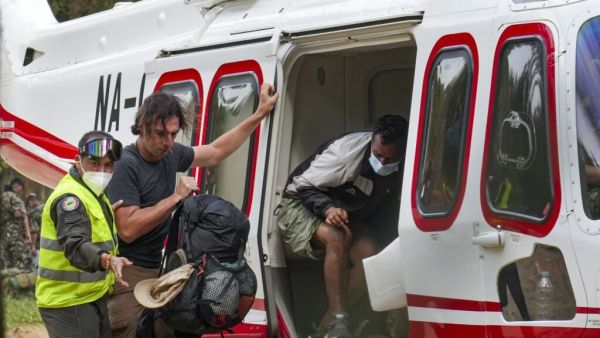
More than 11,000 people have been rescued so far, he said, adding that the government has intensified search and rescue efforts in the flood-hit areas.
Over 22,000 security personnel, including those from the Nepal Army, have been mobilised for the operations, Mahat said.
So far, 254 labourers and technicians have been rescued from the Upper Trishuli 1 Hydropower Project sites, while search operations continue with the involvement of Indian and Chinese tunnel rescue experts.
According to the latest figures, 927 bodies have been sealed, of which 51 have been handed over to family members following identification, while 726 remain unidentified.
As many as 413 unidentified bodies have so far been managed or buried in accordance with standard international norms, officials said.
The authorities have arranged temporary shelter for 2,970 displaced people at various holding centres.
Nepal issues fresh flood alert
Nepalese authorities issued a fresh alert over the risk of floods in several districts across eastern, central and western parts of the country, urging people living near rivers to remain vigilant and take precautionary measures.
There is a high possibility of flash floods in Nuwakot and Rasuwa districts, where water flow in smaller rivers and streams is expected to rise, according to a notice issued by the National Disaster Risk Reduction and Management Authority (NDRRMA).
There is also a risk of rising water levels and a moderate risk of flash floods in several districts, including Taplejung, Sankhuwasabha, Solukhumbu, Khotang, Okhaldhunga, Ramechhap, Dolakha, Sindhupalchowk, Kavrepalanchok, Lalitpur, Bhaktapur, Kathmandu and Dhading in eastern and central Nepal.
In western Nepal, the districts under alert include Gorkha, Lamjung, Dolpa, Rukum East, Rukum West, Jajarkot, Darchula, Baitadi, Dadeldhura, Doti, Kailali and Kanchanpur, the authority said.
The NDRRMA urged people living along riverbanks and in other vulnerable areas to remain alert and take necessary precautions in view of the forecast.
-
3 scenic backwaters to visit from Hyderabad on a road trip
-
7 Hyderabad firsts that deserve a spot on your bucket list

-
Mangaluru CCB nabs absconding fraudster wanted in multiple cases
-
India Squad For Afghanistan T20Is: Sanju Samson Returns, 4 Players Face Fitness Test!

-
Keir Starmer To Quit Parliament, Triggering By-Election In Holborn And St Pancras