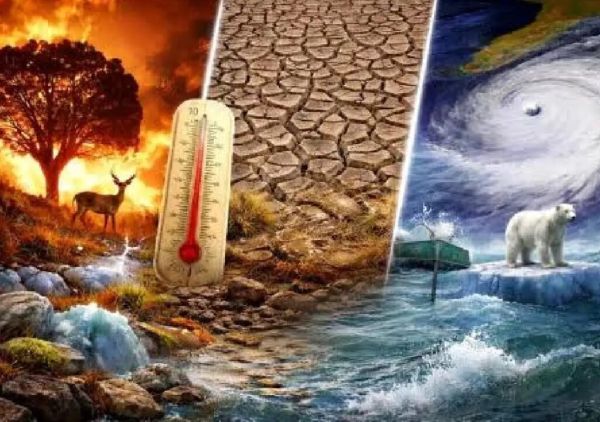
Climate change is usually communicated through scientific data, research findings and warnings about the future. But researchers and writers are increasingly exploring another powerful tool — poetry — to help people understand the emotional and human dimensions of a changing climate.
Poetry can make climate science personal
Poet and professor Sam Illingworth says poetry can transform complex global issues into language that feels intimate and familiar. This can help people connect with climate change not only as a scientific challenge but also as something that affects everyday life.
The haiku, with its traditional 17-syllable structure and connection to nature, offers a particularly striking example. Its characteristic shift or kireji can mirror climate change, moving suddenly from one reality to another.
Changing seasons are telling a story
Researchers Jasmin Kirkbride and Paul Chambers have studied English-language haiku from the past three decades and found subtle signs of a changing climate.
References to species such as curlews and butterflies have become less frequent, while seasonal indicators can appear at unusual times. Flowers traditionally associated with one season, for instance, may appear in poems linked to another.
These changes can capture environmental loss and disruption in ways that statistics may not.
Poems can help imagine climate futures
Research fellow Heena Dave argues that poetry can also help communities think about uncertain futures. Writing speculative poems has helped school leaders explore their concerns, memories and hopes surrounding climate change.
Such creative exercises can encourage people to consider how climate change may affect their schools, communities and children.
When poetry meets science
One unusual project showed that the relationship between art and science can have a physical environmental impact. Simon Armitage’s poem In Praise of Air was displayed on a 20-metre-high banner in Sheffield coated with titanium dioxide.
The material used sunlight to help break down pollutants, and the installation reportedly removed around two tonnes of nitrogen oxide from the surrounding environment over three years.
The growing intersection of poetry, science and climate communication suggests that understanding environmental change does not always begin with numbers. Sometimes, a few carefully chosen words can make people stop, notice and imagine what needs to change.
-
Pakistan release 7 players, change coaches mid-tour at Lord’s

-
Deda's debt is increasing in Bastodo! These 5 rules must be obeyed to overcome the financial crisis

-
Homemade Natural Bleach: From potatoes to gram flour, make natural bleach with these household items, your face will glow.

-
Mira Kapoor Met Smriti Irani On A Flight, Recalls Trying Her Iron-Rich Soup Recipe

-
Big discount on iPhone 17 Pro and Pro Max, opportunity to buy cheap up to Rs 14 thousand