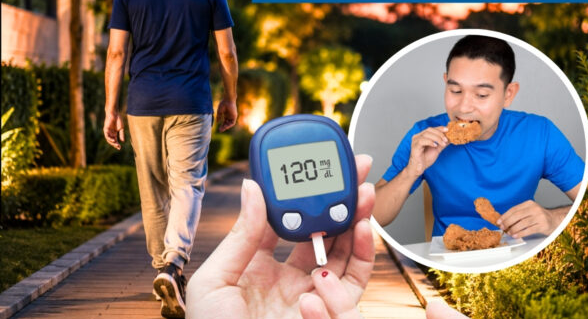
Post Dinner Walk Benefits: Why does blood sugar increase after eating food? You may also have this question. Often you must have seen that diabetic patients check their blood sugar level after eating food. According to health experts, the list of diabetes sufferers in India is long. That is why India is also called the capital of diabetes. Once someone has diabetes, it stays with him for the rest of his life. The good thing is that it can be controlled by healthy eating. For this, doctors first advise to pay attention to your habits.
In fact, after having dinner, we often feel like going straight to bed or sofa. But, if a light walk of just 10 minutes is included in your daily routine after dinner, then this habit can help in controlling blood sugar. Especially a light walk can be useful in reducing the postprandial glucose spike in blood sugar that increases after eating. Now the question is, why does the blood sugar level increase after eating food? What is the right way to control this? Diabetologist Dr. BK Roy of Apollo Hospital Noida is telling about this-
Why does blood sugar increase after eating food?
According to health experts, when we eat food, the carbohydrates present in it are digested and converted into glucose. After this the sugar level in the blood increases. Under normal circumstances, the body transports this glucose to the cells with the help of insulin. But this process is not as effective in people with diabetes or insulin resistance, due to which sugar can increase more after eating. This is the reason why some physical activity after meals is considered beneficial. When muscles become active, they start using glucose, which can help control post-meal blood sugar.
How to take a 10 minute walk?
For this there is no need to go to the gym or do vigorous exercise. Shortly after finishing dinner, a 10-minute comfortable to moderate walk can be started. In the material of the American Diabetes Association, a short walk of 5-10 minutes after eating has been described as a habit that has a positive effect on blood glucose. If it seems difficult to walk continuously for 10 minutes in the beginning, then it can be increased gradually according to your capacity. This walk can be done on the roof of the house, room, street or even in the park.
Immediately after eating or after some time?
Research suggests that light activity around meals, especially early after meals, may help reduce postprandial glucose. A systematic review found exercise after meals to be more effective than exercise before meals and being inactive. However, this does not mean that you start walking too fast as soon as you finish eating. It is better to start at a comfortable pace.
Not just for diabetes patients
Taking a short walk after dinner is not only a useful habit for people with diabetes. A light walk can help control post-meal glucose spike even in healthy people. Research has shown a reduction in glucose and insulin response from a light walk after meals.
10 minute habit, big benefit
The most important thing is that it is not necessary to set aside a long time for this. A small habit like taking a 10-minute walk every day after dinner can help create a long-term active routine.
-
SC to hear Centre’s plea to quash FIRs against NEET protesters
-
11 OTT releases this week (Aug 31-Sept 6): Full list inside

-
Do not make any mistakes in the household leaves curd at home? Keep in mind 6 things work!
-
If you have a small child at home, keep them away from mosquitoes and insects during monsoon, adopt these 5 easy solutions

-
Zomato Bans Analogue Paneer Dishes From Platform, Announces Zero-Tolerance Policy