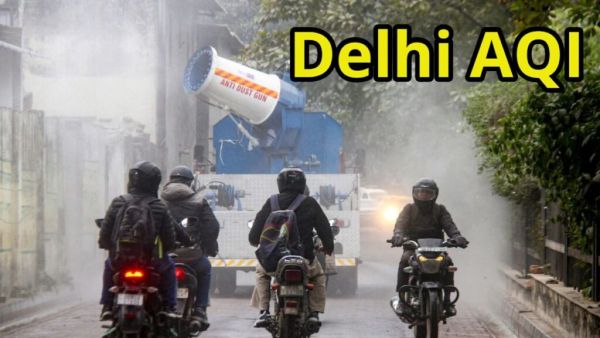
Delhi AQI: Delhi weather changed but the fate of Delhiites did not change… Yes, we are talking about air pollution in Delhi. Heavy rains continue in Delhi in August this year. Despite heavy rains, Delhiites are forced to live under the shadow of pollution. The serious condition of air pollution in Delhi can be gauged from the fact that it is the highest in the last three years in the month of August.
According to the Indian Meteorological Department (IMD), Safdarjung has received 653.9 mm of rain since the beginning of the monsoon season, whereas the normal average is 506.7 mm. That means this time 147.2 mm or about 29 percent more rainfall has been recorded. After this, Delhi's Air Quality Index (AQI) is highest in the month of August.
According to the Meteorological Department, the rainfall in Delhi in August this year set a record of 29 percent more than normal. The first week of August saw the highest rainfall in 15 years and the heaviest rainfall in a single day was recorded on August 25. Despite so much rain, the air quality also reached its worst average level in three years. In the first seven days of August, Delhi had received 127 mm of rain, which is the highest rainfall in the first week of the month since 2011. Apart from this, on August 25, Safdarjung recorded 99.1 mm rainfall within 24 hours, which was the heaviest rainfall on a single day in August in two years. Earlier, this much or more rainfall had occurred on August 1, 2024, when 107.6 mm of rain had fallen.
Almost all weather stations in the city recorded more rainfall than normal.
Almost all the weather stations in the city have recorded more than normal rainfall. Palam received 533.2 mm rainfall, which is 11 percent more than the normal of 482.1 mm. Whereas Lodhi Road received 648.2 mm rainfall, i.e. 28 percent more than normal. The highest surge was seen in the Ridge area, which received 703.1 mm rainfall, which is 63 percent more than normal. Whereas Ayanagar recorded 686.3 mm rainfall, which is 59 percent more. Safdarjung received 354.1 mm rainfall in a month, whereas the normal is 222.9 mm, i.e. 59 percent more. In Palam this figure was 300.8 mm, which is 45 percent more. The rainfall in the ridge almost doubled, it received 357.4 mm rainfall which is about 97 percent more than normal. Whereas Ayanagar received 383.2 mm rainfall which is 114 percent more than normal.
Maximum AQI reached 129
Talking about air quality, according to the report of the Center for Research on Energy and Clean Air, the average AQI for 28 days in August was 92, which is the highest after 2023. However, it was a matter of relief that the air remained in satisfactory category for 19 days out of 28. Whereas nine days remained in moderate category. The maximum AQI this month reached 129, which is the highest since 2023.