Chandigarh: Treatment of breast cancer is not limited to surgery and chemotherapy only. Many patients may require long-term, regular follow-up with radiation, targeted, or hormone therapy. Mukhyamantri Sehat Yojana (MMSY) is helping in continuity of treatment for the eligible beneficiaries. Under this scheme, cashless treatment up to Rs 10 lakh per family is provided every year in government and empaneled private hospitals.
Breast cancer is the most common cancer among women in India.
Breast cancer is a condition when abnormal cells present in the breast start growing and dividing rapidly. Breast cancer is the most common cancer in women in India. According to the Indian Council of Medical Research–National Center for Disease Informatics and Research (ICMR-NCDIR), an estimated 2,16,108 women were diagnosed with breast cancer in India in 2022. At the same time, this number was estimated to increase to 2,32,832 in 2025. According to the program's estimates, one in every 29 Indian women by the age of 74 is at risk of developing breast cancer at some point in her life.
Financial problems should not become a hindrance in treatment: Health Minister
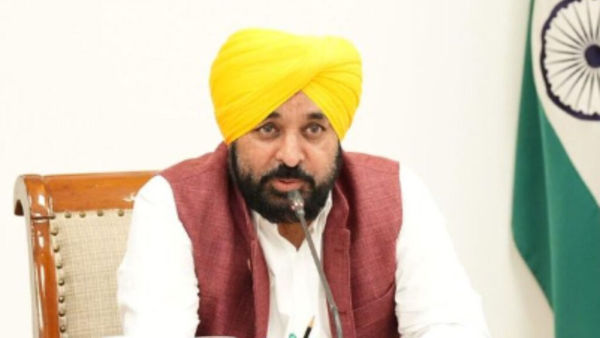
Punjab Health and Family Welfare Minister Dr Balbir Singh said that the objective of MMSY is to ensure that eligible patients are not deprived of better health services due to financial constraints. “Eligible patients should not be deprived of quality cancer treatment due to any kind of financial difficulty,” he said.
Treatment can last from several months to years
According to Dr. Karuna Singh, Professor and Head of Radiation Oncology at Advanced Cancer Institute, Bathinda, breast cancer treatment can last for several months and in some patients the process can be even longer. He said that the initial phase of treatment may last for several months. Some patients may then require years of follow-up with targeted or hormonal therapy. Regular check-ups of patients may continue for a long time even after treatment is completed. During this period, clinical examinations and necessary tests are carried out to monitor recovery, side effects of treatment and possible signs of disease recurrence.
Treatment depends on the stage and biological characteristics of the disease.
Dr. Karuna Singh said that the treatment of breast cancer is decided on the basis of the stage of the disease and its biological characteristics. Chemotherapy, surgery, and radiation therapy may be used in cases of locoregional disease. Hormone therapy is also given if needed. At the same time, in cases of metastatic disease, chemotherapy can be used with or without immunotherapy, keeping in mind the individual condition of the patient.
15,494 breast cancer treatments under MMSY
According to data from the State Health Agency (SHA), Punjab, 15,494 breast cancer treatments have been done so far under the Mukhyamantri Sehat Yojana, at a cost of about Rs 26.59 crore. Of these, the highest number of 4,515 treatments were recorded for women aged 50–59 years. This was followed by 4,141 treatments in women aged 40–49 years and 3,557 treatments in women aged 60–69 years. Meanwhile, 1,332 treatments were recorded in women aged 30–39 years.
A total of 12,213 treatments have been recorded across all three age groups of 40–69 years.
Many options from surgery to immunotherapy
Dr. Manraj Singh Kang, Associate Professor of Radiation Oncology at Government Medical College and State Cancer Institute, Amritsar, said that the treatment of breast cancer may include options like surgery, chemotherapy, radiation therapy, hormonal therapy and immunotherapy. Technologies like VMAT, 3D, IMRT, IGRT and brachytherapy can be used in radiation therapy.
The disease may be more aggressive at a younger age
According to Dr. Kang, breast cancer in some women may also be to genetic factors. If the disease occurs at the age of 30–40, especially before menopause, it is likely to be more aggressive. In such cases the cancer may be hormone receptor negative or even triple negative.
At the same time, women aged 50 years or older are more likely to have hormone positive breast cancer. In such cases, especially in stages 1–3, the disease may be relatively less aggressive and the prognosis is likely to be good.
Breast-conserving surgery and mastectomy are the main options
Dr. Kang said that there are two main options for breast cancer surgery. The first is breast-conserving surgery, which aims to preserve the breast and may be possible in some cases of stages 1–3. Another option is modified radical mastectomy (MRM). Surgery is chosen based on several factors such as the biopsy report, number and size of tumors, involvement of lymph nodes and other characteristics of the tumor.
MMSY does not put the financial burden of treatment on the family
Rajinder Kaur, a resident of Sangrur, underwent breast-conserving surgery with cryoplasty at Tata Memorial Hospital. Her husband Parbu Singh said that the Chief Minister Health Scheme proved to be very helpful for his family. He said, “Mukhyamantri Sehat Yojana has been no less than a miracle for our family. My wife got the best treatment without any financial burden. We are grateful to the government for providing such health facilities.”
Important scheme for economically weak families
Dr. Karuna Singh said that MMSY can prove to be very important for economically weak families. According to him, through the scheme most of the patients are able to complete their treatment. He clarified that the objective of the scheme is not to influence medical decisions, but to prevent financial problems from becoming a hindrance in completing the treatment.
For families undergoing long-term cancer treatment, such financial assistance can reduce the financial pressure of treatment. This can help patients and their families focus more on completing treatment, maintaining necessary follow-up, and moving toward recovery.
-
Give a tasty twist to your daily idli, make paneer stuffed idli for breakfast; The recipe is easy

-
Maharashtra Food Body Makes License Mandatory For Bhandara, Mahaprasad Events
-
'He is not corrupt… speak openly' Former Pakistani players came out in support of Imran Khan
-
Pukhraj Gill shines in Jakarta, just one step away from Asian Tour card; Made place in top-10
-
Mizoram footballer Lalianzuala Changtey selected as the best Indian footballer of the year 2026