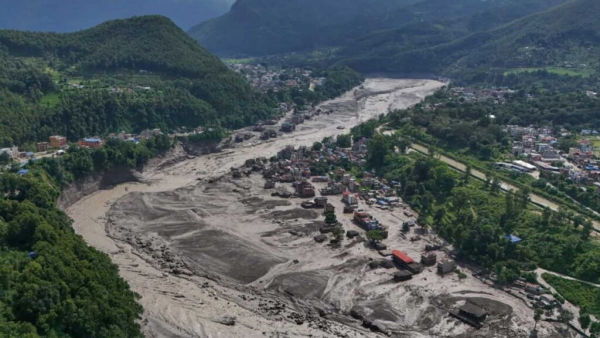
The raging flood that passed through Gyirong Port, the main trading center of Nepal-Tibet, washed away the infrastructure, buildings and roads in its path like straw.
New Delhi: The severe flood on the Nepal and Tibet border has caused huge devastation in the vast land and border areas of China. The fierce form of flood that passed through Gyirong Port, the main trading center of Nepal-Tibet, washed away the infrastructure, buildings and roads in the way like straw. Horrific scenes of people running to save their lives captured in CCTV and eyewitness cameras are being rapidly circulated in the media around the world. However, in the country where this disaster has occurred, the people are being kept unaware of the real horror of this tragedy.
Serious loss of life and search in the debris
According to reports, a large number of people have died in this horrific natural disaster and dozens of civilians are still reported missing. Chinese President Xi Jinping has held an emergency review meeting with officials, while the Prime Minister has been sent to inspect the affected areas. Hundreds of emergency personnel have been deployed for relief operations, carrying out rescue operations amidst fast-flowing rivers, landslides and debris.
Strict censorship and selective attitude of Chinese media
The scene of devastation is clearly visible on channels around the world, but access to these videos and images within China has been extremely limited. China’s state media is only showing selective footage of government-controlled rescue operations and distribution of relief materials. Independent posts on Chinese social media and internet platforms to the floods, victims’ stories, photographs and information about missing persons are being quickly removed or censored.
Tibet’s political history and strict restrictions
Experts and human rights activists believe that Tibet’s sensitive political history is the main reason behind this strict media ban. Since establishing control over Tibet in the 1950s, the Chinese Communist Party has closely guarded religious, cultural and social activities there. Foreign journalists are restricted from freely visiting Tibet and reporting there is impossible without government permission.
Immediately after the disaster, the local Communist Party office issued instructions to members to engage in relief work and ‘maintain social order and public trust’. In this atmosphere of fear, local citizens and victim families are hesitant in sharing their ordeal or the pain of loss of their loved ones with the world. This is why amidst the claims of government relief operations, the real pain of the tragedy and the true figure of loss of life are buried behind the dragon wall.
-
From Easter Island away trips and a suspected drug lord in midfield to squirrel costumes: 20 astonishing football stories from around the world
-
Hyderabad: BRS leader booked after woman alleges abuse, threats

-
Hair Care Tips: Be careful if you are making this mistake with wet hair, hair fall may increase.

-
Maharashtra Food Body Lifts Suspension On Food Licenses Of 5 BKC Restaurants

-
How to remove stubborn yellow stains on bathroom floors and tiles? Know 5 easy home hacks of vinegar and baking soda