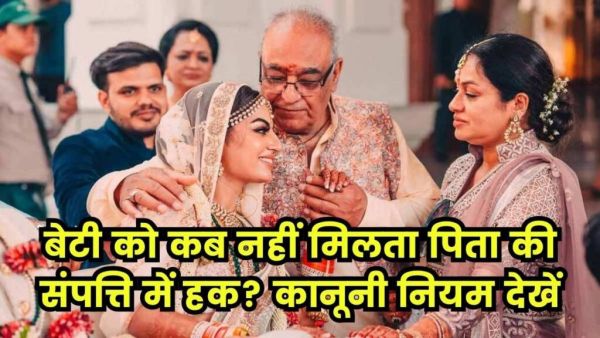
There has been a belief in Indian society for a long time that after marriage, the daughter becomes 'someone else's property' and has no legal right on her maternal property. However, from a legal point of view the situation is completely different and clear. The Hindu Succession Amendment Act, 2005 and landmark decisions of the Supreme Court (Vineeta Sharma vs. Rakesh Sharma, 2020) have given daughters the status of 'coparcener' in ancestral property equal to sons by birth. But despite this, there are many such legal circumstances and exceptions, where the daughter does not get a single rupee or piece of land from her father's property. Ancestral Property vs. Self-Acquired Property: This is where the rights are decided. In law, father's property is mainly divided into two categories, and the rights of daughters also depend on this classification: 1. Ancestral Property: This is the property which has been passed on undividedly from the grandfather, great-grandfather or the last four generations. A daughter has equal rights in this property from birth as a son. Being married does not affect the daughter's rights. Even if the father wants, he cannot give his daughter's share in the ancestral property to anyone else as per his wish. 2. Self-Acquired Property: This is the property which the father has purchased from his earnings, business or pension. The father has complete and exclusive ownership over this property. In which 4 situations does the daughter not get the right in her father's property? According to the law, the daughter's claim on the property becomes invalid in some special circumstances: 1. Writing of a valid Will by the father: If the father has given his self-acquired property through his will only in the name of his son, wife or any trust and has not included the daughter's name in it, then the daughter cannot legally claim that property. 2. Gift Deed or sale of property while alive: If the father sells his self-acquired property to a third person during his lifetime or transfers it to someone else through a gift deed, then after his death the daughter cannot claim any legal right over it. 3. Voluntary Relinquishment Deed by the daughter: If the daughter has signed a legal 'Relinquishment Deed' of her own free will at the time of marriage or later, then she cannot ask for a share in the property again in the future. 4. Registered partition of ancestral property before 2005: If legal or registered partition of ancestral property was done through the court before December 20, 2004, then those old cases cannot be reopened. What changes happen in the rights of daughters after marriage? Even after marriage, the daughter's birthright in her father's ancestral property never ceases. If the father dies intestate, then by law all his properties (both ancestral and self-acquired) are distributed equally among the Class-1 legal heirs—i.e. son, daughter, wife and mother. However, after marriage, the daughter does not directly get the status of 'co-heir' in the ancestral property of her in-laws, but she gets protection under the husband's property and marital rights. Property Rights of Daughters in Muslim, Christian and Other Religions Muslim Personal Law (Sharia): Under Muslim succession rules the daughter gets a share in the property, but usually her share is half (1/2) of the son's share. Indian Succession Act (Christian and Parsi): In Christian and Parsi community, both son and daughter get equal inheritance in the property of parents.
-
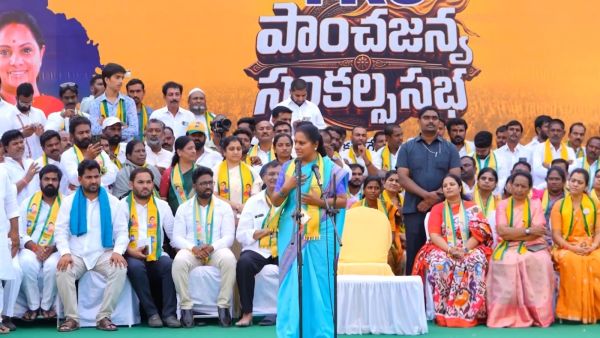
Kavitha comes to tears talking about Delhi excise policy scam
-
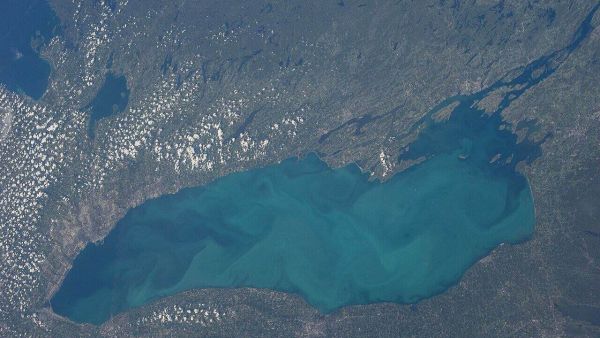
Trump asked Apple to change Lake Ontario name to Lake America
-
Woman randomly stabs 2 in New York, shot dead by police

-
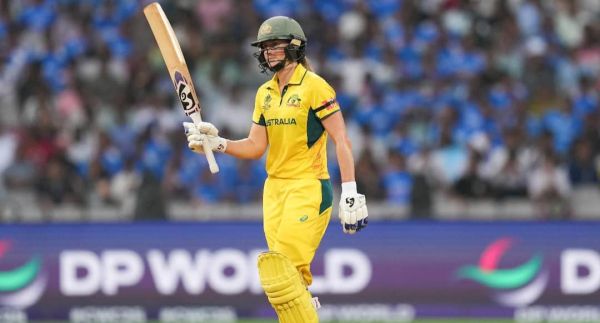
World's Richest Female Cricketer Revealed - She's Not Indian
-
Delhi Govt Begins Probe Into Beacon Public School Over Alleged Lack Of Recognition