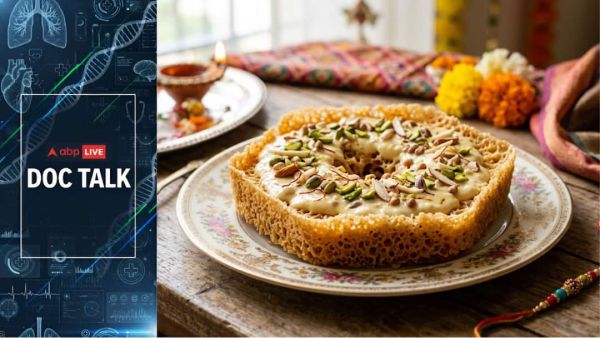
Raksha Bandhan comes with a lot of beloved traditions and one such tradition is a giant box of ghevar in many parts of North India. This confection, soaked in sugar syrup and often sprinkled with rabri, malai, nuts or silver leaf, is honeycombed and deeply ingrained in the festivities. This is not about the fact that we eat ghevar once a year. That’s because we often underestimate how fast a pleasurable amount can turn into a hefty metabolic load.
Ghevar is made with concentrated sugar syrup, ghee or oil and maida (refined flour). In the Malai and Rabri varieties, an additional layer of fat and sugar is added. Traditional ghevar has between 350 and 425 calories per 100 grams, according to current nutritional estimates, but recipes and portion sizes vary widely. 600-700 calories in a good size portion of rabri or malai ghevar is more than a third of the daily energy needs of an average adult.
So it is more useful to ask: How big is the serving, what is on top of it, what else have I eaten today? Rather than: How many pieces can I eat?
Doc Talk | H1N1 Beyond The Lungs: How Influenza Can Affect The Brain And Nervous System
What Is A Reasonable Amount Of Ghevar?
For a healthy adult, a moderate festive portion is around 40–50g, usually a small wedge rather than a whole disc. The topping boosts the energy density of malai or rabri ghevar so it is best to limit it to 30 to 40 grams.
Those with high triglycerides, fatty liver disease, diabetes, prediabetes, obesity or polycystic ovarian syndrome should be more cautious. A lesser amount of approximately 20-30 grams may be considered only if the glucose is reasonably controlled and the patient’s physician or dietician has not advised otherwise. Some people with poorly controlled diabetes or very high triglycerides may be better off avoiding it.
There is no “safe number” of anything that has medical significance. The rest of the meal, activity, liver health, medication, body weight, and glucose control are all critical.
What Happens If You Eat Too Much Ghevar?
The first response is an increase in blood glucose. Carbohydrates are readily available in refined flour and sugar syrup but there is not much fibre to slow their absorption. The pancreas needs to secrete insulin to get this glucose from the blood into cells.
In metabolically well people, the body might be able to handle a one-off spike. But in people who are insulin-resistant, glucose levels can also remain elevated longer. May cause thirst, drowsiness, exhaustion, heavy, or excessive urination. Postprandial readings may be particularly prominent in those on glucose lowering drugs.
The fat in ghevar complicates this reaction. The dessert is fried and may contain ghee or malai or rabri which can slow down the process of digestion. In this way, blood sugar may climb rapidly and remain elevated for hours after a meal. This long and delayed response is especially important for users of insulin, who should never try to “cover” a holiday treat by changing their doses on their own.
Diabetes that was previously undiagnosed may show up with conspicuously high readings at festivals. The liver also gets the surplus.
Once immediate energy needs are satisfied and glycogen stores have been adequately replenished, surplus carbohydrates can contribute to the liver’s production of fat. Overdoing it often can make fatty liver and triglycerides worse, especially if you're not active.
The blend of refined carbohydrates and fat is extremely tasty but not in proportion to how filling it is, making it particularly easy to overconsume. In a few minutes a person can eat several hundred calories and not feel as full as they would after a meal with protein, veggies and pulses.
Overeating can also lead to acidity, bloating, nausea, or abdominal discomfort. A large, rich meal can make people with gallbladder problems, reflux illness or sensitive digestion feel especially ill.
One Celebration Or A Week Of Leftovers
For most healthy people, one small serving is probably not going to cause any lasting damage. The bigger issue is "festival spillover" - sweets eaten at home, at work, on visits and again after dinner for several days in a row.
As per the National Institute of Nutrition, the 2024 Dietary Guidelines for Indians recommends about 25 grams of sugar per day for better health. The World Health Organization recommends that for additional benefits, free sugars should be reduced to around 5% of total daily calories, which is roughly 25 grams a day. It also recommends that free sugars be kept below 10%. One syrup-soaked meal can use up or even exceed the recommended daily intake, depending on the recipe.
If you do this too often, you can end up with higher triglycerides, weight gain, insulin resistance and cavities. The health impact of cumulative exposure is greater than that of a single ceremonial bite.
Doc Talk | Trying To Conceive? How Fertility Stress Can Affect Your Mental Health
How To Eat Ghevar Smartly
Don't take it on an empty stomach. Begin with a wholesome meal that has vegetables, eggs, paneer, curd, dal or some other protein. Protein and fibre can also increase satiety and slow the speed at which a meal impacts blood sugar levels.
Plain ghevar is better than rabri or thickly layered malai types Rather than breaking off “small” pieces repeatedly, cut out one section that you specify. Share a serving. Don’t eat it with sugary drinks and don’t compensate by skipping meals during the day; severe restriction often results in overeating.
A 10 or 20-minute workout after eating can help muscles use up circulating glucose, but it won’t burn away the calories. People with diabetes may check their blood sugar as part of a regular medical routine, especially an hour or two after they start to eat. If readings are consistently high they should not be treated with unsupervised changes in medications but should be reviewed with their physician.
Don't turn Raksha Bandhan into a diet anxiety exercise. Ghevar is not a test of one’s resolution but is a part of the celebration. The most practical rule is simple: maintain the tradition, scale back the quantity, and don’t let one holiday indulgence turn into an extended period of metabolic overload.
Disclaimer: The information provided in the article is shared by experts and is intended for general informational purposes only. It is not a substitute for professional medical advice, diagnosis, or treatment. Always seek the advice of your physician or other qualified healthcare provider with any questions you may have regarding a medical condition.
-
Joy Elite League round two: Al-Ittihad meet the competition’s biggest victims, while Al-Ahli stay alert against the six-goal side

-
BCCI Furious Over Asian Games Conditions: 'Dressing Room In Tents, Washroom 500m Away'
-
Dalal Streets Close Higher As Sensex Jumps Over 215 Points, Nifty Tests 24,200

-
Asian Games 2026: BCCI, ACC Unhappy With Japan Facilities; India May Send 'B' Team If Arrangements Fail To Meet Standards

-
Trump Plans Chip Tariffs That Could Hit Servers & Laptops, Tech Industry Warns Of AI Setback