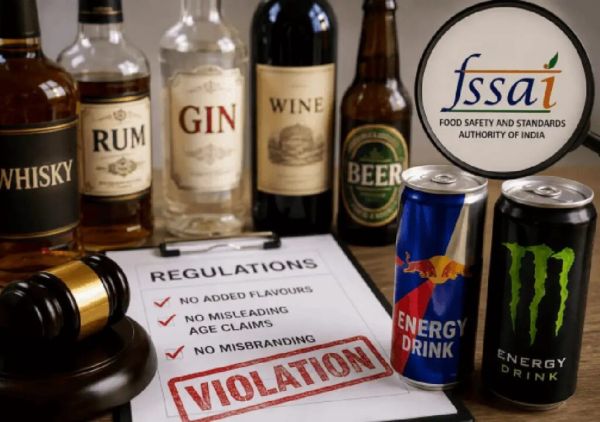
Indian whisky drinkers may have a new reason to look more closely at the labels on their bottles after the Food Safety and Standards Authority of India (FSSAI) stepped up scrutiny of alcoholic beverages over alleged violations involving flavour additives and age- claims.
The issue does not mean that all flavoured alcoholic beverages are illegal. Rather, the regulatory concern centres on the use of added flavours to reproduce the characteristic profile of spirits such as whisky or rum when those characteristics are expected to come from the raw materials and prescribed manufacturing processes.
Why added flavouring is under scrutiny
India’s regulations for alcoholic beverages specify that spirits including whisky, rum, gin, vodka and brandy should derive their characteristic flavour from their raw materials and manufacturing methods.
FSSAI has reportedly issued notices to manufacturers, seeking explanations over alleged violations under the Food Safety and Standards Act, 2006.
The scrutiny has also included inspections and sampling of manufacturing facilities. In Tamil Nadu, the state liquor retailer reportedly stopped selling 11 varieties following FSSAI testing that allegedly detected artificial flavouring substances.
What does ‘aged’ whisky really mean?
Age- claims are another area attracting attention. Words such as ‘aged’ and ‘matured’ can lead consumers to believe that the entire spirit has spent a particular number of years in a cask.
However, for a blended spirit, the stated age has a specific regulatory meaning. It refers to the youngest spirit in the blend rather than every component being the same age.
FSSAI has reportedly identified instances where required disclosures relating to age claims were not made, potentially creating an impression different from what regulations require.
Consumers are paying more attention
The issue comes as India’s alcohol market continues to expand and consumers increasingly show interest in premium spirits, provenance and maturation.
For buyers, the regulatory action is a reminder not to assume that every whisky contains added flavouring or that every age statement is misleading. Instead, consumers can pay closer attention to labels and check whether claims about age, maturation and flavouring are properly disclosed.
For the industry, the controversy could lead to further regulatory consultations and clarification over the distinction between permitted processing practices and flavouring intended to replicate a spirit’s defining characteristics.
Ultimately, the information printed on a bottle is an important part of the consumer proposition. As premium spirits become more popular, understanding what terms such as ‘aged’ and ‘matured’ actually mean could help consumers make more informed choices.
-
Karisma Kapoor recalls Kareena Kapoor’s burqa shot in Refugee

-
Watch: Rakhi Sawant prays for flood-hit Nepal in Makkah

-
Sri Lanka Tour Done: India's Next Opponent, Complete September Cricket Schedule Revealed

-
Mikel Arteta sends message to Arsenal players amid Julian Alvarez transfer uncertainty

-
Chelsea move for Emi Martinez as £7.5m deal is agreed for Aston Villa goalkeeper upgrade