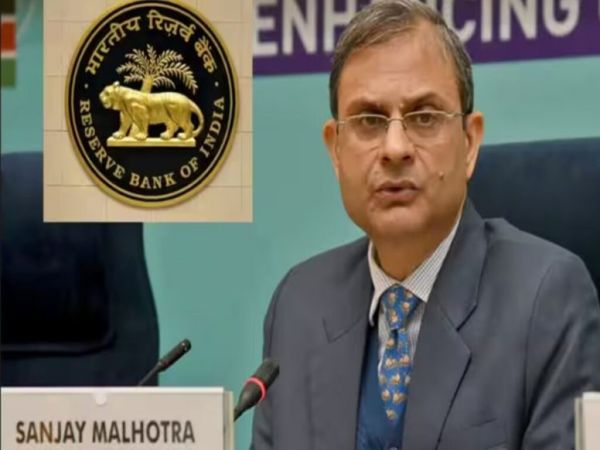
India’s domestic economy continues to show resilience despite trade tensions, fresh US tariffs and geopolitical risks, with strong demand, improving industrial activity and better capital inflows supporting growth.
India’s economy has continued to hold firm despite a challenging global backdrop, according to the Reserve Bank of India’s (RBI) latest ‘State of the Economy’ assessment. The central bank said robust domestic demand, improving manufacturing and services activity, better monsoon conditions and a recovery in foreign investment flows are helping the economy withstand external pressures.
“The global economy is confronting a fragile geopolitical environment and continuing trade- uncertainties,” RBI researchers and economists said in the report, while noting that India’s domestic economy has displayed considerable resilience.
RBI Keeps Repo Rate Unchanged at 5.25%
The assessment comes after the RBI’s Monetary Policy Committee (MPC) kept the benchmark repo rate at 5.25% during its August 5 meeting.
The central bank slightly upgraded its economic growth outlook for FY27 to 6.7% from 6.6%while reducing its inflation projection to 5% from 5.1%.
However, the MPC also indicated that monetary policy could become tighter later in the financial year. The meeting minutes suggested that a potential rate hike could come into consideration if inflationary pressures increase, with headline inflation expected to reach as much as 5.9% during the third quarter of FY27.
Economic Activity Remains Strong in July
According to the RBI, the economic momentum recorded during the first quarter of FY27 carried forward into July.
Several high-frequency indicators showed continued strength across manufacturing and services, suggesting that domestic economic activity remains relatively healthy despite global uncertainty.
Consumer demand also remained firm. The central bank pointed to vehicle and tractor sales as indicators of sustained demand. Petroleum consumption, meanwhile, returned to positive growth after declining for three consecutive months.
Manufacturing Growth Picks Up
India’s industrial sector recorded a notable improvement in June.
Industrial production posted its strongest growth in nearly two years supported by a broad-based improvement in manufacturing activity.
The services sector also maintained its resilience, reinforcing the RBI’s view that domestic economic conditions remain supportive of overall growth.
Exports Rise, But Trade Deficit Widens
India’s merchandise trade also showed strong activity in July, with both exports and imports recording healthy growth.
Merchandise exports reached their highest level so far in FY27 over a four-month period. However, the country’s trade deficit widened compared with both the previous month and the same period a year earlier.
The RBI attributed part of the widening deficit to a larger shortfall in electronic goods.
Better Monsoon Offers Support to Agriculture
The southwest monsoon has emerged as another positive factor for the Indian economy.
Rainfall was below normal in June, but monsoon activity improved in July. This helped bring kharif sowing closer to normal acreage and reduced some of the concerns surrounding agricultural output.
A better agricultural season could also support rural demand in the months ahead.
Liquidity and Credit Conditions Remain Comfortable
The RBI highlighted favourable financial conditions as another factor supporting economic activity.
Liquidity in the banking system remained comfortable, while credit growth stayed strong. Government bond yields also softened, helped in part by a recovery in foreign capital inflows.
These conditions could provide additional support to investment and economic activity.
Inflation Still a Key Risk
Despite the positive growth indicators, inflation remains an area of concern.
Headline consumer price inflation edged higher, largely because of supply-side pressures. Core inflation, however, remained broadly stable, indicating that cost pressures have so far had a limited impact on underlying inflation.
The RBI will continue to monitor these developments closely, particularly because higher inflation could influence the direction of monetary policy later in FY27.
US Tariffs and Geopolitical Tensions Pose Risks
The global economic outlook remains uncertain, with geopolitical tensions in West Asia and renewed US tariffs creating risks for international trade and economic growth.
The RBI noted that these developments could affect both global growth and inflation by influencing trade flows, commodity prices and supply chains.
There was, however, some improvement in global uncertainty. The central bank said uncertainty had declined for the fourth consecutive month helped partly by reduced tensions between the US and Iran.
The Geopolitical Risk Index also recorded a sharp decline.
Global Market Volatility Eases
Financial market volatility across emerging economies eased during August, supported by lower crude oil prices.
Markets in advanced economies also became relatively calmer, helped by stronger economic fundamentals. However, volatility increased slightly around the middle of August amid renewed concerns over inflation and uncertainty surrounding West Asia.
For India, lower global volatility and softer oil prices could provide some relief, particularly given the country’s dependence on imported crude.
RBI Remains Positive About India’s Economic Outlook
Despite the risks coming from global trade tensions, US tariffs and geopolitical instability, the RBI believes India’s strong domestic fundamentals continue to provide a buffer.
Strong consumer demand, recovering industrial activity, resilient services, favourable monsoon conditions and improving capital inflows are helping the economy maintain its momentum.
The latest assessment therefore presents a mixed global picture but a relatively reassuring domestic one: while external risks remain significant, India’s robust macroeconomic fundamentals are providing the economy with a cushion against global shocks.
-
Hyderabad’s sweetest Milad-un-Nabi tradition is kheer puri

-
At 69, Hyderabad man shoots his way to three golds medals

-
Palestinian shot during raid on UNRWA centre by Israeli forces

-
Iran, Oman discuss managing traffic through Strait of Hormuz

-
Israeli strikes kill at least 4 people in Gaza’s refugee camp