A ₹505 Pizza Order Turns Into A Consumer Court Battle
A seemingly small dispute over a pizza order has ended with a food delivery platform and an eatery being ordered to pay ₹10,520 to a customer in Uttarakhand.
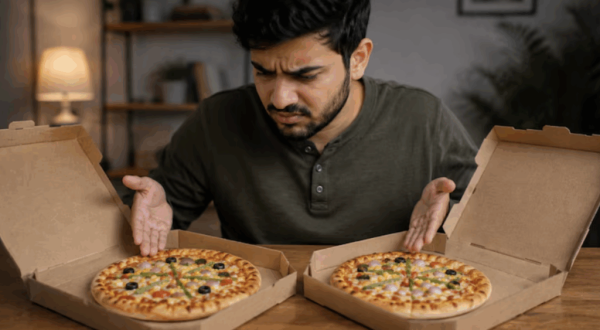
The customer had ordered two pizzas for ₹505 through a food delivery app. The product listing showed a pizza size of 10 inchesbut the customer received a pizza measuring just 7 inches.
What followed was a lengthy attempt to obtain a refund, eventually taking the matter to a consumer commission.
Customer Complained About The Three-Inch Difference
The customer noticed the discrepancy after receiving the order and promptly raised the issue with customer support.
However, according to the complaint, the problem was not resolved and a refund was not provided.
Instead of accepting the response, the customer escalated the matter through several grievance mechanisms.
He approached the National Consumer Helpline and the CPGRAMS portalfollowed by a formal legal notice.
When those efforts did not resolve the dispute, he approached the consumer commission.
Consumer Commission Finds Deficiency In Service
The consumer commission examined the complaint and concluded that the customer had not received the product as it was described when he placed the order.
The difference was not considered a minor variation.
A 10-inch pizza and a 7-inch pizza have a substantial difference in their actual surface area, meaning the customer received significantly less food than what was represented in the listing.
The commission therefore treated the matter as deficiency in service and an unfair trade practice.
Food Delivery Platform Also Held Responsible
The food delivery platform reportedly argued that it was only an intermediary connecting customers with restaurants.
It maintained that it did not manufacture, prepare or package the pizza and therefore had limited control over the restaurant’s product.
However, the commission did not completely accept that argument.
It observed that the platform played an integral role in the service chain, including accepting the order, coordinating with the restaurant and facilitating delivery.
Therefore, responsibility could not simply be avoided by describing the platform as an intermediary.
Eatery Failed To Respond
The restaurant or eatery involved in the dispute reportedly failed to file its response before the commission.
As a result, proceedings against the seller moved forward without its defence being considered.
The commission then relied on the evidence and affidavits available in the case while determining the dispute.
Customer Gets ₹10,520
The final compensation was considerably higher than the original ₹505 food bill.
The eatery and platform were ordered to jointly and severally pay the customer ₹10,520 within 45 days.
The amount included the original pizza price of ₹505delivery charges of ₹15compensation of ₹5,000 for mental and physical harassmentand another ₹5,000 towards litigation expenses.
The case therefore transformed a ₹505 consumer dispute into a compensation order worth more than 20 times the original purchase value.
Why The Case Matters For Online Food Orders
The ruling highlights an important issue in the rapidly expanding food delivery industry.
Customers generally rely entirely on information displayed on an app when placing an order.
That can include the product name, quantity, size, ingredients, price and other specifications.
If the delivered product materially differs from what was advertised, consumers can potentially challenge the transaction.
The case reinforces the importance of accurate product descriptions on digital platforms.
Platforms May Not Always Escape Responsibility
One of the most significant aspects of the case is the platform’s argument that it was merely an intermediary.
The commission’s reasoning suggests that a platform involved in accepting orders and coordinating fulfilment can form an important part of the overall service.
This could have wider implications for online marketplaces.
Digital platforms may need to pay greater attention to how products are described and whether customers receive what they actually ordered.
A Three-Inch Difference Became A Big Legal Issue
At first glance, the dispute may appear trivial.
The difference between a 10-inch and 7-inch pizza might seem like something that could be resolved through a simple refund.
But the commission considered the discrepancy significant enough to constitute a failure to provide the service that had been promised.
The customer’s decision to pursue the matter also demonstrates how consumer grievance mechanisms can be used even when the original financial dispute is relatively small.
The Real Lesson For Food Delivery Companies
The case sends a clear message to restaurants and delivery platforms: product descriptions need to match what reaches the customer’s doorstep.
Size, quantity and specifications are not merely marketing details when they influence a purchasing decision.
If a customer pays for one product but receives something materially different, the resulting dispute can become much more expensive than the original order.
Customers Also Have A Lesson To Learn
Consumers facing similar problems should preserve evidence.
Screenshots of the product listing, order confirmation, invoice, photographs of the delivered item and customer-support conversations can all become important if a dispute escalates.
A customer should ideally first attempt to resolve the issue directly with the platform or restaurant.
If that fails, formal consumer grievance channels can provide another avenue for seeking relief.
A Small Bill, A Big Consumer Court Lesson
The Uttarakhand case shows how a ₹505 food order can become a serious consumer dispute when the product delivered does not match what was advertised.
The customer received a 7-inch pizza instead of the listed 10-inch version and was initially unable to secure a refund.
After escalating the matter through multiple grievance channels and eventually approaching the consumer commission, he was awarded ₹10,520.
The ruling could serve as a reminder to digital platforms and restaurants that accuracy in online product listings matters.
Summary
A Uttarakhand customer who ordered two pizzas worth ₹505 received 7-inch pizzas instead of the 10-inch size advertised on a food delivery app. After failing to obtain a refund, he approached consumer grievance authorities and eventually the consumer commission. The commission found deficiency in service and unfair trade practice, ordering the eatery and platform to jointly pay ₹10,520, including compensation and litigation costs.
-
Life Gets So Much Better For 4 Chinese Zodiac Signs After Tuesday, August 25, 2026

-
Redmi Note 17 Pro: Possible launch in India on September 15 with 10,000mAh battery, price may increase by ₹ 8,000

-
The hassle of frequent recharge is over! BSNL's great plan, will get validity of 412 days

-
TopX Casino Review – Read

-
Railways launches special campaign for clean drinking water facilities
