Manchester United’s summer transfer window has reached an important point. The opening phase of their business was wrapped up early, pre-season has offered a few indications, and the closing weeks now look set to shape how Michael Carrick’s squad will appear once the serious fixtures begin. The latest update centres on United’s market position, especially the situation around Bruno Fernandes, the search for a left-back and the view that more movement could still happen before the deadline.
For a club long linked with heavy spending, one figure stands out straight away. United’s “net outlay sits at only £44million”. That marks a clear change from recent seasons, particularly after “more than £500m went on new players” in the first two years following Sir Jim Ratcliffe’s purchase of a stake in the club. The mood at Old Trafford now suggests a more restrained transfer strategy, which helps explain why the club “started the window quickly but have slowed down”.
That slowdown has not removed the urgency. It has only altered the shape of the summer. United dealt with midfield early, added depth in goal, and then paused. The major question now is whether that patient approach will prove wise or whether it could leave Carrick short in positions that still need strengthening.
The biggest development concerns the captain. “Manchester United are in contract talks with Bruno Fernandes amid the player receiving a lucrative proposal from Galatasaray.” The financial terms involved are significant. “The Turkish club offered the 31-year-old a salary of €20million (£17.1m;$23.2m) a year,” which is a striking amount for any player in his thirties.
What matters most from United’s point of view, however, is the player’s position. “Fernandes wants to remain at United and is in discussions about a new deal.” That will be a major boost inside the club and among the fanbase, because the team’s creative structure still depends heavily on him. His existing contract, “signed in August 2024, run until 2027, with the option of an additional 12 months”, gives United some protection. There was also a clause that briefly opened the door to outside interest, as “Fernandes had a €65m release clause that was only open to foreign clubs earlier this summer, but that has since expired.”
The expiry of that clause is significant. It shifts the balance firmly. The report adds that “United are not open to selling Fernandes after the expiration of that clause and maintain they have not received any contact from clubs over the Portugal international.” In simple terms, the club’s stance is firm both publicly and privately, and the player appears to be on the same page.
From a footballing perspective, that makes complete sense. The analysis around Fernandes was particularly notable. He was labelled “the outstanding creative force in Europe last season”, backed up by numbers that show how reliant United still are on him. “Fernandes created four chances per game, more than any other player across Europe’s top five leagues, culminating in a record-breaking 21 Premier League assists.” Add in his availability and work rate, and the verdict was blunt: “Selling him is unthinkable”.
That may sound forceful, but it is hard to dispute. United can speak about long-term planning, rebuilding the squad and targeting future profiles, but none of those aims become easier if they remove the one player who consistently keeps the attack functioning. The wiser course is the one already suggested: keep Fernandes, renew his contract, and bring in players who can reduce the load on him both physically and creatively.
There may be a temptation to interpret the quiet spell as indecision, but the explanation is more nuanced. “Signing midfielders was a crucial aspect that had to be addressed early in the window, and United did that by signing Andrey Santos and Youri Tielemans. Backup goalkeeper Karl Darlow also joined.” That early work gave the club room to breathe.
After that, “United then decided to take stock and assess options, while seeing how Carrick’s team progressed through pre-season. Certain situations have also needed time to develop, so United waited.” There is a clear logic to that. Rather than rushing into inflated deals, the club seem to have preferred to pause, evaluate and then push late in the window if the right chances present themselves.
Even so, this is where the pressure increases. “With a fortnight left in the window, and Carrick confirming his desire for more signings, some supporters are calling for United to strike.” That feels like an accurate reflection of the current mood. A calmer process is understandable, but it still has to deliver. If the needs are obvious and the manager has pointed to them in public, the final stretch cannot simply drift by.
Carrick himself was careful in his wording, but the message was still clear. “There’s one or two areas where we’d like to improve. But we are pretty clear in the messages that we need to keep pushing and there’s certain things that we want to try and do, but it needs to be right.” That quote sums up the recruitment approach perfectly: open to doing business, selective about profile, and unwilling to act merely for the sake of activity.
If one position defines United’s remaining plans, it is left-back. The report states plainly that “Left-back is the main focus, with midfield another area to address.” In an ideal scenario, the preferred signing may also offer flexibility across both positions, giving the squad a player capable of solving more than one tactical issue.
That helps explain the mention of Myles Lewis-Skelly. United “have been offered the chance to sign Lewis-Skelly through intermediaries” and, “although a deal would appear complicated”, it is “not necessarily thought to be the end of the matter.” Those qualifications are important. Arsenal remain the player’s clear priority, and it is also stated that “Lewis-Skelly himself wants to stay at Arsenal.” So while the interest may be genuine, the route to a deal is far from straightforward.
The same applies to another player United admire. “United have also strongly considered Lewis Hall,” whose tactical awareness and development make him an obvious fit for the role. But there is one straightforward obstacle: “Newcastle insist the 21-year-old is not for sale.” That usually shuts down talks quickly unless the selling club changes its stance late in the window, which is never something that can be counted on.
That is where a more realistic option comes into view. “Jorge Salinas represents a cheaper plan,” and the report adds that his “€16m release clause in his Racing Santander contract” means “a deal could be concluded quickly for the Spain Under-19 left-back.” In the context of the late window, those are attractive conditions. United would know the price, the mechanism is simple, and the age profile fits a wider recruitment model built around both potential and immediate cover.
Another route appears to be blocked. “Club Brugge insist Joaquin Seys, who has been linked with United, will not be leaving.” Looking across the shortlist, a pattern is clear. United may know the type of player they want, but several of the more high-profile names are difficult to prise away. That puts greater emphasis on whether the club move decisively towards the realistic target rather than spending too long chasing the ideal one.
There were also useful signs regarding the wider squad. Marcus Rashford’s appearance against AC Milan attracted attention for more than one reason. The report says he “played his first United game of any kind in 20 months” and “wore the No 9 shirt”. Shirt numbers can still change, but the reading was clear: it “signified the expectation that he will remain at United beyond the end of the window.” In a summer filled with questions about squad order and roles, that is a notable indication.
Elsewhere, the striker position could yet become more important. “A striker is on the cards if Joshua Zirkzee departs,” and “Juventus have held talks over Zirkzee.” That looks like a situation worth monitoring closely. Outgoing transfers often unlock incoming ones, and if United lose a centre-forward late in the window, they may have to respond quickly.
Younger players are also drawing interest. “West Brom are at an early stage of trying to do a deal for Collyer, although other clubs are interested.” The same report also says that “Suitors are expected to make a move for Harry Amass, United’s 19-year-old left-back.” Those situations matter because they can affect squad depth and development planning, particularly in a position where the senior side is already seeking reinforcements.
The academy market has already seen movement. Ethan Williams joined Peterborough “in a deal worth £750,000 plus add-ons and a 50 per cent sell-on clause” while Ethan Ennis moved to Stockport County for “a lower six-figure fee and a 50 per cent sell-on.” Those look like sensible arrangements, protecting future value while allowing the players opportunities elsewhere.
All of that leaves United facing a familiar but hugely important final fortnight. The broad strategy is defensible. The club have not panicked, they have protected their most valuable asset in Fernandes, and they have shown discipline after years when spending often appeared disconnected from a wider plan. But discipline is only praised when it is backed up by execution. Left-back is still unresolved, midfield depth remains under consideration, and the possibility of a striker signing depends on departures.
The biggest positive may be that the most important piece of business is internal. If Fernandes stays, signs a new deal and remains the central figure in Carrick’s side, United retain a strong level of control over their season. The task is to build enough around him to make that control meaningful.
From the perspective of an uncertain Manchester United supporter, this update leaves a feeling somewhere between reassurance and concern. On Fernandes, there is no debate at all. If “Fernandes wants to remain at United” then the club must get that sorted and do so quickly. He carried the team through too many matches last season for there to be any hesitation. When you read “Selling him is unthinkable”, it feels exactly right.
Where the discomfort remains is in the pace of the rest of the window. I understand the line that “it needs to be right”, and after years of rushed business that sounds sensible. But supporters also know how these windows can finish: plenty of noise, not enough action, and then everyone is told to trust the process while obvious weaknesses are still there.
It makes sense for left-back to be the main priority, but if Lewis-Skelly wants Arsenal and Lewis Hall is not for sale, then United need to stop dreaming and start making decisions. If Salinas is the realistic deal, then move for him. The same applies to midfield depth. This squad still looks only one or two injuries away from appearing very thin in important areas.
So yes, there are positive signs here. Keeping Bruno would be massive. Rashford staying could still prove important. But supporters are not wrong to want a stronger finish to the window than the current pace suggests.
-
Leo Horoscope Today, August 19, 2026: Financial aspects will remain strong, you will succeed in seizing opportunities

-
Aries Horoscope Today, August 19, 2026: Successful in Transactions, Protection of Collective Interests

-
Virgo Horoscope Today, August 19, 2026: Activity will increase in banking work, work contracts will improve

-
Things you should carry if you’re visiting the mountains during monsoon

-
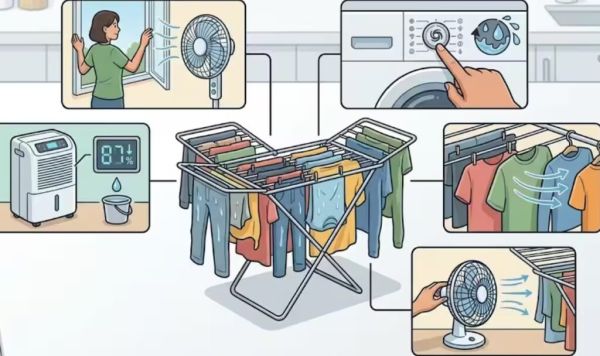
How to dry clothes faster in humid weather: 5 simple tips |