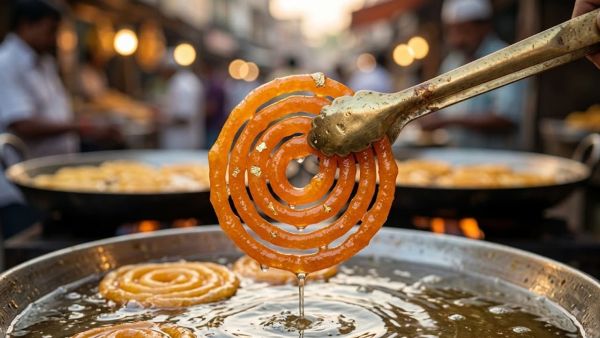
Part of the fun is that there is no single jalebi experience across India.
The familiar version is generally made by piping batter into hot oil or ghee in tight spirals, frying it until crisp and then soaking it in sugar syrup. But recipes, thickness, texture and serving styles vary considerably from one region to another.
In Bengal, for example, jilipi can refer to several preparations. There are versions made with different batters, while chhenar jilipi uses chhena and can be fried in ghee. In parts of Bengal, moong dal is also used for a preparation known as moong jilipi or papri.
Then comes imarti, jalebi’s more intricate cousin, known as amriti or jangiri in different parts of the subcontinent. It looks related to jalebi but is made differently, traditionally using urad dal (black gram) batter, and has a thicker, flower-like shape. The two sweets are therefore similar but should not simply be treated as the same dessert.
-
Army personnel who saved comrades' lives, injured terrorist chosen for Kirti Chakra posthumously

-
Ex-employee, three others arrested for robbing liquor contractor of Rs 1.53 lakh in Faridabad

-
IAS officer hearing Jauhar University case gets central deputation

-
Minister Agnimitra Paul, celebrities take part in women's ‘Freedom Beyond Midnight’ march in Kolkata

-
NHRC notice to states, UTs, FSSAI over concerns raised about sale, consumption of 'analogue paneer'