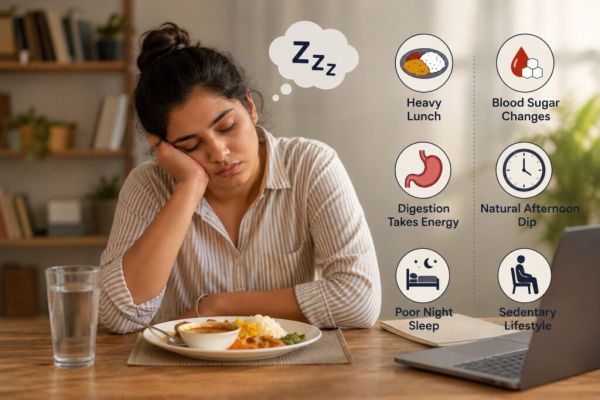
14 Aug, 2026: Feeling sleepy after lunch is quite common. You may notice your eyes becoming heavy, concentration dropping and a strong urge to take a nap shortly after eating. While occasional post-lunch drowsiness is generally normal, experiencing intense sleepiness every day should not always be ignored.
Several factors, including your body’s natural biological clock, the size of your meal, the type of food you eat and changes in blood sugar levels, can contribute to this feeling.
Why does sleepiness occur after lunch?
After a meal, the body shifts its attention towards digestion. Blood flow and metabolic activity involved in processing food can contribute to a temporary feeling of relaxation and tiredness.
There is also a natural dip in alertness during the afternoon as part of the body’s circadian rhythm. This can make you feel sleepy even when you have had enough sleep the previous night.
The effect may become more noticeable after a large or heavy meal.
Heavy meals can increase tiredness
The quantity of food you eat can make a difference. A very large meal requires more effort from the digestive system and may leave you feeling sluggish afterwards.
Meals containing large amounts of refined carbohydrates, sweets, sugary drinks or highly processed foods can also cause a rapid rise in blood glucose. The subsequent changes in blood sugar and insulin levels may be accompanied by tiredness or reduced concentration in some people.
This does not mean that carbohydrates should be completely avoided. Instead, maintaining balanced portions and combining carbohydrates with protein, vegetables and fiber can help make meals more nutritionally balanced.
Blood sugar may also play a role
Foods high in added sugar and refined carbohydrates can cause blood glucose levels to rise quickly. The body responds by releasing insulin, which helps move glucose from the bloodstream into cells.
For some people, fluctuations in blood glucose may be followed by fatigue, weakness or sleepiness.
If you frequently experience extreme tiredness after meals, particularly along with excessive thirst, frequent urination, unexplained weight changes or blurred vision, it is advisable to speak to a healthcare professional and consider appropriate testing.
What can you do to reduce post-lunch sleepiness?
- A few simple lifestyle changes may help:
- Keep lunch portions moderate instead of eating until you feel excessively full.
- Include protein-rich foods, vegetables and fiber in your meals.
- Limit excessive added sugar and highly refined foods.
- Drink enough water throughout the day.
- Take a short, gentle walk after eating instead of immediately lying down.
- Maintain a consistent sleep schedule and get adequate sleep at night.
- Avoid making lunch excessively heavy, particularly if you need to remain alert for work or study.
A short period of rest after lunch is not necessarily a problem. However, regularly needing a long nap or experiencing severe daytime sleepiness despite getting adequate sleep may warrant further attention.
When should you consult a doctor?
Occasional sleepiness after eating is usually not a cause for concern. However, persistent or unusually severe daytime fatigue can sometimes be associated with underlying issues such as blood-sugar problems, sleep disorders, nutritional deficiencies or other health conditions.
If the tiredness is frequent, worsening or accompanied by other unusual symptoms, consult a qualified healthcare professional rather than assuming it is simply because of lunch.
-
Tariq Mansoor and Basit Ali: BJP’s key minority faces

-
BJP team to visit Hanur encounter site, report in a week

-
Israel Carries Out Eight Airstrikes On Unused Airbase In Northwestern Syria’s Idlib

-
Bangladesh Seeks More Diesel From India Amid Energy Crisis: Here's What MEA Responds

-
Scared of Snakes This Monsoon? Here’s How to Keep Them Away During Monsoon