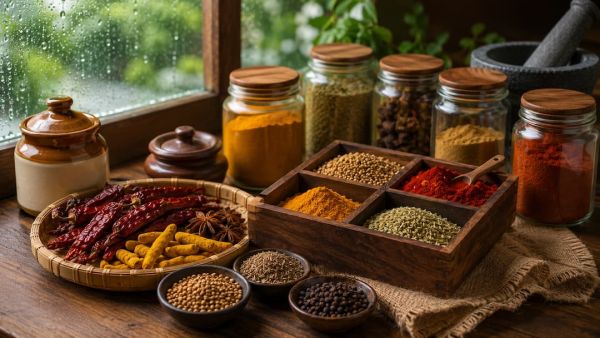
The monsoon brings relief from scorching heat, but the rise in humidity can create problems in the kitchen. Spices such as turmeric, red chilli, coriander and cumin can easily absorb moisture during the rainy season. As a result, they may develop lumps, lose their aroma and, in some cases, show signs of spoilage. While damp spices are often thrown away, those that are only slightly affected by moisture can sometimes be restored with proper drying and storage. However, spices showing visible mould or an unusual smell should not be reused.
Dry Damp Spices With Sunlight Or Low Heat
If your spices have only absorbed a little moisture and show no signs of mould, spread them in a thin layer on a clean, dry plate or tray and place them in sunlight for a few hours. This can help remove excess moisture and restore some of their texture and aroma. Since monsoon weather may not always provide enough sunlight, another option is gently heating the spices in a dry pan over low heat. Keep stirring them and avoid roasting for too long, as excessive heat can affect their flavour, aroma and colour. Once dried, allow the spices to cool completely before transferring them to a container.
Packing them while they are still warm can lead to condensation and cause moisture to build up again. If turmeric, chilli or other powdered spices have developed small lumps because of humidity, you can break them down after drying and pass the powder through a fine sieve. This helps restore a smoother texture. However, there is an important distinction: spices with visible mould, an unpleasant smell, unusual discolouration or significant spoilage should be discarded rather than dried and reused.
Store Spices Properly To Keep Moisture Away
Drying the spices is only half the job. Proper storage is equally important to prevent them from becoming damp again. Transfer completely cooled spices into clean, completely dry airtight containers. Glass or good-quality food-safe containers can help keep humidity out when properly sealed. Avoid using a container that has even a little moisture inside. The location also matters. Keep spice containers in a cool, dry cabinet away from the sink, dishwasher and areas exposed to steam from the stove. Instead of keeping large quantities open for frequent use, it can also be practical to keep smaller amounts in everyday-use containers and store the remaining supply securely. During the monsoon, check your spices periodically for changes in smell, texture, colour or signs of mould. A little care while drying and storing them can help reduce unnecessary food waste while keeping your kitchen supplies in better condition.
-
USS Abraham Lincoln Under Fire Over Sailor Conditions After 250 Days At Sea

-
4 Dead, 6,000 Stranded At Tokyo's Narita Airport As Record Rain Flood Japan

-
‘After Galwan, Now Arunachal?’ Kharge Questions PM Modi On China’s Alleged Move Along LAC

-
'Couldn’t Have Been On Anyone’s Script': Ravi Ashwin Lauds Bangladesh's Turnaround In 1st Test Vs Australia

-
Delhi University Drops Delhi Sultanate Paper, Several History Courses From Revised PG Syllabus