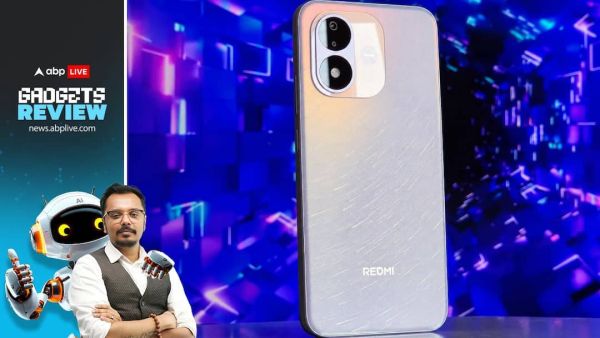
Redmi Note 17 Review: Smartphone makers have spent the better part of the last few years teaching us that thinner is better, lighter is better, and somehow another AI feature is always better. A few brands, including Redmi, have taken a different approach. On the Note 17, the Xiaomi sub-brand has put an 8,000mAh battery inside the phone and basically said: What if your phone just... didn't die?
That is the headline, and honestly, I like the thinking. There is something wonderfully uncomplicated about a smartphone that prioritises the one thing we all universally hate: running out of battery.
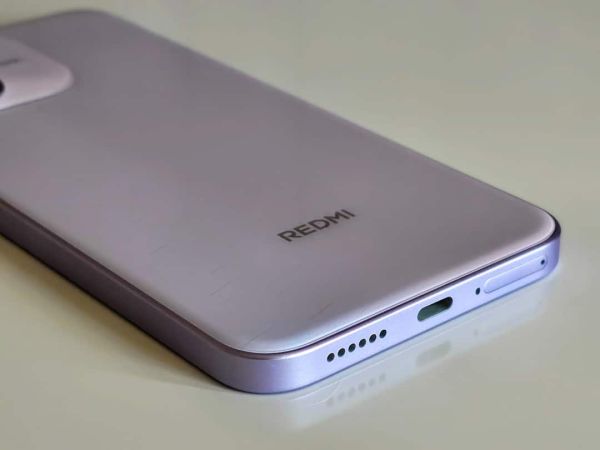
The Redmi Note 17 starts at Rs 27,999 for the 6GB + 128GB model. My review unit came in Starlight Purple, which looks particularly good when sunlight hits the back and reveals its radial shooting-star pattern. Then there is the rest of the specification sheet: a 17.75cm AMOLED display with a 120Hz refresh rate, Snapdragon 4 Gen 4, 50MP primary camera, Gorilla Glass 7i, 45W charging and 22.5W wired reverse charging. On paper, it sounds like Redmi has built a phone around one giant idea and then sensibly filled in the gaps.
GennieGPT, ABP Live's in-house AI review bot, meanwhile, has seen "8,000mAh" and appears to have forgotten every other word in the English language. Let's show her some real-world use cases.
Redmi Note 17 Review: Quick Pointers
What Works:
- 8,000mAh battery genuinely changes the charging routine
- 120Hz AMOLED display is a strong part of the package
- Starlight Purple looks excellent in direct sunlight
- 22.5W reverse charging is genuinely practical
- 8.4mm thickness is impressive for such a large battery
- MicroSD expansion and IR blaster remain welcome
What Doesn't:
- 225 grams is hard to disguise
- Snapdragon 4 Gen 4 is about efficiency, not brute force
- 50MP camera sounds more exciting than the overall camera system
- 8MP selfie camera is decidedly basic
- 128GB storage feels stingy at this price
The Battery Is Not A Feature. It's The Whole Personality
✨ GennieGPT: 8,000mAh! Shayak, I have calculated that this phone contains approximately 47 business days of battery. Xiaomi has successfully solved electricity.
Shayak: 47 days? LLMs can now a crack a joke it seems. Ignore that number, but yes, the battery is the Redmi Note 17's defining feature.
An 8,000mAh cell is enormous by smartphone standards, and you notice it less from the number itself than from what happens to your daily routine. You stop thinking about charging. That's a surprisingly liberating feeling. For me, even on heavy usage, the battery lasted me two days on a single charge, easy.
You can spend hours watching videos, browsing social media, using navigation, taking photographs and generally treating the phone like a small portable computer without constantly checking the top-right corner wondering whether 17 per cent is enough to get you home.
The interesting bit is that Redmi has managed to fit all of this into an 8.4mm-thick body. The trade-off becomes obvious the moment you pick it up: 225 grams. This is not a phone that disappears in your hand. It's not even particularly interested in trying.
But there is a reasonable argument here. I'd much rather carry a slightly chunky phone that refuses to die than a beautiful slab that needs a power bank before the evening tea break.
✨ GennieGPT: And 22.5W reverse charging! The Redmi Note 17 can literally donate its life force to other devices!
Shayak: Reverse charging becomes considerably more interesting when the phone itself has an 8,000mAh battery. Give your earbuds, smartwatch or another phone a boost and you still have plenty left in the tank. It's one of those features that sounds gimmicky until the first time somebody says, "Do you have a charger?" You do. It's your entire phone.
AMOLED Done Right, Marketing Not Required

✨ GennieGPT: 17.75cm TrueColour AMOLED! 120Hz! 1,800 nits! Five million to one contrast! This isn't a display, Shayak. This is a portal.
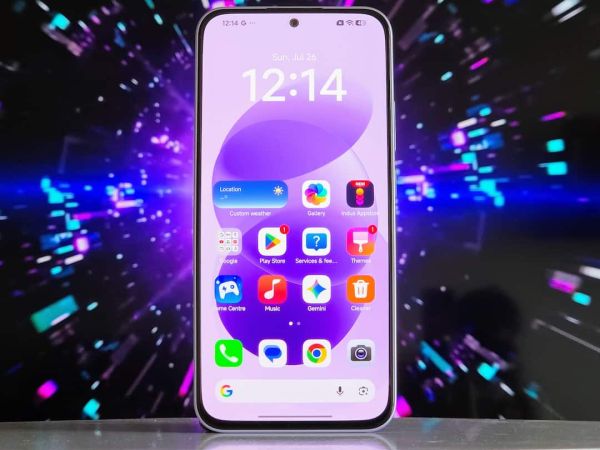
Shayak: The 17.75cm AMOLED panel is probably the Redmi Note 17's second-best feature after its battery. The 2396 × 1080 resolution is sharp enough, the 120Hz refresh rate keeps scrolling fluid, and AMOLED gives you the contrast and punchy colours you'd expect.
The claimed 1,800-nit peak brightness also matters more than some of the sillier numbers on this specification sheet. In bright Indian daylight, a screen that can push brightness hard is genuinely useful.
You also get DCI-P3 colour, TÜV eye-protection certification and an in-display fingerprint sensor.
See, I'll be honest. None of that is revolutionary. But, then again, it doesn't need to be. This is simply a display that feels suitably expensive for the class. And that matters because you interact with the screen more than almost anything else on a phone.
✨ GennieGPT: 4nm Snapdragon 4 Gen 4! Up to 2.3GHz! Adreno GPU! Efficiency meets performance! This is a gaming machine wearing a business suit!
Shayak: That's a very expensive way of saying "mid-range chipset". The Snapdragon 4 Gen 4 is clearly not here to win benchmark charts. It's here to make the phone feel responsive without turning the battery into a hostage situation.
You get 6GB or 8GB of LPDDR4X RAM and 128GB of UFS 2.2 storage.
For the usual smartphone routine — WhatsApp, Instagram, YouTube, Chrome, maps, music and multitasking — this should be perfectly adequate. Casual gaming is also fine. But there is a difference between capable and enthusiastic. The Note 17 is capable. It is not particularly enthusiastic.
And that's okay. Not everybody buying a phone around Rs 28,000 is secretly preparing for an esports career. The bigger issue is that 128GB is the only listed storage option, while the underlying UFS 2.2 storage is hardly cutting-edge in this segment.
At least the microSD slot gives you an escape hatch.
Let's Talk Cameras
✨ GennieGPT: 50MP high-resolution camera! f/1.8! High-resolution photography! Redmi has put a professional camera in your pocket!
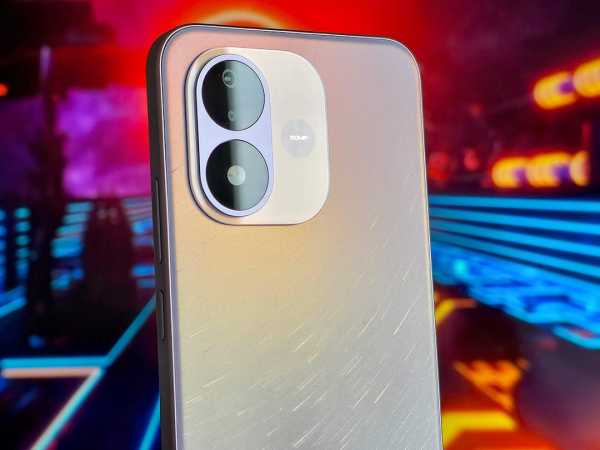
Shayak: No. Redmi has put a 50MP smartphone camera in your pocket. Which is perfectly fine. The 50MP main camera has an f/1.8 aperture and a five-element lens. On a specification sheet, that's a respectable starting point.
And that's really the story here. This camera is designed to get the job done rather than redefine mobile photography.
In good light, the hardware should have enough resolution and Redmi's processing does enough to make everyday photographs look pleasing. The kind of pictures most people actually take... food, friends, pets, holidays, sunsets, things they probably won't look at again in six months... are well within its comfort zone.
But the number "50MP" needs to be kept in perspective. Sensor quality, image processing, dynamic range and low-light behaviour matter much more than the megapixel count. The 8MP front camera, meanwhile, is a reminder that Redmi has clearly chosen where to spend its camera budget.
The Purple One Is The Good One
✨ GennieGPT: Starlight Purple! Radial shooting-star pattern! This is not a smartphone. This is ART.
Shayak: For once, your enthusiasm is justified. The Starlight Purple finish is one of those designs that's far more interesting in person than in a product photograph. Under normal indoor lighting, it looks relatively restrained. Put it under sunlight and the radial pattern comes alive, creating this subtle shooting-star effect across the back.
It's a clever way of making a fairly conventional rectangular smartphone feel like it has a personality. And, thankfully, Redmi hasn't tried to turn the rear into a festival of branding, unlike some other premium brands.
The problem is that a phone this large can only do so much to hide its physical presence. It looks sleek. It feels substantial.
Some Not-So-Trendy Features Deserve More Credit
✨ GennieGPT: Gorilla Glass 7i! IR blaster! MicroSD! USB Type-C! This phone has become the Swiss Army knife of smartphones!
Shayak: Again, slightly too enthusiastic. But this is where Redmi deserves credit.
The Gorilla Glass 7i gives the front some additional protection, while the IR blaster remains one of those delightfully practical Xiaomi additions that you don't think about until you need it.
There's also a microSD slot, which is increasingly useful when 128GB is the ceiling rather than the starting point. And yes, Redmi includes a 45W charger, USB Type-C cable, protective case and pre-applied screen protector in the box.
None of these will make anyone gasp at a launch event. They will, however, save you money after the launch event. I'll take boring convenience over another AI feature that writes emails I didn't ask it to write.
2,160Hz, With The Smallest Asterisk In The Universe
✨ GennieGPT: 2,160Hz instantaneous touch sampling! Shayak, this phone can read your thoughts before your fingers finish moving!
Shayak: The 2,160Hz instantaneous touch sampling rate sounds spectacular, but it comes with a condition: it's supported only in selected gaming scenarios. That's still potentially useful. In compatible games, faster touch response can make controls feel more immediate. But these are exactly the specifications that need context.
For everyday use, you're going to notice the 120Hz display far more than the 2,160Hz touch figure. This is an important distinction in modern smartphone reviews. A specification can be technically impressive without being particularly important to you.
Redmi Note 17 Review: Final Verdict
The Redmi Note 17 is a phone with a very clear sense of priorities. It doesn't try to be impossibly thin, it doesn't pretend the Snapdragon 4 Gen 4 is a gaming monster, and it doesn't surround a 50MP camera with the usual vocabulary of "professional-grade" nonsense. Instead, Redmi has gone after something far simpler: Endurance.
That 8,000mAh battery is enormous, and it changes how you use the phone. The 120Hz AMOLED display is another genuine strength, the Starlight Purple finish looks excellent, and practical touches such as reverse charging, expandable storage and an IR blaster give the Note 17 a welcome sense of completeness.
But there are compromises. The phone is heavy. The Snapdragon 4 Gen 4 is adequate rather than exciting. UFS 2.2 storage feels dated, and the 8MP selfie camera won't win any awards.
Then comes the price. At Rs 27,999 for 6GB + 128GB, the Redmi Note 17 isn't cheap enough to be dismissed as a straightforward battery-first budget phone. At this price, buyers are entitled to ask for better performance, better cameras, or more storage. And that's ultimately what makes the Note 17 interesting. It's the phone for someone who has decided that charging their smartphone twice a day is simply beneath them.
Should You Buy Redmi Note 17?
- Yes, if battery life is your priority, you spend a lot of time consuming content, and you want a big AMOLED display to go with that enormous battery.
- Maybe, if you want a dependable everyday phone and don't care about chasing benchmarks or flagship-grade camera performance.
- No, if 225 grams sounds excessive, gaming performance is your primary concern, or you expect cutting-edge hardware for Rs 27,999.
-
USS Abraham Lincoln Under Fire Over Sailor Conditions After 250 Days At Sea

-
4 Dead, 6,000 Stranded At Tokyo's Narita Airport As Record Rain Flood Japan

-
‘After Galwan, Now Arunachal?’ Kharge Questions PM Modi On China’s Alleged Move Along LAC

-
'Couldn’t Have Been On Anyone’s Script': Ravi Ashwin Lauds Bangladesh's Turnaround In 1st Test Vs Australia

-
Delhi University Drops Delhi Sultanate Paper, Several History Courses From Revised PG Syllabus