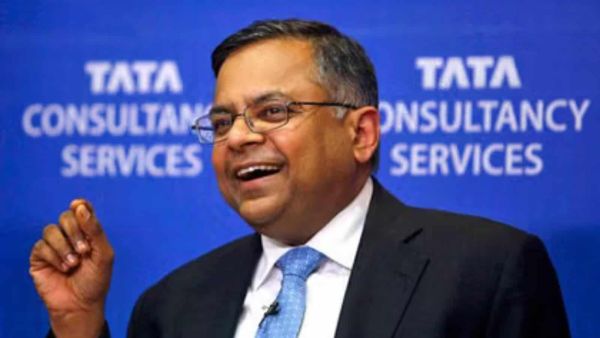
New Delhi: N Chandrasekaran will step down as chairman of Tata Sons when his current term ends in February 2027, drawing the curtains on a decade at the helm of one of India’s most influential business groups after a prolonged standoff over his reappointment with Tata Trusts Chairman Noel Tata.
Chandrasekaran, 63, who has spent 40 years with the Tata Group, on Wednesday, August 12, said he had informed the Tata Sons board that he would not offer himself for reappointment when his term ends on February 20, 2027. He asked the board to settle on a successor soon to ensure a smooth transition.
The decision follows months of uncertainty over his continuation at Tata Sons, the principal holding company and promoter of Tata group companies. Philanthropic trusts collectively hold 66 per cent of Tata Sons, giving Tata Trusts significant influence over the group’s governance.

Chandrasekaran, widely known as Chandra, said the Sir Dorabji Tata Trust and Sir Ratan Tata Trust, which together hold 51.54 per cent of Tata Sons, had unanimously recommended a five-year extension of his term. The proposal was subsequently recorded and recommended by the Tata Sons Nomination and Remuneration Committee and the board, he said.
5-year extension proposal not carried as one director did not support it
The proposal was tabled at a February 24 board meeting but was not carried through after one director did not support it.
Without naming who opposed the proposal, Chandrasekaran said he chose to defer the decision in the absence of unanimous support.
Six months later, with no resolution reached, he said the leadership uncertainty had become untenable as Tata Sons oversees several strategic projects at critical stages.
Tensions between Chandra and Noel Tata
The impasse had been linked to differences between Chandra and Noel Tata, who became chairman of Tata Trusts in 2024 following the death of Ratan Tata. Tata had reportedly sought assurances that Tata Sons would not be publicly listed, a position Chandra did not agree to. The disagreement also involved questions over board representation.
Tata had also reportedly sought greater clarity from Chandra on the group’s five-year strategic roadmap, ways to provide an exit to the Shapoorji Pallonji Group without taking Tata Sons public, and his position on the long-debated listing of Tata Sons.
The tensions had not completely paralysed the board. A Tata Sons meeting held in May was described by people familiar with the deliberations as constructive, with Noel Tata focusing on businesses, including Air India and BigBasket, while Chandra led reviews of group companies.
“I have completed 40 years of professional life at the Tata Group. I am grateful for the immensely satisfying opportunity to contribute to this venerable institution,” he said in the statement on Wednesday.
Tata Sons, the principal holding company of the Tata Group, is majority-owned by Tata Trusts and controls more than 30 group companies, including Tata Consultancy Services, Tata Motors and Air India.
In the absence of unanimous vote, Chandra defers decision
Stating that his current tenure is coming to an end on February 20, 2027, he said, “Sir Dorabji Tata Trust and Sir Ratan Tata Trust had unanimously resolved and recommended the extension of my next term for a period of five years, which was recorded and recommended by the Tata Sons Nomination and Remuneration Committee and the Board. Subsequently, the resolution was tabled in the Tata Sons Board on February 24, 2026.”
“However, the proposal was not carried through because one of the Board Members did not support it, and in the absence of unanimous support, I chose to defer the decision,” he said. “It has been 6 months since that Board meeting, and no resolution has been reached till date.”
Tata Sons, he said, is a very large institution and there are many strategic projects that are under critical stages of execution.
“It is not only necessary to have a leader in place to lead the Group beyond February 2027, but also clarity on leadership is important for employees, investors, partners and other stakeholders,” he said. “Under these circumstances, earlier today, I have communicated to the Tata Sons Board that I have decided not to offer myself for reappointment when my term ends on February 20, 2027. I have asked the Board to decide on the succession soon to ensure a proper transition.”
A decade at the top
Chandra joined the Tata Group in 1987 and rose through Tata Consultancy Services (TCS), becoming its chief executive in 2009. He was appointed chairman of Tata Sons in 2017, succeeding Ratan Tata’s interim tenure after the removal of Cyrus Mistry.
Under Chandra, the Tata group expanded aggressively across technology, auto, aviation, electronics and manufacturing, while pursuing large investments in semiconductors and other strategic sectors. The group now comprises 31 companies operating across more than 100 countries, according to Tata’s website.
Tenure marked with challenges
His tenure has also faced mounting challenges. Tata Group has had to contend with the fatal Air India crash, pressure on its technology business from the global shift toward artificial intelligence and a cyberattack affecting Jaguar Land Rover.
The succession question now moves to the centre of Tata Group governance. With Tata Trusts holding the controlling stake in Tata Sons and the board yet to settle on a successor, the choice of Chandra’s replacement could shape the strategic direction of the conglomerate for years to come.
For Chandra, the decision marks a departure from what would have been an unprecedented third five-year term at Tata Sons. He said leading the group over the past decade had been “a great honour and a profound responsibility” and thanked its stakeholders for their support.