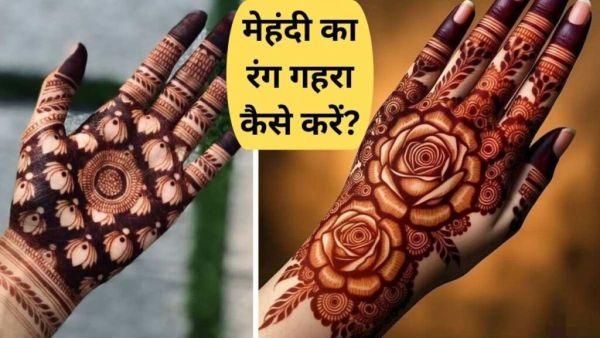
Lifestyle Desk – As soon as Sawan approaches, the enthusiasm for applying mehndi increases among women, especially during Rakhi and Teej, women definitely apply mehndi. Green bangles, sixteen makeup and beautiful mehendi on hands are the special identity of this festival. However, many times, even after hours of hard work on applying the design, the color of the mehendi does not become as thick as expected. Some people's mehendi remains light orange while some's color starts fading quickly on their hands.
If you also want thick and long lasting mehendi on your hands this Teej, then you can try the method of adding some special essential oils to mehendi. The scent of essential oils like eucalyptus, lavender and tea tree can enhance the mehendi experience. However, it is important to use these oils very carefully and in limited quantities. Let us know about it in detail.

Why is the color of mehendi dark?
Lawsone, the main pigment present in henna leaves, reacts with the keratin present in the upper layer of the skin to form an orange to dark reddish-brown stain. The final color of the mehendi depends on many things—the quality of the mehendi, the temperature of the skin, how long the mehendi was applied, and how the hands were taken care of afterward. There is also a tradition of adding some essential oils to the henna paste. The aromatic compounds present in some oils are believed to help in the development of henna color. But this does not mean that adding more oil will make the color darker.
You can use eucalyptus and lavender oil
Essential oils like eucalyptus and lavender are used in very small quantities in henna paste. Their strong fragrance gives the mehendi a distinct aroma and in some people's experience the color develops better. But applying essential oils directly on the skin can cause irritation or allergies. Therefore, it is important to limit its quantity in henna paste also. First-time users should do a patch test on a small area of skin first.
Be careful while using tea tree oil
Tea tree oil is also used with henna, but it may irritate the skin of some people. Especially people with sensitive skin should be careful before using it. Do not use essential oils on children or very sensitive skin without expert advice.
Not just oil, keep these things in mind too
To get a thick color, it is important to leave the mehendi on the hands for sufficient time. After the mehendi dries, it is better to remove it by rubbing it slowly instead of immediately washing it with water. Avoid repeatedly putting your hands in water immediately after removing henna. Over the next few hours the color may gradually darken to reddish-brown. Another important thing is to avoid 'black henna' or henna which gives black color very quickly. Chemicals like PPD can be added to these, which can cause serious allergic reactions on the skin. If you want thick color of mehendi on this Teej, then choose good quality natural mehendi, use essential oils wisely and do not ignore the sensitivity of the skin.