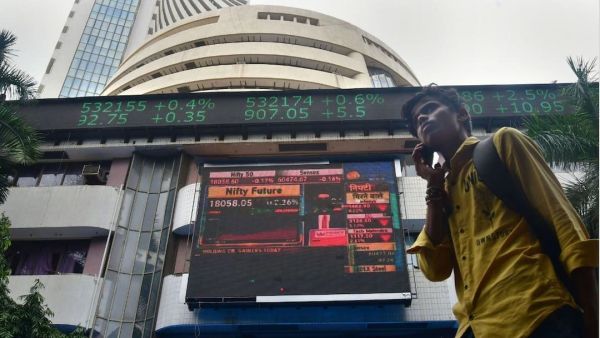
The Nifty 50 is set for a notable reshuffle, with stock exchange operator BSE making its entry into India's benchmark index while information technology major Wipro exits the list of 50 companies.
The change, announced by the National Stock Exchange of India (NSE) on Monday as part of its semi-annual index review, will take effect from September 30.
For BSE, the move marks another significant milestone after a strong run in its share price this year. For Wipro, meanwhile, the exclusion comes as Indian IT stocks continue to face a more cautious investment environment, including concerns around the impact of artificial intelligence (AI) on traditional technology services.
Why Is BSE Joining The Nifty 50?
The key factor behind BSE's inclusion is its market capitalisation available to public investors.
According to the NSE, BSE's six-month average free-float market capitalisation was at least 1.5 times that of Wipro, which was the smallest constituent of the Nifty 50, reported Reuters.
The benchmark index tracks the 50 largest companies in India based on their average free-float market capitalisation over the preceding six months. Companies must also meet trading liquidity requirements before they can qualify for inclusion.
The latest change therefore reflects the relative movement in the market value of the two companies over the review period.
BSE Stock Gains Contrast With Wipro's Performance
The index reshuffle comes against a sharply different performance backdrop for the two stocks.
BSE shares gained around 4 per cent earlier on Monday, taking their gains for 2026 to around 37 per cent. Meanwhile, the shares traded marginally lower on Tuesday, reaching 3,586.70 points apiece.
Wipro, on the other hand, fell 1.1 per cent on Monday and has declined 29.5 per cent so far this year.
The contrasting stock performance has helped shape the relative market capitalisation position that underpins the latest Nifty 50 change.
Why The Nifty 50 Rejig Matters To Investors
Changes to the benchmark index are closely watched by investors because the Nifty 50 is not simply a list of India's largest companies. It is also tracked by a large pool of passive investment money.
According to NSE data, passive funds with around $97 billion in assets under management tracked the 50-stock index as of May 31.
That makes inclusion in the index significant for companies entering the benchmark, while removal can have implications for stocks that leave it.
The Nifty 50's composition is therefore closely monitored whenever the NSE announces its periodic reviews, particularly by investors and funds that use the index as a benchmark or track it through passive strategies.
AI Concerns Add To Pressure On Indian IT Stocks
The latest reshuffle also comes at a time when investors are reassessing the outlook for Indian IT service exporters.
Investors are weighing risks linked to artificial intelligence and its potential impact on the traditional Indian IT services model. At the same time, Indian households are increasingly directing a greater share of their savings towards financial markets.
Against this backdrop, the contrasting fortunes of BSE and Wipro offer a snapshot of how investor preferences have shifted across different parts of India's corporate landscape.
-
Watch: Rohit Sharma Show' Set To Hit TV Screens; Know All Details

-
Kia Syros EV Or MG Windsor: Which One Should Be On Your Radar?

-
Priyanka Gandhi Confronts Protesting BJP MLA Outside Parliament: WATCH

-
Top 10 | ABP LIVE Afternoon Bulletin: Top News Headlines from 11 August 2026 - Afternoon

-
FIFA may have paused its World Cup power grab, but UEFA’s intentions are plain to see