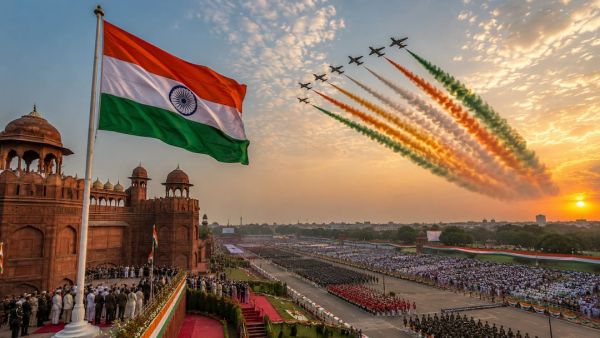
India will celebrate its 80th Independence Day on August 15, 2026, marking 79 years since the country became independent from British rule in 1947. Every year, Independence Day commemorates India's freedom struggle and honours the people who contributed to the country's journey towards self-rule. From the national flag and patriotic ceremonies to the Prime Minister's address from the Red Fort, August 15 remains one of India's most significant national occasions.
History Of India's Independence
India's freedom movement developed over several decades, with resistance to British rule taking different forms across the country. The Indian National Congress, founded in 1885, became an important platform for the political movement for self-government. The struggle gained mass momentum under Mahatma Gandhi, particularly through movements such as the Non-Cooperation Movement, Civil Disobedience Movement and Quit India Movement. The slogan “Do or Die”, associated with the Quit India Movement launched in 1942, became a defining call for freedom. Alongside Gandhi's non-violent movement, revolutionary groups and leaders also played significant roles. Subhas Chandra Bose and the Indian National Army became prominent symbols of resistance against British rule. After the Second World War, Britain's ability to continue governing India weakened. Political negotiations between Indian leaders and the British government eventually resulted in the decision to transfer power.
Why India Celebrates Independence Day On August 15
The Indian Independence Act 1947, passed by the British Parliament, created the independent dominions of India and Pakistan. The legislation came into effect on August 15, 1947. The date was selected by Lord Louis Mountbatten, the last Viceroy of India. Mountbatten reportedly chose August 15 because it was the second anniversary of Japan's surrender to the Allied powers in 1945, an event associated with the end of the Second World War. However, independence came alongside the Partition of British India, resulting in the creation of India and Pakistan and one of the largest mass migrations in modern history. Millions of people were displaced, while widespread communal violence caused immense suffering.
Independence Day Significance And Interesting Facts
India's first Independence Day was marked by celebrations in New Delhi, with Jawaharlal Nehru becoming the country's first Prime Minister. In the early hours of August 15, 1947, Nehru delivered his famous “Tryst with Destiny” speech. Today, the main national ceremony takes place at the Red Fort in New Delhi, where the Prime Minister unfurls the national flag and addresses the nation. The ceremony is followed by cultural programmes and celebrations across the country. A notable fact about India's independence is that Mahatma Gandhi was not present in Delhi for the celebrations in 1947. He was in Calcutta, working to restore peace during communal tensions. Independence Day is therefore more than a public holiday. It is an occasion to remember the sacrifices made during India's freedom struggle, reflect on the challenges surrounding Partition and recognise the responsibilities that come with independence. As India marks its 80th Independence Day in 2026, the occasion continues to connect the country's history with its democratic present and future.
-
The dark side of South Korea’s overnight delivery boom

-
The dark side of South Korea’s overnight delivery boom

-
Zara Noor Abbas and Asma Abbas win hearts with graceful dance

-
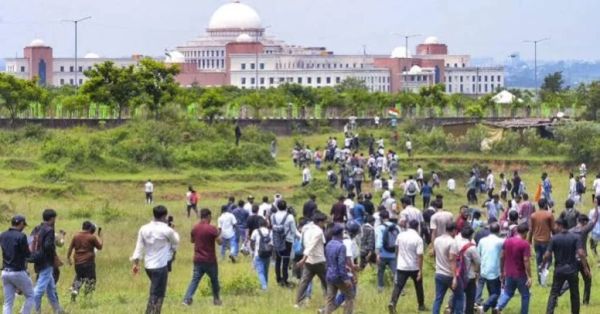
परीक्षा में अनियमितता के विरोध में झारखंड विधानसभा तक छात्रों का मार्च, पुलिस के साथ झड़प
-
Much-Deserved Success Arrives For 3 Zodiac Signs On August 11, 2026