
9 August 2026
As we try not to convince ourselves that Arsenal are simply going to stroll to the Premier League title, it is worth looking at every side with a realistic chance and assessing the strengths and weaknesses each of them may carry into the season.
Will it be a one-team race, a two-team battle, or perhaps even an eight-team contest? That will only become clear as the campaign unfolds, but before the first ball is kicked, here is one strength and one weakness for every club that could be in the mix.
Arsenal’s greatest advantage this season is the fact that everybody already knows exactly what this team is.
No other title rival can really boast the same level of continuity in both squad and manager. In virtually every area of the pitch, Arsenal have one of the league’s best players and, even with William Saliba facing a long-term injury, their squad still looks the strongest in the division.
If you were trying hard to find a flaw, you might point to the absence of a truly elite left winger, although new signing Christos Tzolis could well replace the underwhelming Gabriel Martinelli.
And in Mikel Arteta, Arsenal have a manager who has already shown he can get a team over the line. When a side is not winning trophies, his behaviour — such as robbing his own players or making them listen to You’ll Never Walk Alone like something from A Clockwork Orange — can seem amusing. Once titles arrive, those same methods are reframed as the work of a visionary.
Weakness: Complacency
“Complacency is a disease,” Sir Alex Ferguson once said, and right now that looks like the biggest obstacle standing between Arsenal and back-to-back Premier League titles.
Even leaving aside the physical burden on players such as Declan Rice and Bukayo Saka, who have been run into the ground, the psychological impact of winning the Premier League — and ending both a 20-year wait and a sequence of second-place finishes — is bound to have affected the entire squad.
Arteta, with his ultra-intense methods, may not necessarily be the ideal figure to ease that feeling. Defending the Premier League crown is notoriously difficult. Neither Arsene Wenger nor Jurgen Klopp managed it. In fact, only Ferguson, Pep Guardiola and Jose Mourinho have done so.
Strength: A complete squad (including Erling Haaland)
When a long-serving manager leaves a club, it is often the case that the squad left behind is not in great shape for the successor. That certainly cannot be said of what Pep Guardiola has left for his former protégé.
Manchester City’s squad appears impressively well-rounded. In defence they have Marc Guehi, Abdukodir Khusanov, Josko Gvardiol and Ruben Dias. Gianluigi Donnarumma remains one of the finest shot-stoppers in world football. Elliot Anderson has been brought in to reinforce a midfield which, even if Rodri were unavailable, would still rank among the league’s strongest. Up front, Rayan Cherki, Antoine Semenyo and perhaps a revived Phil Foden provide the spark.
And then there is Erling Haaland, whose goals effectively serve as a cheat code for any coach. The Norwegian can drift through spells of matches quietly, but he has repeatedly shown just how lethal he can be at the start of a season.
So there are no excuses for Enzo Maresca.
Weakness: Enzo Maresca
Maresca was appointed as Guardiola’s successor and, while it is difficult to question the judgement of the City hierarchy, there are still fair doubts about exactly how strong a manager he is.
At Leicester City, he secured promotion, but that came after a serious slump in the second half of the campaign and with a squad considerably more talented than its competition. At Chelsea, he collected silverware in the Europa League and Club World Cup, which also felt roughly in line with expectations.
There is a worry that Maresca does not really possess a Plan B. Guardiola faced comparable criticism during his own career, but he adapted — using John Stones in midfield while nominally at left-back, and playing more directly to maximise Haaland. Those were tactical developments Maresca has not yet shown he can produce.
Of course, City will not need a Plan B in 90% of their matches because the quality of the squad should be enough. But in the biggest and most pressurised fixtures, that tactical limitation could be exposed.
Strength: Andoni Iraola
Andoni Iraola arrives at Anfield with a reputation as one of the most highly regarded young coaches in world football, but perhaps even more importantly, his style is much closer to Jurgen Klopp’s approach than Arne Slot’s.
By the end of the Arne era, everything had begun to feel stale. The football had become too slow and deliberate, and despite recording the second-highest average possession in the league, Liverpool managed only the sixth-most shots on target per game.
Liverpool’s main strength this season could be the fresh energy Iraola brings. In his opening press conference, he promised football that would be “hard, intense and aggressive”, words that will have delighted the Kop.
Weakness: A mismatched squad of underperforming talent and aged players
The more clear-eyed Liverpool supporters will understand that, no matter how capable Iraola may be, he has not exactly inherited an ideal set of tools.
Liverpool’s squad is a strange one. It contains some of Europe’s most highly rated young players, but they are surrounded by plenty of mediocrity and others nearing the end of their top-level years. On top of that, much of that talent has gone backwards rather than improved since arriving at Anfield. The Florian Wirtz issue is now one for Iraola to solve, and it was revealing that in his first press conference he admitted the club “need more players.”
There is a clear sense that the squad has been allowed to decline over recent seasons, even though a title was won. That feeling is strongest in midfield, where Curtis Jones, Alexis Mac Allister, Wataru Endo and Harvey Elliott all come with question marks.
Liverpool also have to get better at defending set-pieces. Last season they conceded a league-high 20 goals from those situations.
Strength: Xabi Alonso
Chelsea’s greatest asset this season is that they finally have somebody in the dugout who appears to know exactly what he is doing.
Alonso is the best manager Chelsea have had since at least Mauricio Pochettino, and perhaps even longer than that, while the experienced signings made under him suggest the club’s decision-makers have recognised the mistakes of their earlier approach.
The Spaniard is, of course, new to the Premier League as a manager, but he can lean on his playing background as well as an unbeaten Bundesliga title triumph.
In terms of the squad alone, it is difficult to argue Chelsea possess one of the very best, but the Alonso factor has persuaded many to view them as possible title challengers.
It has been widely noted that Chelsea were outrun in all but one of their matches last season, and solving that issue is Alonso’s first major task.
To address it, he has brought in the so-called ‘good eggs’ Jordan Henderson and Danny Welbeck, the sort of players who are said to be there to ‘set the standard’, but Alonso has previous when it comes to elite players not fully buying into his methods.
Granted, that happened at Real Madrid, where player power tends to outweigh managerial authority, but the way Chelsea’s squad treated Liam Rosenior showed how quickly this particular group can turn.
Making them run is absolutely central to whatever success Chelsea hope to achieve this season.
Strength: One of the best front lines in the league and the willingness to use it
In a Premier League increasingly driven by numbers and systems, Manchester United’s strength is that they do not really operate that way.
Only Manchester City matched United’s total of 595 long shots last season. From an xG of 64.71, United scored 69 goals. Put simply, they are perfectly happy to have a go from range.
It is a risky way of playing, but it becomes less risky when a club can attract some of the best players in the world, and that individual quality has repeatedly proved enough to break down stubborn defensive blocks.
United will once again depend heavily on Bruno Fernandes as their chief creator, but for the first time in a long while, the club seems to have one of the strongest attacking units in the league. It feels a fairly safe call to say they will finish among the top scorers this season.
Weakness: Michael Carrick
Manchester United have actually gone about their transfer business quite sensibly and there is no glaring weakness in the squad itself.
If you wanted to be extremely fussy, you could argue that a right-back and a winger who hugs the touchline would still help, but beyond that this looks like a well-balanced squad containing a healthy blend of experience, youth and quality.
So perhaps the biggest concern lies not on the pitch, but just beside it.
It has been widely discussed how much Carrick benefited from his predecessor’s failures in cup competitions, and the big question is whether he can be just as effective when United are facing 60 matches rather than 40.
There is no getting away from the fact that he is the least qualified head coach in the Premier League, and would a sacked Middlesbrough manager with a 46.3% win rate have landed this job without his playing reputation? Absolutely not.
Carrick’s results meant the United board felt they had little choice but to extend his deal, but Eddie Howe showed last season that he could outmanoeuvre him tactically. If the expected slump arrives, United’s decision to stick with Carrick will look even more costly given that managers such as Alonso, Iraola and Oliver Glasner have gone elsewhere.
Strength: A much-improved defence
Tottenham Hotspur’s bank balance has undeniably been an advantage this summer and, for once, they appear to have used it wisely.
The midfield has received a badly needed overhaul with the arrivals of Mateus Fernandes and Sandro Tonali. James Maddison’s return is the classic case of a player who ‘feels like a new signing’, but above all Spurs have moved to address a defence that was far too porous.
They conceded an average of 1.5 goals per game last season, with only the relegated teams posting a worse figure, but their back line now looks considerably stronger than it did a year ago.
Antonin Kinsky endured a horror show against Atletico Madrid, but his performances since then have suggested that was an isolated incident rather than the kind of regular blunders Guglielmo Vicario was prone to. Pedro Porro enjoyed an excellent World Cup with Spain, while Jan Paul van Hecke and Marcos Senesi were among the Premier League’s best defenders last season.
The arrival of those two should allow Micky van de Ven to shift into a full-back role, where his pace may be used more effectively. Andy Robertson, meanwhile, brings the sort of ‘experience’ that Chelsea have underlined the value of.
Even allowing for the fact that this is Spurs and things can therefore unravel for no obvious reason, any success they enjoy this season is likely to be built on defensive solidity, because that was what they lacked most last year.
Weakness: The number nine spot
The outlook is far less encouraging at the other end of the pitch.
The clear weak point for Tottenham is at centre-forward, because would any other title contender really swap their current options for either Richarlison or Dominic Solanke?
Solanke has only once reached double figures in a Premier League season and missed more than half of last season’s matches through injury. Richarlison, meanwhile, was the only player in the squad to score 10 or more last year, but he remains inconsistent.
Talk of a move for Junior Kroupi would have brought in a very gifted player, but he was far more effective for Bournemouth as a second striker or attacking midfielder than as an out-and-out number nine, and his injury has ended whatever chance there was of completing that transfer.
Spurs have also been linked with Savinho and Cody Gakpo, but neither would solve the striker problem.
Strength: Unai Emery
Without question, Aston Villa’s biggest strength is Unai Emery.
You would not be ridiculed for arguing that he is one of the two best managers in the league, and it is difficult to overstate just how important he is to Villa. They flirted with a title push early last season, but the Champions League adds another major demand for Emery to juggle.
Weakness: The loss of Morgan Rogers
The challenge for Emery is that he is being asked to produce more magic after losing the club’s best player.
Morgan Rogers has left, and although Villa received a huge fee for him, they are not going to be able to replace him with someone of the same standard.
That attacking threat will be badly missed, especially as the remaining forward line looks uncertain at best. Ollie Watkins scored 16 last season but is reportedly attracting interest now that he has reached 30. Tammy Abraham arrived in January but managed only two goals. The loan move for Alejandro Garnacho has the feel of a classic ‘I can fix him’ transfer.
Strength: A much-needed jolt
If we are being extremely generous and trying to take the positive view, then the abrupt exits of Eddie Howe, Anthony Gordon, Sandro Tonali and Bruno Guimaraes could be seen as the shock Newcastle United needed.
The club had gone flat under Howe, who consistently found it difficult to balance Champions League commitments with Premier League demands, and in different circumstances he might have chosen to walk away himself at the end of last season.
As it happened, he returned for pre-season looking drained of energy for the role, forcing Newcastle to act. A new face in Matthias Jaissle might provide the squad with fresh motivation, even if appointing him is a significant gamble.
Where do you even start?
Newcastle have lost their captain and leading scorer, their best winger, and one of their top midfielders within the space of just a few months, and they do not have the financial flexibility required to spend heavily on ready-made replacements.
They have made additions in the £20m-£40m bracket, but their most obvious problem is in attack.
Nick Woltemade began well, but Howe never found the best role for him. Yoane Wissa looks like a huge waste of money, while William Osula did at least improve in the second half of the year. Jaissle needs at least one of them to hit double figures this season if Newcastle are to have any chance.
-
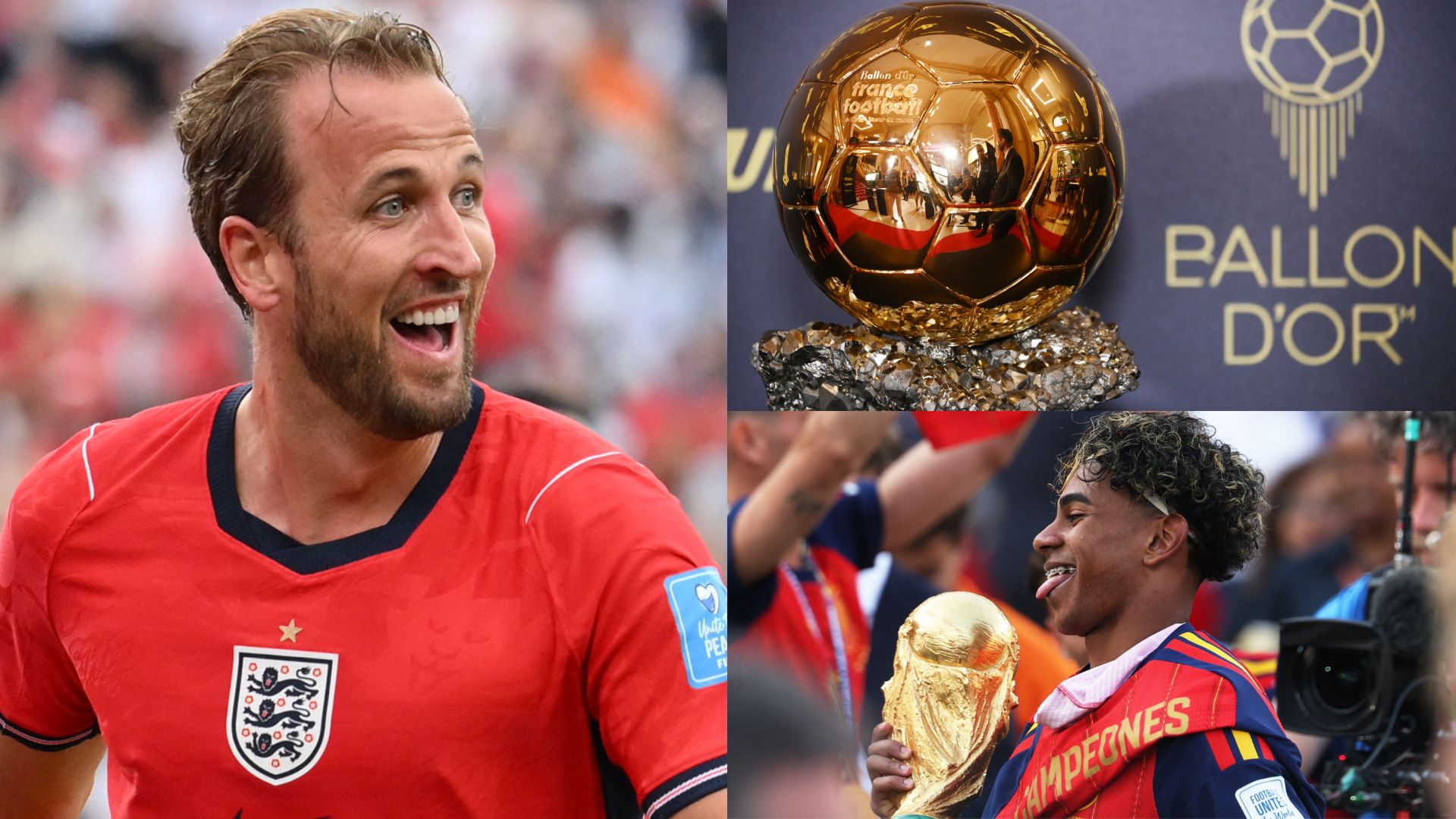
Will Harry Kane win the 2026 Ballon d'Or? Bayern Munich striker told it would be ‘bizarre’ if he is denied the Golden Ball as former England star explains why Lamine Yamal should miss out
-
73-year-Old Indian film director arrested over alleged sexual assault of 33-year-old actress

-
73-year-Old Indian film director arrested over alleged sexual assault of 33-year-old actress

-
Your Zodiac Sign’s Daily Tarot Horoscope For Monday Is Here With A Reading For August 10, 2026

-
Why ‘Click-To-Cancel’ Rules Are Popping Up Across The US (And Why They Matter)