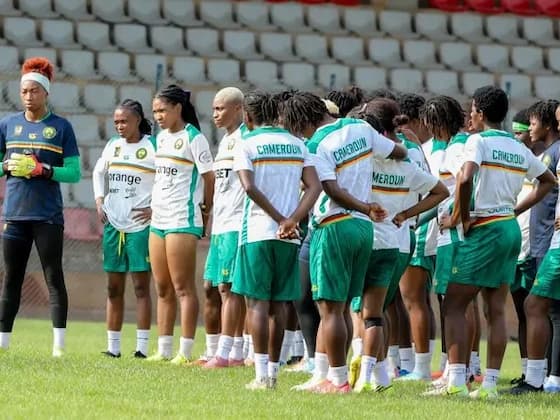
There is something distinctly different about this Women’s Africa Cup of Nations (WAFCON 2026). It is not only about the full stadiums, nor only about the goals. It is not even just about the standard of football, even though the quality has continued to improve with every edition.
This tournament feels different because, perhaps for the first time, reputation on its own is no longer enough.
For years, discussions around African women’s football began and ended with the same familiar group of nations. Nigeria, South Africa, Morocco, Cameroon and Ghana were expected to dominate, while everyone else was largely seen as there to take part. WAFCON 2026 has quietly challenged that long-held belief.
This competition has shown that African women’s football has moved into a new era, one in which investment, opportunity and belief are beginning to make the contest more even.
Many thought the traditional powerhouses would move through the tournament with ease. Instead, this edition has delivered surprises that have made the continent sit up and take notice. Established sides have been forced to battle for every point, while rising nations have made it clear they are no longer content to simply fill the field. That is not evidence that the giants are declining; it is evidence that everybody else is improving.
For years, there has been talk about narrowing the gap in women’s football across Africa. Perhaps that gap has not vanished entirely, but it is certainly smaller than many had assumed.
The signs are visible everywhere. Players who once had very limited chances are now playing professionally across Europe and elsewhere. Coaches are building international experience, and federations that once struggled to make women’s football a priority are beginning to understand its value. The progress may have been gradual, but it has been genuine.
Watching this WAFCON, I keep thinking about the girls chasing a ball on dusty pitches far away from television cameras. The girl in Ga-Mphahlele in South Africa, Ntoaboma in Ghana, and Amagunze in Nigeria. Girls in Bweranyangi in Uganda, Mbalmayo in Cameroon, and Tiznit in Morocco.
The girl whose football boots have been stitched back together more than once. The girl who walks kilometres to training because there is no transport. The girl who has never seen a match from inside a stadium but never misses one on a neighbour’s television. She is watching this tournament too. She is watching women who look like her, sound like her and understand the barriers she faces.
Representation has always mattered, but belief may matter even more.
When emerging nations play without fear, when every match feels uncertain and every point has to be earned, young girls begin to realise that history is not permanent. It can be rewritten.
Women’s football across Africa has often been measured by what it does not have: not enough funding, not enough facilities and not enough visibility. Those discussions still matter because those challenges are real.
But WAFCON 2026 has also highlighted something just as important — resilience, growth, depth and ambition.
This tournament has become a reminder that talent has never belonged only to the continent’s biggest football countries. It has always been present in villages, townships and rural communities where opportunity has been limited but dreams have remained stubbornly alive. As journalists, supporters and stakeholders, we often celebrate champions.
This year, we should also celebrate competitiveness. Competitive tournaments produce better football. Better football brings larger audiences. Larger audiences attract investment. Investment creates opportunity, and opportunity changes lives.
As WAFCON approaches its conclusion, one team will lift the trophy. But long after the medals have been presented, another triumph will endure.
Across Africa, girls from villages, townships and overlooked communities will believe that the path from a dusty field to the biggest stage in African football is no longer impossible. That may prove to be the greatest legacy of WAFCON 2026.
Football is at its most powerful when it creates opportunity. WAFCON 2026 is not only crowning a champion, it is reminding every girl, no matter how small her village, that her dream also belongs on Africa’s biggest stage.
-
Young Vietnamese workers embrace ‘right to disconnect’ after office hours
-
Young Vietnamese workers embrace ‘right to disconnect’ after office hours
-
Ali Raza mourns the sudden death of his father
-
Your Zodiac Sign’s Weekly Love Horoscope Is Here For August 10 – 16, 2026

-
What’s The Minimum Distance You Should Leave Between A Washing Machine And The Wall?