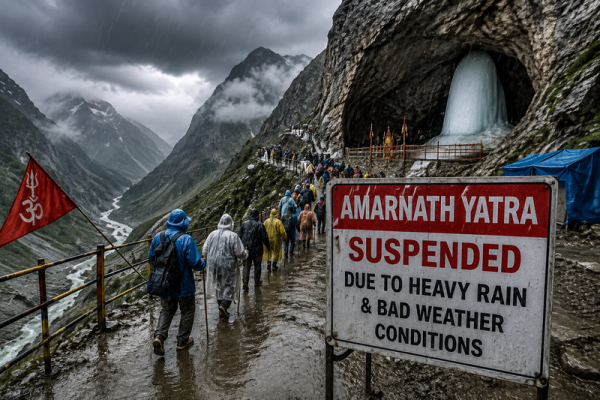
Jammu Kashmir Weather Update: Authorities have suspended the Amarnath Yatra amid concerns over deteriorating weather conditions and the risk of heavy rain in parts of Jammu and Kashmir. The decision comes as the India Meteorological Department (IMD) forecasts increased rainfall activity across the Union Territory, particularly around August 10 to 12.
The pilgrimage has been halted as a precautionary measure, with no fresh batch of devotees being permitted to proceed from Jammu towards the Kashmir Valley. Officials are closely monitoring weather conditions, pilgrimage tracks and the Jammu-Srinagar National Highway before deciding when movement can safely resume.
The suspension is especially significant because recent rainfall has already affected pilgrimage routes and triggered restoration work at several locations. Authorities are therefore prioritising the safety of devotees amid the possibility of more rain, landslides, falling rocks and localised flash flooding.
No Fresh Batch of Pilgrims Allowed From Jammu
Pilgrims staying at the Bhagwati Nagar Yatri Niwas in Jammu were not allowed to leave for the Valley following the decision to suspend the pilgrimage.
Officials are expected to reassess conditions based on the latest weather forecast and the condition of roads leading towards the base camps.
The Jammu-Srinagar National Highway remains particularly important for the pilgrimage because thousands of devotees use the route to reach onward destinations in Kashmir. Heavy rain in mountainous terrain can quickly trigger landslides, shooting stones and debris accumulation, potentially disrupting traffic.
Recent weather-related damage has also prompted repair and restoration work along pilgrimage tracks.
Amarnath Yatra Halted on Both Routes
The Shri Amarnath Ji Yatra has been suspended from August 9 on both the Baltal and Pahalgam routes because of adverse weather forecasts and ongoing restoration work following recent rainfall. (Kashmir Life)
The traditional Pahalgam route had already been affected by track repair work, while pilgrims had been using the Baltal route in north Kashmir's Ganderbal district.
The annual pilgrimage began on July 3 and is scheduled to conclude on August 28, coinciding with Shravan Purnima and Raksha Bandhan.
More than 4.7 lakh pilgrims had already visited the holy cave shrine by the time the latest weather-related restrictions were imposed.
What Has IMD Said About the Weather?
The weather department expects rainfall activity to remain active across Jammu and Kashmir over the coming days.
IMD forecasts issued in early August indicated the possibility of isolated heavy rainfall over the Jammu-Kashmir region during August 9–11, along with widespread or fairly widespread rain in parts of the region. (Mausam)
Weather conditions may initially remain comparatively manageable in some areas, but rainfall is expected to increase as a fresh weather system influences the region.
South Kashmir, the Pir Panjal belt and parts of the Jammu division are among the areas where rainfall activity could become more intense.
North and central Kashmir may also experience spells of light to moderate rain.
Which Areas Could Receive Heavy Rain?
Several sensitive areas are likely to require additional caution during the wet spell.
Parts of the Jammu region could experience moderate to heavy rainfall, while districts located close to mountainous and vulnerable terrain may face a greater risk of weather-related disruptions.
Kathua and Ramban are among the areas where rainfall can have a significant impact on road connectivity.
The Pir Panjal region is also considered vulnerable because intense rain can loosen slopes and trigger landslides or falling rocks.
In south Kashmir, districts such as Shopian, Anantnag and Pulwama may experience periods of stronger rainfall.
Even when widespread extremely heavy rain is not expected, intense showers over a short period can create dangerous conditions in valleys, near streams and along mountain roads.
Flash Flood and Landslide Risk in Vulnerable Areas
Heavy rainfall in mountainous parts of Jammu and Kashmir can cause water levels in streams and local channels to rise rapidly.
Low-lying areas and locations near steep slopes are therefore at risk of localised flash flooding.
Landslides are another major concern.
Water entering already saturated slopes can weaken soil and rock structures, increasing the chances of debris falling onto highways and rural roads.
Shooting stones are particularly dangerous along sections of the Jammu-Srinagar National Highway and other mountain routes.
Recent disruptions on NH-44 have already demonstrated how quickly landslides and falling rocks can affect road movement in the region. Traffic has required temporary suspension and restoration operations at affected locations. (Akashvani News)
Travellers Advised to Check Road Conditions
People planning to travel through mountainous areas between August 10 and 12 should check the latest road and traffic advisories before beginning their journey.
Weather in the Himalayan region can change rapidly, meaning a road that is open in the morning may later face restrictions because of rain, landslides or falling debris.
Travellers should particularly avoid entering vulnerable mountain stretches without confirming that the route is operational.
Pilgrims should rely on official announcements regarding the Amarnath Yatra instead of proceeding towards base camps independently.
Why Authorities Are Taking Extra Precautions
The decision to suspend the pilgrimage reflects the risks associated with combining large-scale pilgrim movement with unstable mountain weather.
Thousands of devotees travel through narrow routes, steep terrain and high-altitude areas during the Amarnath Yatra. Even relatively short periods of intense rainfall can make tracks slippery, damage temporary infrastructure and affect road access.
Recent rainfall has already caused enough damage for restoration and maintenance work to be required on pilgrimage tracks. Authorities have therefore opted to restrict movement rather than expose travellers to unnecessary risk.
Will the Amarnath Yatra Resume Soon?
There is currently no fixed restart time mentioned in the latest suspension announcements.
Officials are expected to review the situation based on weather conditions, track restoration and road safety before allowing fresh batches of pilgrims to move forward.
The pilgrimage is scheduled to continue until August 28, but operations during the remaining period will depend heavily on weather and safety assessments.
Key Advisory for Pilgrims and Tourists
Anyone travelling in Jammu and Kashmir over the next few days should keep track of official IMD forecasts, traffic police advisories and local administration announcements.
Tourists and pilgrims should avoid riverbanks, unstable slopes and areas known for landslides during periods of intense rain.
Those travelling on the Jammu-Srinagar corridor should also confirm highway conditions before departure.
For now, the major development is that the Amarnath Yatra remains suspended as authorities respond to adverse weather forecasts and repair rain-damaged tracks. With rainfall activity expected to remain elevated in parts of Jammu and Kashmir, safety restrictions may continue until conditions improve.
The current IMD and pilgrimage updates support the core weather-and-suspension angle, though individual district-level rainfall intensity can change with newer forecasts. (Mausam)
-
New Bajaj Pulsar N160 S, N160 SS First Look: More Power, New Features

-
Indian-Origin Woman's Partner Arrested Seven Months After Her Murder In Canada

-
Dharmendra Pradhan Says He Resigned As Education Minister After NEET Protests, Accuses Attempts To Mislead Gen Z

-
Bombay HC Flags 133 RTE Dues Petitions, Asks Maharashtra To Overhaul School Reimbursement System

-
DC The Bloody Valentine Box Office Collection Day 2: Lokesh Kanagaraj & Wamiqa Gabbi's Film Sees Growth, Nears ₹18 Crore Worldwide