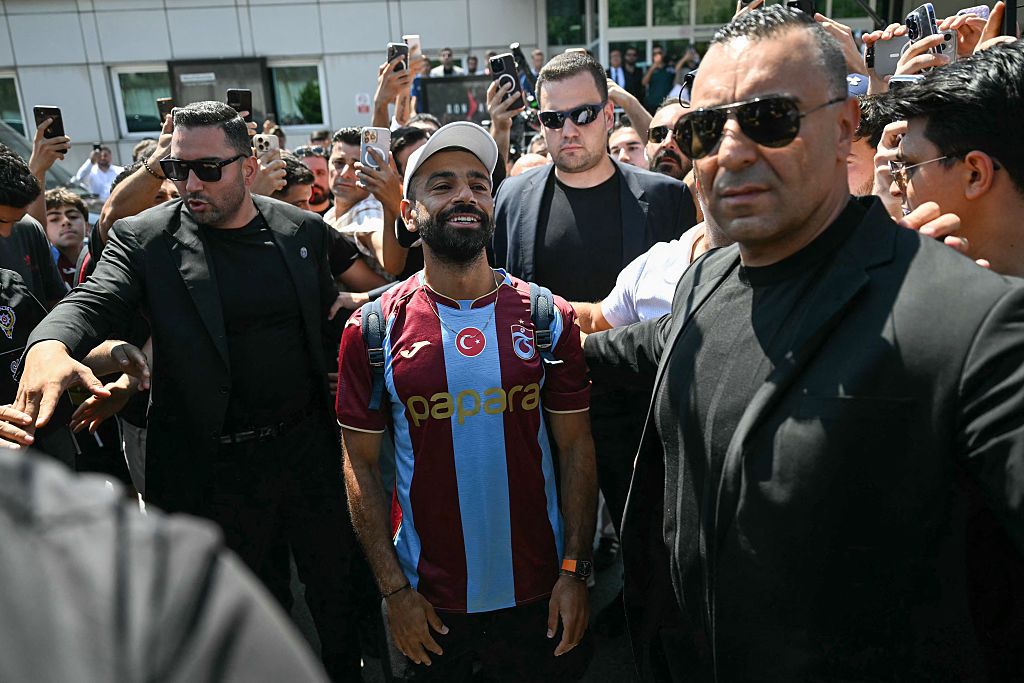
Long-time admirers of Liverpool legend Mohamed Salah have every reason to feel upset by this decision.
Just eight months ago, Mohamed Salah was left on the bench for three matches in a row by Liverpool manager Arne Slot, at a time when the club was struggling.
The Egyptian’s reaction was fierce: he delivered a stinging verdict on Slot’s management and made thinly veiled accusations towards the Liverpool hierarchy, suggesting they wanted to push him out quietly for financial reasons.
Salah felt at that point, and later proved on the pitch, that he still had plenty more to offer the game. Now that his move to Trabzonspor has been confirmed, those media interventions must be viewed for what they now look like – absurd, disappointing, and insulting to his most loyal supporters.
The reality is that Salah was right. Being dropped was a message, and Liverpool’s hierarchy were almost certainly working out how to move him on and clear his huge salary from the wage bill.
But his decision to join the Super Lig, a league that would struggle to rank among the world’s top ten in quality, feels nothing short of a betrayal to the long-time supporters who defended him so strongly when he was treated unfairly.
Salah finished the 2025/26 season with 29 goal contributions across the Premier League, Champions League, Africa Cup of Nations and the World Cup.
He played only 41 matches for Liverpool, yet still produced 22 involvements in at least ten fewer games than in any season since the start of the decade, apart from 2023/24, another campaign badly affected by injury for Salah.
He also enjoyed his most productive Africa Cup of Nations with Egypt, and led his country to their first-ever World Cup victory, as well as a knockout-stage win over Australia, recording seven contributions across those two major tournaments.
Even so, surely even his most optimistic backers would admit that a move to Turkey gives the impression of a player who has, in some sense, given up.
In a summer in which other departing Premier League greats of a similar age chose to reduce their wage demands in order to remain at the top level, including free agents Bernardo Silva and John Stones, both leaving the side Salah competed against for nearly a decade, this decision should leave followers of his remarkable career deeply disheartened.
It is understood that the Egyptian, now the highest-paid player in Europe after tax, rejected lower salary offers from several Serie A clubs. Even Salah’s loudest critic, Jamie Carragher, admitted that Turkey is “a level too low” for the Liverpool icon, and said he had expected to see him return to Italy.
It is also understood that two factors were especially important in Salah’s choice: his wife, Magi, was drawn to Turkey as a place for the family to live, and, naturally, the scale of his enormous salary package played a major role as well, something that ties back to his financially difficult upbringing in Nagrig.
The Salah family bought a sea-facing villa worth $10 million in Bodrum, Turkey, more than a year ago, which had already suggested they saw the country as an appealing place to settle.
The Egyptian rose from poor and isolated conditions in a rural farming village to become one of the greatest footballers in history, and because of that journey, Salah appears to see salary as a vital measure of his value and success.
Even with those motivations in mind, the widespread disapproval this decision has attracted around the world is entirely understandable, and it becomes even stronger when viewed specifically through the eyes of Egyptian supporters.
In that part of the world, the reaction is driven by affection – Salah is the greatest African footballer in history, and he almost single-handedly put his country on the global sporting map.
But seeing the Liverpool icon choose money over glory feels both like a painful end to an era many hoped would never finish, and like a profound betrayal, because it seems he has ended it too soon.
For those supporters, the ones who believed Salah when he told the press last December that he remained one of the finest players in the world, and who watched him shine for Egypt throughout 2026, the feeling is as sad as it is infuriating.
Fortunately for the 34-year-old, he can still redeem himself. But in doing so, he has placed an extraordinary burden on his own shoulders, perhaps the greatest of his entire career, to achieve something that has eluded him ever since his debut.
That task is to win the Africa Cup of Nations with Egypt, the most successful nation in the history of that competition, who have not lifted the trophy at any point since Salah made his international debut.
Of course, Salah is far from being to blame for that. In truth, the 34-year-old is the main reason Egypt did not slip into footballing obscurity after the Port Said disaster halted the country’s football development back in 2012.
That riot tragically led to the deaths of 74 people, injured more than 500 others, and caused domestic football in Egypt to shut down for two years.
As a consequence, the national team suffered heavily, and Salah’s talent was crucial in still taking them to two AFCON finals in 2017 and 2021, as well as to the third and fourth World Cups in Egypt’s history.
If he is to restore his image in the eyes of those who reasonably feel he has stepped away from elite competition too early – especially given that Salah, one of football’s fittest athletes, told Gary Neville in 2025 that he expects to still be playing at 40 – then winning Africa’s biggest international prize is essential.
During his Premier League years, supporters came to accept as fact that whenever the Africa Cup of Nations was held mid-season, it would almost inevitably result in Salah finishing the campaign below his usual level because of the tournament’s huge demands.
That was especially clear in 2021/22, when the now 34-year-old was, by some distance, the best player in the world from August to December, contributing to 21 goals in 15 consecutive Premier League games.
At the January tournament, he was involved in 75% of Egypt’s goals on the way to the final against Senegal, which Egypt lost, and he played four straight matches that went the full 120 minutes.
When he returned to Liverpool, Salah’s output declined, as the physical and mental strain of carrying both club and country eventually caught up with him.
In Turkey, that issue no longer applies, not even at 34, because Salah will be able to cope with the lighter physical demands of a league far, far less competitive than the English top flight.
And with Egypt having come close to upsetting eventual finalists Argentina at the 2026 World Cup – a match in which Salah produced a brilliant assist for his country’s second goal, only for it to be controversially ruled out – expectations were already high heading into the 2027 tournament.
The Liverpool legend will get two consecutive opportunities, first in 2027 in the summer edition hosted by Kenya, Uganda and Tanzania, and then again in 2028.
After that, the Africa Cup of Nations will move to a four-year cycle, meaning Salah’s next chance would not come until 2032. For obvious reasons, that is completely unrealistic.
In the Super Lig, Salah’s clearest route to footballing immortality in Turkey would be to lead Trabzonspor to Europa League glory, assuming the club even gets through the qualifying rounds.
Yet many of his long-time supporters are unlikely to care even if he were to surpass Lionel Messi’s 91-goal calendar-year record in Turkey. A more fitting end to his career could still have come on Merseyside, where he might have continued breaking Premier League records in a rotational role.
Perhaps most painfully for those fans, this move has effectively validated some of the most unfair narratives around Salah, including those from within the Liverpool fanbase, where some were quick to label him “finished” after a single underwhelming season.
Salah clearly still has plenty left to offer, even if his transfer priorities seem to clash with the swagger and confidence that have often, and sometimes justifiably, defined him.
He can still set his legacy in stone by winning the Africa Cup of Nations title that has escaped him throughout his career, but Egyptians are unlikely to tolerate any more excuses if he fails to deliver it.
For a player who somehow emerged from the harshest of childhood circumstances and became arguably the greatest footballer in Premier League history, it feels strangely fitting that he would place such immense pressure on himself at the closing stage of his journey.
And somehow, because with Mohamed Salah it is always somehow, it almost feels obvious that he will do it.
-
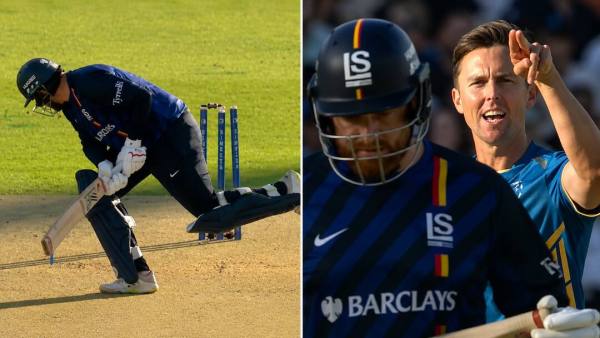
Trent Boult's 'Salute' Send-Off To Jonny Bairstow Goes Viral After Toe-Crushing Yorker | WATCH
-
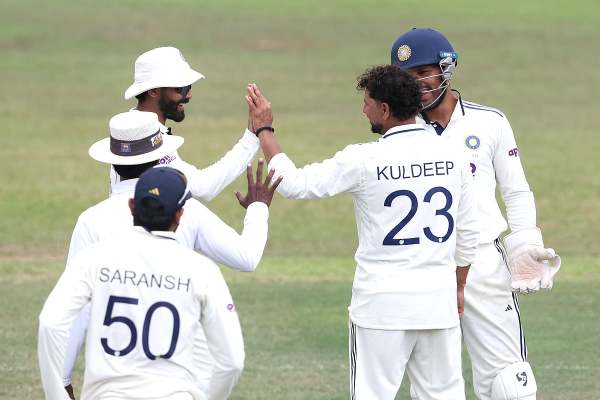
IND Vs SL XI Practice Match: India Bowlers Toil As Hosts Plunder 363/8 On Day 1
-
SBI Clerk 2026 Recruitment: State Bank Of India Opens Applications For Junior Associate Posts Until August 27
-
NEET PG 2026: Centre Says India Has 86,360 PG Medical Seats; Karnataka Leads With 10,092; Plans To Add 5,000 More By 2028-29

-
Vishal Bhardwaj To Make Film On Tarun Tejpal Rape Case After Conviction, Says 'Want Lead Actor To Be Unaware Of The Crime'