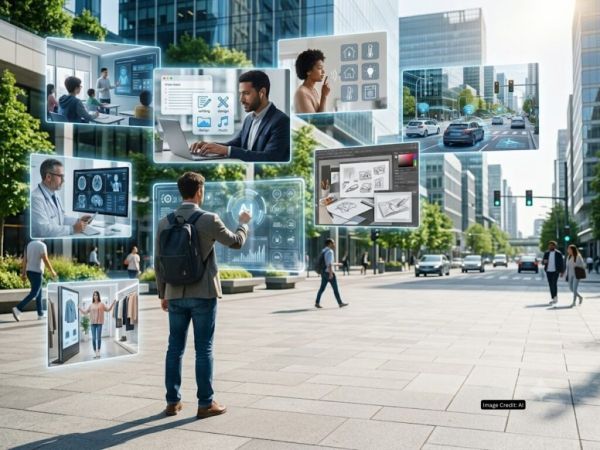
People don’t just talk about artificial intelligence at conferences anymore, somewhere along the way, it slipped into ordinary routines, and most folks didn’t even notice it happening. Look at how someone shops these days, or the way they keep an eye on their health, or simply get from one part of the city to another, and 2026 makes the point pretty clearly: AI stopped being something to wait for a good while back. It’s already there, working quietly underneath everything. Here’s a closer look at where that’s most visible.
Healthcare Has Gotten A Lot More Personal
Radiologists used to spend hours combing through scans, now risk patterns get flagged almost as soon as the image loads, catching details that a tired pair of eyes might easily miss during a routine check. Throw wearables into the picture, quietly logging sleep, heart rate, and every small metric in between, and doctors end up with a far fuller picture than before, which means less guesswork and quicker decisions.
Online Shopping Has Started Reading Minds, Almost
Gone are the days of recommendation engines throwing random products at you and hoping something sticks. They now factor in what you’ve bought before, how you browse, even the time of year, so suggestions actually land. Throw in virtual try-ons and AI styling tools, and shopping online has stopped feeling like a shot in the dark.
Getting Around The City Isn’t the Ordeal It Once Was
Traffic that used to snarl up entire commutes is now being managed by predictive tools and signals that adjust themselves depending on what’s happening on the road. Cab apps route smarter to cut down waiting, and even public transport is starting to shift schedules on the fly rather than sticking to a fixed timetable no matter what.
The Office Doesn’t Run Like It Used To
The dull stuff, scheduling meetings, first drafts, sorting through data, is increasingly getting handed off to AI tools, which frees people up to actually think instead of doing grunt work. Meetings summarise themselves, emails write in seconds, and without much fanfare, entire workflows have just gotten faster.
Students Are Learning At Their Own Pace, Not The Textbook’s
Learning platforms now pick up on how a student’s actually doing and adjust accordingly, slowing down where something isn’t sinking in and speeding past what’s already understood. A few years ago this kind of personal pacing barely existed outside private tutoring. Now it’s becoming fairly ordinary.
Talking To Devices Doesn’t Feel So Stilted Anymore
Voice assistants have gotten noticeably better at following context, so instead of digging through menus, people are just saying what they need and getting it done.
Even Creative Fields Have A New Collaborator
Writers, designers, musicians, a lot of them are now leaning on AI not to replace what they do but to speed through the first messy draft, throw up a few variations, and free up energy for the part of the work that actually needs a human touch.
Put it all together, and the picture is less about AI taking over and more about it quietly rewriting how ordinary days actually run.
Khushi Patel is a Senior Sub Editor at NewsX, covering automotive, technology, Lifestyle, entertainment, and mainstream news. She previously worked as a Copy Editor at Times Network and has written automotive editorial content, including comparison pieces, for TimesDrive.
The post 7 Ways AI Is Changing Everyday Life In 2026 appeared first on NewsX.
-
Khalin Joshi Tightens Grip On J&K Open 2026 With Dominant Six-Shot Lead After Round Three

-
J&K Open 2026: Khalin Joshi Extends Lead To 6 Shots Ahead Of Final Round In Srinagar

-
Argentina Declare July 15 As 'National Football Teams Day' For Beating England In FIFA World Cup 2026 Semi-Final

-
England Recall Dan Lawrence, Ollie Pope For First 2 Tests Against Pakistan; Jacob Bethell Ruled Out

-
Delhi University Students End 9-Day Hunger Strike After Administration Assures Action On Demands